10 Game-Changing Talking Head Video Examples to Master in 2026
Discover 10 powerful talking head video examples with strategic breakdowns. Learn how founders and brands use them to drive growth and build authority.
Mar 6, 2026
In a world saturated with faceless brands and generic AI content, the most powerful asset you have is... you. The simple act of speaking directly to your audience through a talking head video builds trust, authority, and connection faster than any other content format.
But not all talking heads are created equal. Many founders and marketers post videos that fall flat, feeling uninspired and getting quickly scrolled past. The difference between a video that flops and one that builds a loyal following is not a bigger budget or a fancier camera; it's strategy.
This guide moves beyond surface-level tips to give you the exact strategic blueprints used by top founders, creators, and brands. We will break down 10 proven talking head video examples, dissecting what makes each format work, from the hook and structure to the specific editing techniques that capture attention.
You will get actionable templates and insights to turn your spoken ideas into polished, high-impact videos that drive real business results, without needing to become a professional video editor. Let's explore the formats that will help you connect, persuade, and grow.
1. Product Explainer Videos
Product explainer videos are a direct and effective way for founders, product managers, or team leads to demonstrate a product's value. This format features a person speaking directly to the audience, explaining a specific feature, a new update, or the product's core purpose, while a screen recording or product visuals play alongside them. This combination builds a personal connection and provides clear, contextual information, turning abstract benefits into tangible solutions.

This approach is particularly powerful for SaaS companies, where explaining complex functionality is often a major hurdle. Instead of a faceless tutorial, the audience gets a guided tour from the very person who helped build it.
Strategic Breakdown: Notion’s Database Explanation

In this classic example, Notion’s Ivan Zhao breaks down how databases work within the platform. He doesn't just list features; he frames the entire explanation around a core user problem: organizing complex information.
Hook: Starts by acknowledging the user's pain point of managing disparate information, immediately establishing relevance.
Structure: The video follows a simple "problem-solution" arc. Ivan explains the concept, then immediately shows the database feature in action with practical use cases like a reading list.
Editing: Notice the simple yet effective editing. The screen recording is the primary visual, but Ivan remains visible in a small circle, maintaining the personal connection. Key terms and actions are highlighted with on-screen graphics.
Key Insight: The power of this format is its authenticity. A founder’s passion and deep product knowledge are difficult to replicate. It builds trust and makes the product feel more human.
How to Replicate This Strategy
To create effective product explainer videos, focus on clarity and user benefit. This format is a key part of a strong video content marketing strategy, as it directly addresses customer questions.
Start with the "Why": Open by stating the problem your feature solves, not what the feature is.
Show, Don't Just Tell: Use b-roll of your product in action. Guide the viewer’s eye with zooms, callouts, and cursor highlights.
Keep It Simple: Avoid internal jargon. Speak as if you're explaining it to a new customer over coffee.
End with a Clear Next Step: Conclude with a specific call-to-action (CTA), such as "Try this template in your own workspace" or "Sign up for a free trial to test it out."
2. Thought Leadership & Industry Commentary
Thought leadership videos feature founders or business leaders analyzing industry news, trends, or recent developments. In this format, an expert speaks directly to the camera, offering their unique perspective while relevant articles, data, or news clips are displayed on screen. This approach builds authority and audience trust by delivering timely, opinionated insights that go beyond surface-level reporting.
This method is especially effective for establishing a personal brand or positioning a company as a go-to resource in its niche. By consistently providing valuable commentary, creators become the voice their audience turns to for understanding complex market shifts, making it a powerful example of what a talking head video can achieve.
Strategic Breakdown: Chamath Palihapitiya's Market Commentary
Chamath Palihapitiya, a venture capitalist and founder, frequently uses this format to dissect complex financial news and market trends for his audience. His videos are not just news recaps; they are masterclasses in forming a strong, evidence-backed opinion.
Hook: He often starts with a provocative statement or a direct question about a major news event, immediately signaling that he will provide a perspective others might miss.
Structure: His analysis typically follows a logical flow: present the commonly understood facts, introduce a counterintuitive viewpoint, and then use data, personal experience, or first-principles thinking to support his argument.
Editing: The editing is minimal, keeping the focus on his delivery. Simple B-roll of news headlines or charts appears on screen to contextualize his points without distracting from his core message. The raw, unfiltered feel reinforces authenticity.
Key Insight: The value here is not in reporting the news but in interpreting it. Audiences crave clarity and a trusted filter in a sea of information. Providing a sharp, well-reasoned take is how you build an authoritative brand.
How to Replicate This Strategy
To create impactful commentary videos, you must have a distinct and defensible point of view. This format is a cornerstone for building a community around your expertise and is an excellent use case for talking head video examples that drive conversation.
Develop a Unique Angle: Don’t just repeat what others are saying. Ask yourself: "What is my unique insight based on my specific experience?"
Act Quickly: Aim to publish your commentary within 24-48 hours of a major industry event to capture audience interest while the topic is still trending.
Back It Up: Support your opinions with data, personal anecdotes, or logical frameworks. This turns a simple opinion into a credible analysis.
Encourage Debate: End your video by inviting comments and discussion. Ask viewers what they think to foster an engaged community around your content.
3. Customer Testimonial & Success Story Videos
Customer testimonial videos shift the spotlight from your team to your most valuable asset: happy customers. This format features a satisfied client speaking directly about their experience with your product or service, creating powerful social proof. By intercutting their narrative with visuals of their results, business metrics, or personal achievements, you transform a simple review into a compelling success story that builds credibility and trust with potential buyers.

This approach lets a genuine advocate for your brand do the selling for you. Prospects are more likely to believe the claims of a peer who faced similar challenges, making these talking head video examples exceptionally persuasive for moving buyers through the consideration stage of their journey.
Strategic Breakdown: Shopify’s Merchant Stories
Shopify excels at this by creating mini-documentaries about their merchants. Instead of a dry case study, they produce emotionally resonant videos that highlight the entrepreneur's journey, with Shopify positioned as the supportive platform that helped them achieve their dreams.
Hook: The story starts with the person, not the product. It introduces the founder and their unique passion, creating an immediate human connection.
Structure: These videos follow a classic "hero's journey" narrative. The merchant is the hero, they face a business challenge (the conflict), and they use Shopify (the tool) to overcome it and succeed.
Editing: The talking head interview serves as the narrative backbone. This is enriched with b-roll of the merchant in their element, close-ups of their products, and footage of their business in action, making their success feel real and aspirational.
Key Insight: The most effective testimonials don't feel like advertisements. They feel like authentic stories from real people. The focus should be on the customer's transformation, not just your product's features.
How to Replicate This Strategy
To create powerful customer stories, focus on authenticity and a clear narrative arc. To streamline the creation of authentic customer stories, leveraging a dedicated video testimonial script generator can be highly effective.
Find the Right Story: Choose customers with impressive, quantifiable results and a compelling personal journey.
Let Them Talk: Guide them with open-ended questions but let them tell the story in their own words. Avoid overly scripted responses.
Capture Key Metrics: Prompt them to share specific numbers, ROI statements, or "before-and-after" data to add weight to their claims.
Show Their Success: Conclude with a clear visual of their success, reinforcing the positive outcome and associating it with your brand.
4. Daily Wisdom & Motivational Messages
This format involves creating short, consistent talking head videos where a founder or expert shares daily insights, lessons, or motivational messages. These clips are typically 15-60 seconds long and are designed for platforms like Instagram Reels, TikTok, or YouTube Shorts. By delivering bite-sized, valuable content daily, leaders can build a dedicated following seeking inspiration and practical advice, establishing themselves as a trusted authority in their niche.
The power of this strategy lies in its frequency and authenticity. Instead of high-production, sporadic content, it relies on a raw, direct-to-camera style that feels personal and genuine. Leaders like Gary Vaynerchuk and Ryan Holiday have used this to build massive personal brands around core themes of hustle and stoicism, respectively.
Strategic Breakdown: Building a Daily Content Engine
To make daily content sustainable, the process must be efficient. The goal is to create a content machine that consistently produces high-value, low-effort videos that reinforce your brand's core message.
Hook: The opening is critical. It must immediately grab attention with a provocative question, a bold statement, or a relatable problem. For example, "You're procrastinating on the wrong things."
Structure: Follow a simple "Insight-Example-Takeaway" model. Present one core idea, illustrate it with a quick story or analogy, and conclude with a single, actionable piece of advice. This keeps the message focused and memorable.
Editing: Keep production minimal. Use clear, bold captions that are easy to read on mobile. Subtle text animations or a simple background can add polish, but the focus should remain on the speaker's delivery and message.
Key Insight: Consistency trumps production value. An audience will forgive imperfect lighting or sound if the message they receive every day is valuable and authentic. This approach builds a deep, habitual connection with your followers.
How to Replicate This Strategy
To succeed with daily motivational content, you need a system for creation and a clear point of view. This type of talking head video example is perfect for leaders who want to build a strong personal brand.
Define Your Core Theme: Choose a specific area of expertise or philosophy (e.g., habit formation, leadership, marketing tactics). All your content should tie back to this central theme.
Batch Record Your Content: Dedicate a few hours to record 2-4 weeks of daily videos at once. This ensures consistency even on busy days and prevents creative burnout.
Create a Simple Template: Use a consistent opening, closing, and visual style (e.g., text overlays, branding). This makes your content instantly recognizable in a crowded feed.
Engage with Your Community: The daily format is a two-way conversation. Respond to comments and use audience questions to inspire future video topics. This turns passive viewers into an active community.
5. Behind-the-Scenes & Company Culture Videos
Talking head videos are an excellent medium for pulling back the curtain and showcasing the human side of your business. This format features founders or team members discussing company culture, values, milestones, or the work environment. Filmed in authentic settings like the office or during company events, these videos offer an intimate look at the people and principles that define your brand.
This approach is invaluable for building an employer brand and fostering a deeper connection with customers. When people see the real faces and hear the genuine stories behind a company, it transforms a faceless entity into a group of passionate individuals. This transparency builds trust with both potential hires and your target audience.
Strategic Breakdown: Stripe’s Engineering Culture
Stripe is known for its strong engineering-first culture, and they use video to communicate this effectively to prospective talent. Many of their culture videos feature engineers speaking directly about their work, their motivations, and the problems they are solving.
Hook: These videos often open with a direct question or a powerful statement about the company’s mission, immediately framing the conversation around purpose and impact.
Structure: They blend talking head interviews with employees at all levels, not just leadership. This is often paired with b-roll footage of collaborative work sessions, whiteboard brainstorming, and casual office interactions.
Authenticity: The speakers are not overly polished. They speak with genuine enthusiasm and technical depth, which resonates strongly with their target audience of skilled engineers. The focus is on substance over style.
Key Insight: The most effective culture videos empower employees to be the storytellers. Their unscripted perspectives are more credible and relatable than any top-down corporate message.
How to Replicate This Strategy
To create compelling behind-the-scenes content, prioritize authenticity and let your team's personality shine. This type of content is a powerful part of a broader employer branding effort.
Feature Your Team: Move beyond the founder. Interview employees from different departments and levels to present a well-rounded view of your culture.
Focus on "Why": Ask questions that get to the heart of your company's mission. Why do people enjoy working there? What problems are they excited to solve?
Show, Don't Just Tell: Capture real moments. B-roll of team lunches, collaborative meetings, or even a casual conversation in the hallway makes the environment feel tangible.
Highlight Differentiators: What makes your company culture unique? Whether it's a commitment to remote work, a specific problem-solving approach, or a unique team ritual, make that a central theme.
6. Quick Tips & How-To Educational Content
Quick tips and how-to videos are short, high-impact talking head formats (typically 30-90 seconds) where an expert shares a specific, actionable piece of advice. A founder or specialist speaks directly to the camera, often supported by simple text overlays or visuals to clarify the concept. This format is designed for rapid consumption, delivering immediate value and positioning the speaker as a knowledgeable authority.

This approach works exceptionally well on platforms like TikTok, Instagram Reels, and YouTube Shorts, where audiences value quick, digestible information. It's a powerful way to build a community by consistently providing helpful content that solves small but nagging problems for your target audience.
Strategic Breakdown: Sales Hacker's Cold Call Tip
Many brands, like Sales Hacker or Moz, excel at this by breaking down complex topics into bite-sized lessons. For instance, a video might feature a sales expert demonstrating a single line to use in a cold call or an SEO specialist explaining one quick way to check for broken links.
Hook: The video immediately states the benefit, such as "Stop getting hung up on. Try this opening line instead." This grabs the attention of anyone facing that specific problem.
Structure: It follows a simple, direct pattern: present the problem, offer a specific solution, and briefly explain why it works. Numbered lists ("3 Ways to...") or step-by-step frameworks provide a clear structure.
Editing: Editing is minimal but purposeful. The focus is on the speaker, with bold text overlays emphasizing the key takeaway or tip. A progress bar might be used to keep viewers engaged until the end.
Key Insight: The value of these talking head video examples lies in their specificity. Generic advice is forgettable, but a tangible, single-tasking tip is immediately applicable and shareable, which drives organic growth.
How to Replicate This Strategy
To create effective quick-tip videos, prioritize clarity and immediate usefulness. This is a core component for businesses aiming to figure out how to scale content creation because one core concept can be broken down into many micro-videos.
Lead with the Benefit: Start with the outcome. Instead of "How to write a subject line," try "Get a 50% open rate with this subject line formula."
Teach One Thing Well: Resist the urge to cover multiple topics. Focus on a single hack, tip, or step and explain it clearly.
Be Specific and Credible: Share advice you have personally used. If possible, include measurable results ("This increased our conversions by 15%") to build trust.
End with an Engagement Prompt: Conclude by asking a simple question like, "What's your go-to trick for this?" or "Try it and let me know how it goes" to encourage comments and community interaction.
7. Q&A & Direct Audience Engagement Videos
Q&A videos are a powerful format where founders or experts directly answer questions from their audience. This style turns your content strategy into a two-way conversation, addressing specific inquiries, overcoming common objections, and building a loyal community. Questions are often sourced from social media comments, emails, or dedicated community platforms.
This approach is highly effective because it guarantees relevance; you are creating content that your audience has explicitly asked for. It closes the feedback loop, showing your community that you are listening and value their input, which fosters immense trust and loyalty.
Strategic Breakdown: Y Combinator’s Office Hours
While Y Combinator uses many formats, their question-based content, like office hours sessions and partner Q&As, perfectly embodies this strategy. Partners like Michael Seibel or Garry Tan often record videos answering specific, tactical questions from startup founders.
Hook: The premise is the hook. Each video often starts by stating the specific question being answered, such as "How do I find a technical co-founder?" or "What's the best way to get our first 100 users?" This immediately attracts viewers facing that exact problem.
Structure: The format is simple and direct: state the question, provide a detailed answer based on deep experience, and offer actionable advice. There is no fluff, just concentrated value delivered in a direct, one-to-one style.
Authenticity: The setting is usually an office or a simple backdrop, putting the focus entirely on the quality of the advice. The delivery is conversational and candid, reinforcing the idea that this is genuine counsel from an expert, not a polished marketing pitch.
Key Insight: This format positions you as a genuine authority and a helpful guide. By publicly answering questions, you not only help one person but also provide value to the silent majority of your audience who had the same question but never asked.
How to Replicate This Strategy
To create effective Q&A videos, prioritize responsiveness and transparency. This format is a great source of talking head video examples that build community.
Systemize Question Collection: Use tools like a dedicated social media hashtag, a "ask me anything" email address, or a community forum thread to gather questions.
Select Questions Strategically: Choose a mix of questions. Address common, recurring ones to help a broad audience, but also pick niche questions to show you're paying attention to details.
Be Honest and Direct: If you don't know the answer, say so. Authenticity is more valuable than pretending to be an expert on everything. This builds credibility.
Repurpose Answers: A single video answer can be transcribed into a blog post, clipped for social media shorts, and turned into a carousel post. This maximizes the return on your effort.
8. Founder Story & Personal Brand Narrative Videos
Founder stories move beyond features and benefits to connect with an audience on a human level. This talking head format features founders or key leaders sharing their personal journey, the company’s origin story, or pivotal lessons learned from failures. It's a narrative-driven approach that builds a deep emotional connection, positioning the founder as a relatable, authentic guide rather than a distant corporate figure.
This type of video is incredibly effective for building brand loyalty and trust. By sharing vulnerabilities and the "why" behind the business, founders invite their audience to become part of the story, transforming customers into advocates. It’s a powerful tool for communicating company values and mission in a way that resonates personally.
Strategic Breakdown: Sara Blakely's Spanx Origin Story
Sara Blakely, the founder of Spanx, has masterfully used her origin story to build a billion-dollar brand. Her narratives, often shared in interviews or on social media, are a prime example of this talking head format, even when captured by others. She doesn't just recount facts; she brings the audience into the moments of frustration, ingenuity, and perseverance that led to Spanx.
Hook: Blakely often starts with a relatable, almost comical problem: needing the right undergarment for white pants and having nothing that worked. This immediately grounds the story in a real-world struggle.
Structure: Her story follows a classic hero's journey. She identifies a common problem, faces rejection from manufacturers (the conflict), perseveres with a clever sales tactic (the climax), and ultimately achieves massive success.
Editing: When she tells the story herself, the focus is entirely on her expressive delivery. There are no flashy graphics. The power comes from her authentic tone, detailed recollections (like cutting the feet out of her pantyhose), and genuine emotion.
Key Insight: A personal story is your brand’s most unique asset. No competitor can copy your journey. Sharing genuine moments of failure and vulnerability makes your success more believable and your brand more relatable.
How to Replicate This Strategy
To create a compelling founder narrative, focus on a specific, transformational moment rather than your entire biography. This approach is one of the most effective talking head video examples for building a personal brand.
Isolate a Core Conflict: Don't tell your life story. Focus on one pivotal moment: the problem you couldn't solve, the rejection that fueled you, or the "aha!" insight that changed everything.
Embrace Vulnerability: Share the real struggles and doubts. Talking about failures isn't a sign of weakness; it shows resilience and makes your story more compelling and human.
Connect to the "Why": Explicitly link your personal journey to the company's mission. Explain how your experience shaped the values that drive your business today.
Practice Authentic Delivery: Rehearse the key points so you don't ramble, but avoid memorizing a script. The goal is to sound like you're sharing a personal story with a friend, not giving a corporate presentation.
9. Launch & Announcement Videos
Launch and announcement videos are a powerful way for company leaders to share new products, features, or major milestones directly with their audience. This format centers on a key figure, like a founder or CEO, speaking with genuine excitement about what’s launching and why it matters. The goal is to generate buzz, create a sense of occasion, and drive immediate action from viewers.
This approach is highly effective because it attaches a human face to company news, turning a corporate update into a personal message. It’s a direct line from the creator to the customer, making announcements feel more significant and trustworthy.
Strategic Breakdown: Slack’s Quarterly Updates
Slack’s product announcements are a masterclass in this format. Their leaders often step in front of the camera to walk through quarterly updates, framing new features not just as technical additions but as direct solutions to modern workplace challenges.
Hook: They often start by addressing a common user frustration or a big-picture goal, immediately connecting with the viewer's daily work life.
Structure: The video follows a clear "what, why, how" pattern. They introduce the new feature set (what), explain the problem it solves (why), and then show a brief, polished demo of it in action (how).
Editing: The editing is clean and professional. The talking head remains the focus, building authority, while smooth transitions introduce product UI, motion graphics, and text overlays that highlight key benefits.
Key Insight: The person delivering the message is as important as the message itself. A founder’s or leader’s authentic enthusiasm is infectious and builds immense credibility, making the audience feel like they are part of the journey.
How to Replicate This Strategy
To create impactful launch videos, focus on building excitement and clearly communicating value. These videos are also a cornerstone for executives looking to build a strong personal brand.
Lead with Emotion: Don’t just list features. Share your genuine excitement and the story behind the launch. Why were you compelled to build this?
Connect to a Problem: Frame the announcement around a specific pain point your audience experiences. Explain how this launch is the solution.
Show a Quick Win: Include a short, compelling demo of the product in action. Focus on the "aha!" moment, not a full tutorial.
Create a Clear Path: End with a direct and singular call-to-action. Whether it's signing up for a trial, visiting a landing page, or downloading an update, make the next step obvious.
10. Founder Vlog & Real-Time Business Journey Documentation
The founder vlog is a powerful format that documents the real-time journey of building a business. This approach swaps polished production for raw authenticity, featuring a founder speaking directly to the camera about their day-to-day decisions, challenges, and victories. It creates an ongoing narrative that builds a loyal, invested audience over time.
This style of talking head video works because it humanizes the often-opaque world of entrepreneurship. Instead of just seeing the final product, the audience witnesses the struggle, the pivots, and the small wins that lead to success, creating a deep and lasting connection with both the founder and the brand.
Strategic Breakdown: The All-In Podcast & Founder Journeys
While not a single founder vlog, the "All-In Podcast" and the individual journeys of its hosts (like Chamath Palihapitiya or David Sacks) mirror this principle on a grand scale. They openly discuss their investment theses, business breakdowns, and market predictions in real-time. This is a meta-example of the founder journey documentation, where their "business" is their thought leadership and investment activity.
Listeners and viewers follow their intellectual and financial journeys, celebrating their correct calls and analyzing their misses. This ongoing documentation solidifies their authority and builds a massive, engaged community that feels part of the conversation.
Hook: The format's hook is the promise of an inside look. Audiences are drawn to the unfiltered thoughts and processes of successful individuals.
Structure: Vlogs are often loosely structured, following a "day-in-the-life" or a "weekly recap" format. The narrative arc is built across multiple episodes, not just within one.
Editing: Editing is minimal to preserve the raw, authentic feel. Simple jump cuts, basic text overlays, and occasional b-roll are used to maintain pace without overproducing the content.
Key Insight: Transparency is the core asset. Sharing failures and challenges is just as important as sharing wins. This vulnerability builds trust and makes the founder’s eventual success feel like a shared victory for the audience.
How to Replicate This Strategy
To document your business journey effectively, prioritize consistency and honesty. This is one of the most compelling talking head video examples for building a personal brand alongside a company.
Commit to a Schedule: Whether weekly or bi-weekly, a consistent publishing schedule trains your audience to follow along.
Document, Don't Create: Focus on capturing real decisions and moments. Don't try to manufacture drama; the authentic journey is compelling enough.
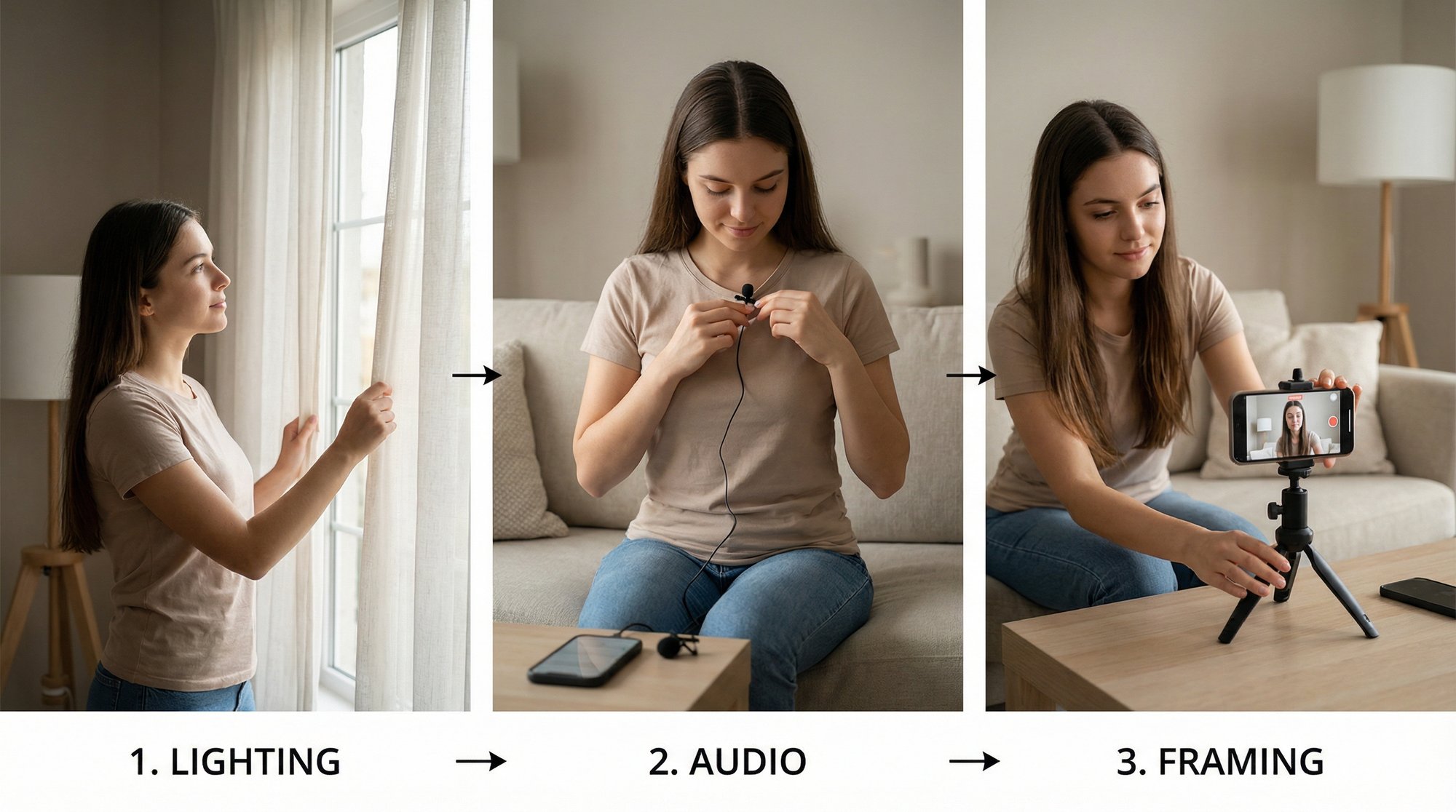
Embrace the Low-Fi Aesthetic: Your phone camera and a simple microphone are all you need to start. The rawness is part of the appeal.
Engage with Your Community: Actively respond to comments and incorporate audience feedback. This makes them feel like they are part of the journey with you.
10 Talking-Head Video Examples Compared
Format | 🔄 Implementation Complexity | ⚡ Resource Requirements (time / production) | 📊 Expected Outcomes | 💡 Ideal Use Cases | ⭐ Key Advantages |
|---|---|---|---|---|---|
Product Explainer Videos | Medium — scripting + product demos | Medium — camera + screen capture + editing | High — clearer product understanding, higher conversions 📊⭐ | Feature announcements, onboarding, SaaS product pages | Builds trust, high conversion, easy to repurpose ⭐ |
Thought Leadership & Industry Commentary | Low–Medium — timely POV + research | Low — quick recording and light editing | Medium — authority, shares, media attention 📊 | PR, personal brand growth, sparking discussion | Positions founder as expert; highly shareable ⭐ |
Customer Testimonial & Success Story Videos | Medium–High — coordinate interviews + B‑roll | High — scheduling, travel/remote interviews, editing | Very High — strong conversion lift, shorter sales cycles 📊⭐ | Enterprise sales, product pages, case studies | Third‑party validation and social proof; trusted by buyers ⭐ |
Daily Wisdom & Motivational Messages | Low — repeatable short format | Low — minimal setup; highly batchable | Medium — builds habit and consistent engagement 📊 | Daily audience growth, platform algorithm performance | Creates daily habit and parasocial connection ⭐ |
Behind‑the‑Scenes & Company Culture Videos | Low–Medium — candid shoots, multiple participants | Medium — on‑site filming and coordination | Medium — better employer brand and customer affinity 📊 | Recruiting, employer branding, values alignment | Humanizes company; attracts talent and loyalty ⭐ |
Quick Tips & How‑To Educational Content | Low — focused, single‑topic shoots | Low–Medium — visual aids and concise editing | High — shareable, establishes niche authority 📊 | Top‑of‑funnel education, short‑form platforms | High shareability and immediate value; easy to produce ⭐ |
Q&A & Direct Audience Engagement Videos | Medium — ongoing monitoring + responsive content | Medium — community management and quick production | Medium–High — stronger loyalty; fewer support tickets 📊 | Community building, support FAQs, product feedback loops | Directly addresses objections; builds trust and insights ⭐ |
Founder Story & Personal Brand Narrative Videos | Medium — narrative crafting and longer delivery | Medium — staged locations and polished edit | High — deep emotional connection; media opportunities 📊 | Personal brand building, long‑form PR, recruiting | Creates strong emotional ties and differentiation ⭐ |
Launch & Announcement Videos | Medium — timing + coordination with teams | Medium — demo assets, polished messaging | High (short‑term) — spikes in signups and buzz 📊 | Product launches, major feature releases, PR pushes | Drives immediate action and momentum; founder credibility ⭐ |
Founder Vlog & Real‑Time Business Journey Documentation | High — ongoing commitment and narrative upkeep | Medium–High — regular filming, editing, publishing cadence | High (long‑term) — loyal audience and growing content library 📊 | Long‑term audience building, transparency, documentary arc | Builds loyal subscribers and documents growth over time ⭐ |
Your Blueprint for Effortless Talking Head Videos
The journey through these diverse talking head video examples reveals a powerful, unifying truth: connection is the new currency. We've dissected everything from founder stories and product explainers to quick tips and industry commentary. The common thread isn't a massive budget or a professional film crew; it's the strategic use of a single, authentic voice to build trust, authority, and community. You’ve seen how specific editing choices, hook structures, and platform-aware formatting can turn a simple monologue into a magnetic piece of content.
These formats aren't just creative ideas; they are strategic assets. A Founder Story humanizes your brand, a Product Explainer clarifies your value, and a Thought Leadership clip establishes your authority. Each video you create serves a distinct purpose in your marketing ecosystem, working together to guide a viewer from casual observer to loyal customer. The biggest takeaway from these examples is that effectiveness comes from clarity and consistency, not complexity.
Turning Insights into Action
So, where do you go from here? The path forward is about removing friction and building momentum. The primary obstacle for most entrepreneurs and marketers isn't a lack of knowledge, it's the perceived effort of post-production. You have the insights, but the thought of editing, adding B-roll, and designing captions can feel like a secondary, full-time job.
This is where you can build a system. Start by identifying the two or three video formats from our list that feel most natural to you and your brand.
For SaaS founders: Focus on Product Explainer and Thought Leadership videos.
For e-commerce brands: Prioritize Founder Story and Customer Testimonial styles.
For personal brands: Lean into Daily Wisdom and Q&A formats to build community.
Once you have your formats, the next step is to batch-record. Dedicate just one hour a week to filming several short clips based on these formats. Don't aim for perfection; aim for completion. Just talk to your phone as if you're explaining your ideas to a single, interested person.
The Real Barrier: Post-Production Friction
The single greatest point of failure in content creation is the gap between recording and publishing. This is where automation and smart tooling become your secret weapon. The goal is to make publishing your content feel as easy as recording it. While manual editing is an option, modern solutions can automate the most time-consuming parts. For those who want to create video content without even being on camera, you can truly streamline the process of creating dynamic visuals without being on camera by considering an AI Talking Avatar tool. This technology allows you to generate a presenter from text, which is a fantastic way to produce consistent content when you're short on time or simply not ready for the camera.
The core principle remains the same: reduce the effort required to get your voice out there. By creating a repeatable workflow, you stop making one-off videos and start building a content engine. The talking head video examples in this article aren't just inspiration; they are proof that this simple format, when executed with strategy and consistency, is one of the most powerful tools available for building a brand that people know, like, and trust. Your expertise is the asset. Video is just the delivery mechanism. Start small, be consistent, and let your authentic voice do the work.
Ready to turn your raw footage into polished, engaging videos without the editing headache? Unfloppable is the content repurposing service built for busy founders and marketers. We take your simple talking head videos and transform them into captivating, share-worthy content, complete with dynamic captions, B-roll, and strategic edits, so you can focus on running your business. Get your first video for just $1.
In a world saturated with faceless brands and generic AI content, the most powerful asset you have is... you. The simple act of speaking directly to your audience through a talking head video builds trust, authority, and connection faster than any other content format.
But not all talking heads are created equal. Many founders and marketers post videos that fall flat, feeling uninspired and getting quickly scrolled past. The difference between a video that flops and one that builds a loyal following is not a bigger budget or a fancier camera; it's strategy.
This guide moves beyond surface-level tips to give you the exact strategic blueprints used by top founders, creators, and brands. We will break down 10 proven talking head video examples, dissecting what makes each format work, from the hook and structure to the specific editing techniques that capture attention.
You will get actionable templates and insights to turn your spoken ideas into polished, high-impact videos that drive real business results, without needing to become a professional video editor. Let's explore the formats that will help you connect, persuade, and grow.
1. Product Explainer Videos
Product explainer videos are a direct and effective way for founders, product managers, or team leads to demonstrate a product's value. This format features a person speaking directly to the audience, explaining a specific feature, a new update, or the product's core purpose, while a screen recording or product visuals play alongside them. This combination builds a personal connection and provides clear, contextual information, turning abstract benefits into tangible solutions.

This approach is particularly powerful for SaaS companies, where explaining complex functionality is often a major hurdle. Instead of a faceless tutorial, the audience gets a guided tour from the very person who helped build it.
Strategic Breakdown: Notion’s Database Explanation

In this classic example, Notion’s Ivan Zhao breaks down how databases work within the platform. He doesn't just list features; he frames the entire explanation around a core user problem: organizing complex information.
Hook: Starts by acknowledging the user's pain point of managing disparate information, immediately establishing relevance.
Structure: The video follows a simple "problem-solution" arc. Ivan explains the concept, then immediately shows the database feature in action with practical use cases like a reading list.
Editing: Notice the simple yet effective editing. The screen recording is the primary visual, but Ivan remains visible in a small circle, maintaining the personal connection. Key terms and actions are highlighted with on-screen graphics.
Key Insight: The power of this format is its authenticity. A founder’s passion and deep product knowledge are difficult to replicate. It builds trust and makes the product feel more human.
How to Replicate This Strategy
To create effective product explainer videos, focus on clarity and user benefit. This format is a key part of a strong video content marketing strategy, as it directly addresses customer questions.
Start with the "Why": Open by stating the problem your feature solves, not what the feature is.
Show, Don't Just Tell: Use b-roll of your product in action. Guide the viewer’s eye with zooms, callouts, and cursor highlights.
Keep It Simple: Avoid internal jargon. Speak as if you're explaining it to a new customer over coffee.
End with a Clear Next Step: Conclude with a specific call-to-action (CTA), such as "Try this template in your own workspace" or "Sign up for a free trial to test it out."
2. Thought Leadership & Industry Commentary
Thought leadership videos feature founders or business leaders analyzing industry news, trends, or recent developments. In this format, an expert speaks directly to the camera, offering their unique perspective while relevant articles, data, or news clips are displayed on screen. This approach builds authority and audience trust by delivering timely, opinionated insights that go beyond surface-level reporting.
This method is especially effective for establishing a personal brand or positioning a company as a go-to resource in its niche. By consistently providing valuable commentary, creators become the voice their audience turns to for understanding complex market shifts, making it a powerful example of what a talking head video can achieve.
Strategic Breakdown: Chamath Palihapitiya's Market Commentary
Chamath Palihapitiya, a venture capitalist and founder, frequently uses this format to dissect complex financial news and market trends for his audience. His videos are not just news recaps; they are masterclasses in forming a strong, evidence-backed opinion.
Hook: He often starts with a provocative statement or a direct question about a major news event, immediately signaling that he will provide a perspective others might miss.
Structure: His analysis typically follows a logical flow: present the commonly understood facts, introduce a counterintuitive viewpoint, and then use data, personal experience, or first-principles thinking to support his argument.
Editing: The editing is minimal, keeping the focus on his delivery. Simple B-roll of news headlines or charts appears on screen to contextualize his points without distracting from his core message. The raw, unfiltered feel reinforces authenticity.
Key Insight: The value here is not in reporting the news but in interpreting it. Audiences crave clarity and a trusted filter in a sea of information. Providing a sharp, well-reasoned take is how you build an authoritative brand.
How to Replicate This Strategy
To create impactful commentary videos, you must have a distinct and defensible point of view. This format is a cornerstone for building a community around your expertise and is an excellent use case for talking head video examples that drive conversation.
Develop a Unique Angle: Don’t just repeat what others are saying. Ask yourself: "What is my unique insight based on my specific experience?"
Act Quickly: Aim to publish your commentary within 24-48 hours of a major industry event to capture audience interest while the topic is still trending.
Back It Up: Support your opinions with data, personal anecdotes, or logical frameworks. This turns a simple opinion into a credible analysis.
Encourage Debate: End your video by inviting comments and discussion. Ask viewers what they think to foster an engaged community around your content.
3. Customer Testimonial & Success Story Videos
Customer testimonial videos shift the spotlight from your team to your most valuable asset: happy customers. This format features a satisfied client speaking directly about their experience with your product or service, creating powerful social proof. By intercutting their narrative with visuals of their results, business metrics, or personal achievements, you transform a simple review into a compelling success story that builds credibility and trust with potential buyers.

This approach lets a genuine advocate for your brand do the selling for you. Prospects are more likely to believe the claims of a peer who faced similar challenges, making these talking head video examples exceptionally persuasive for moving buyers through the consideration stage of their journey.
Strategic Breakdown: Shopify’s Merchant Stories
Shopify excels at this by creating mini-documentaries about their merchants. Instead of a dry case study, they produce emotionally resonant videos that highlight the entrepreneur's journey, with Shopify positioned as the supportive platform that helped them achieve their dreams.
Hook: The story starts with the person, not the product. It introduces the founder and their unique passion, creating an immediate human connection.
Structure: These videos follow a classic "hero's journey" narrative. The merchant is the hero, they face a business challenge (the conflict), and they use Shopify (the tool) to overcome it and succeed.
Editing: The talking head interview serves as the narrative backbone. This is enriched with b-roll of the merchant in their element, close-ups of their products, and footage of their business in action, making their success feel real and aspirational.
Key Insight: The most effective testimonials don't feel like advertisements. They feel like authentic stories from real people. The focus should be on the customer's transformation, not just your product's features.
How to Replicate This Strategy
To create powerful customer stories, focus on authenticity and a clear narrative arc. To streamline the creation of authentic customer stories, leveraging a dedicated video testimonial script generator can be highly effective.
Find the Right Story: Choose customers with impressive, quantifiable results and a compelling personal journey.
Let Them Talk: Guide them with open-ended questions but let them tell the story in their own words. Avoid overly scripted responses.
Capture Key Metrics: Prompt them to share specific numbers, ROI statements, or "before-and-after" data to add weight to their claims.
Show Their Success: Conclude with a clear visual of their success, reinforcing the positive outcome and associating it with your brand.
4. Daily Wisdom & Motivational Messages
This format involves creating short, consistent talking head videos where a founder or expert shares daily insights, lessons, or motivational messages. These clips are typically 15-60 seconds long and are designed for platforms like Instagram Reels, TikTok, or YouTube Shorts. By delivering bite-sized, valuable content daily, leaders can build a dedicated following seeking inspiration and practical advice, establishing themselves as a trusted authority in their niche.
The power of this strategy lies in its frequency and authenticity. Instead of high-production, sporadic content, it relies on a raw, direct-to-camera style that feels personal and genuine. Leaders like Gary Vaynerchuk and Ryan Holiday have used this to build massive personal brands around core themes of hustle and stoicism, respectively.
Strategic Breakdown: Building a Daily Content Engine
To make daily content sustainable, the process must be efficient. The goal is to create a content machine that consistently produces high-value, low-effort videos that reinforce your brand's core message.
Hook: The opening is critical. It must immediately grab attention with a provocative question, a bold statement, or a relatable problem. For example, "You're procrastinating on the wrong things."
Structure: Follow a simple "Insight-Example-Takeaway" model. Present one core idea, illustrate it with a quick story or analogy, and conclude with a single, actionable piece of advice. This keeps the message focused and memorable.
Editing: Keep production minimal. Use clear, bold captions that are easy to read on mobile. Subtle text animations or a simple background can add polish, but the focus should remain on the speaker's delivery and message.
Key Insight: Consistency trumps production value. An audience will forgive imperfect lighting or sound if the message they receive every day is valuable and authentic. This approach builds a deep, habitual connection with your followers.
How to Replicate This Strategy
To succeed with daily motivational content, you need a system for creation and a clear point of view. This type of talking head video example is perfect for leaders who want to build a strong personal brand.
Define Your Core Theme: Choose a specific area of expertise or philosophy (e.g., habit formation, leadership, marketing tactics). All your content should tie back to this central theme.
Batch Record Your Content: Dedicate a few hours to record 2-4 weeks of daily videos at once. This ensures consistency even on busy days and prevents creative burnout.
Create a Simple Template: Use a consistent opening, closing, and visual style (e.g., text overlays, branding). This makes your content instantly recognizable in a crowded feed.
Engage with Your Community: The daily format is a two-way conversation. Respond to comments and use audience questions to inspire future video topics. This turns passive viewers into an active community.
5. Behind-the-Scenes & Company Culture Videos
Talking head videos are an excellent medium for pulling back the curtain and showcasing the human side of your business. This format features founders or team members discussing company culture, values, milestones, or the work environment. Filmed in authentic settings like the office or during company events, these videos offer an intimate look at the people and principles that define your brand.
This approach is invaluable for building an employer brand and fostering a deeper connection with customers. When people see the real faces and hear the genuine stories behind a company, it transforms a faceless entity into a group of passionate individuals. This transparency builds trust with both potential hires and your target audience.
Strategic Breakdown: Stripe’s Engineering Culture
Stripe is known for its strong engineering-first culture, and they use video to communicate this effectively to prospective talent. Many of their culture videos feature engineers speaking directly about their work, their motivations, and the problems they are solving.
Hook: These videos often open with a direct question or a powerful statement about the company’s mission, immediately framing the conversation around purpose and impact.
Structure: They blend talking head interviews with employees at all levels, not just leadership. This is often paired with b-roll footage of collaborative work sessions, whiteboard brainstorming, and casual office interactions.
Authenticity: The speakers are not overly polished. They speak with genuine enthusiasm and technical depth, which resonates strongly with their target audience of skilled engineers. The focus is on substance over style.
Key Insight: The most effective culture videos empower employees to be the storytellers. Their unscripted perspectives are more credible and relatable than any top-down corporate message.
How to Replicate This Strategy
To create compelling behind-the-scenes content, prioritize authenticity and let your team's personality shine. This type of content is a powerful part of a broader employer branding effort.
Feature Your Team: Move beyond the founder. Interview employees from different departments and levels to present a well-rounded view of your culture.
Focus on "Why": Ask questions that get to the heart of your company's mission. Why do people enjoy working there? What problems are they excited to solve?
Show, Don't Just Tell: Capture real moments. B-roll of team lunches, collaborative meetings, or even a casual conversation in the hallway makes the environment feel tangible.
Highlight Differentiators: What makes your company culture unique? Whether it's a commitment to remote work, a specific problem-solving approach, or a unique team ritual, make that a central theme.
6. Quick Tips & How-To Educational Content
Quick tips and how-to videos are short, high-impact talking head formats (typically 30-90 seconds) where an expert shares a specific, actionable piece of advice. A founder or specialist speaks directly to the camera, often supported by simple text overlays or visuals to clarify the concept. This format is designed for rapid consumption, delivering immediate value and positioning the speaker as a knowledgeable authority.

This approach works exceptionally well on platforms like TikTok, Instagram Reels, and YouTube Shorts, where audiences value quick, digestible information. It's a powerful way to build a community by consistently providing helpful content that solves small but nagging problems for your target audience.
Strategic Breakdown: Sales Hacker's Cold Call Tip
Many brands, like Sales Hacker or Moz, excel at this by breaking down complex topics into bite-sized lessons. For instance, a video might feature a sales expert demonstrating a single line to use in a cold call or an SEO specialist explaining one quick way to check for broken links.
Hook: The video immediately states the benefit, such as "Stop getting hung up on. Try this opening line instead." This grabs the attention of anyone facing that specific problem.
Structure: It follows a simple, direct pattern: present the problem, offer a specific solution, and briefly explain why it works. Numbered lists ("3 Ways to...") or step-by-step frameworks provide a clear structure.
Editing: Editing is minimal but purposeful. The focus is on the speaker, with bold text overlays emphasizing the key takeaway or tip. A progress bar might be used to keep viewers engaged until the end.
Key Insight: The value of these talking head video examples lies in their specificity. Generic advice is forgettable, but a tangible, single-tasking tip is immediately applicable and shareable, which drives organic growth.
How to Replicate This Strategy
To create effective quick-tip videos, prioritize clarity and immediate usefulness. This is a core component for businesses aiming to figure out how to scale content creation because one core concept can be broken down into many micro-videos.
Lead with the Benefit: Start with the outcome. Instead of "How to write a subject line," try "Get a 50% open rate with this subject line formula."
Teach One Thing Well: Resist the urge to cover multiple topics. Focus on a single hack, tip, or step and explain it clearly.
Be Specific and Credible: Share advice you have personally used. If possible, include measurable results ("This increased our conversions by 15%") to build trust.
End with an Engagement Prompt: Conclude by asking a simple question like, "What's your go-to trick for this?" or "Try it and let me know how it goes" to encourage comments and community interaction.
7. Q&A & Direct Audience Engagement Videos
Q&A videos are a powerful format where founders or experts directly answer questions from their audience. This style turns your content strategy into a two-way conversation, addressing specific inquiries, overcoming common objections, and building a loyal community. Questions are often sourced from social media comments, emails, or dedicated community platforms.
This approach is highly effective because it guarantees relevance; you are creating content that your audience has explicitly asked for. It closes the feedback loop, showing your community that you are listening and value their input, which fosters immense trust and loyalty.
Strategic Breakdown: Y Combinator’s Office Hours
While Y Combinator uses many formats, their question-based content, like office hours sessions and partner Q&As, perfectly embodies this strategy. Partners like Michael Seibel or Garry Tan often record videos answering specific, tactical questions from startup founders.
Hook: The premise is the hook. Each video often starts by stating the specific question being answered, such as "How do I find a technical co-founder?" or "What's the best way to get our first 100 users?" This immediately attracts viewers facing that exact problem.
Structure: The format is simple and direct: state the question, provide a detailed answer based on deep experience, and offer actionable advice. There is no fluff, just concentrated value delivered in a direct, one-to-one style.
Authenticity: The setting is usually an office or a simple backdrop, putting the focus entirely on the quality of the advice. The delivery is conversational and candid, reinforcing the idea that this is genuine counsel from an expert, not a polished marketing pitch.
Key Insight: This format positions you as a genuine authority and a helpful guide. By publicly answering questions, you not only help one person but also provide value to the silent majority of your audience who had the same question but never asked.
How to Replicate This Strategy
To create effective Q&A videos, prioritize responsiveness and transparency. This format is a great source of talking head video examples that build community.
Systemize Question Collection: Use tools like a dedicated social media hashtag, a "ask me anything" email address, or a community forum thread to gather questions.
Select Questions Strategically: Choose a mix of questions. Address common, recurring ones to help a broad audience, but also pick niche questions to show you're paying attention to details.
Be Honest and Direct: If you don't know the answer, say so. Authenticity is more valuable than pretending to be an expert on everything. This builds credibility.
Repurpose Answers: A single video answer can be transcribed into a blog post, clipped for social media shorts, and turned into a carousel post. This maximizes the return on your effort.
8. Founder Story & Personal Brand Narrative Videos
Founder stories move beyond features and benefits to connect with an audience on a human level. This talking head format features founders or key leaders sharing their personal journey, the company’s origin story, or pivotal lessons learned from failures. It's a narrative-driven approach that builds a deep emotional connection, positioning the founder as a relatable, authentic guide rather than a distant corporate figure.
This type of video is incredibly effective for building brand loyalty and trust. By sharing vulnerabilities and the "why" behind the business, founders invite their audience to become part of the story, transforming customers into advocates. It’s a powerful tool for communicating company values and mission in a way that resonates personally.
Strategic Breakdown: Sara Blakely's Spanx Origin Story
Sara Blakely, the founder of Spanx, has masterfully used her origin story to build a billion-dollar brand. Her narratives, often shared in interviews or on social media, are a prime example of this talking head format, even when captured by others. She doesn't just recount facts; she brings the audience into the moments of frustration, ingenuity, and perseverance that led to Spanx.
Hook: Blakely often starts with a relatable, almost comical problem: needing the right undergarment for white pants and having nothing that worked. This immediately grounds the story in a real-world struggle.
Structure: Her story follows a classic hero's journey. She identifies a common problem, faces rejection from manufacturers (the conflict), perseveres with a clever sales tactic (the climax), and ultimately achieves massive success.
Editing: When she tells the story herself, the focus is entirely on her expressive delivery. There are no flashy graphics. The power comes from her authentic tone, detailed recollections (like cutting the feet out of her pantyhose), and genuine emotion.
Key Insight: A personal story is your brand’s most unique asset. No competitor can copy your journey. Sharing genuine moments of failure and vulnerability makes your success more believable and your brand more relatable.
How to Replicate This Strategy
To create a compelling founder narrative, focus on a specific, transformational moment rather than your entire biography. This approach is one of the most effective talking head video examples for building a personal brand.
Isolate a Core Conflict: Don't tell your life story. Focus on one pivotal moment: the problem you couldn't solve, the rejection that fueled you, or the "aha!" insight that changed everything.
Embrace Vulnerability: Share the real struggles and doubts. Talking about failures isn't a sign of weakness; it shows resilience and makes your story more compelling and human.
Connect to the "Why": Explicitly link your personal journey to the company's mission. Explain how your experience shaped the values that drive your business today.
Practice Authentic Delivery: Rehearse the key points so you don't ramble, but avoid memorizing a script. The goal is to sound like you're sharing a personal story with a friend, not giving a corporate presentation.
9. Launch & Announcement Videos
Launch and announcement videos are a powerful way for company leaders to share new products, features, or major milestones directly with their audience. This format centers on a key figure, like a founder or CEO, speaking with genuine excitement about what’s launching and why it matters. The goal is to generate buzz, create a sense of occasion, and drive immediate action from viewers.
This approach is highly effective because it attaches a human face to company news, turning a corporate update into a personal message. It’s a direct line from the creator to the customer, making announcements feel more significant and trustworthy.
Strategic Breakdown: Slack’s Quarterly Updates
Slack’s product announcements are a masterclass in this format. Their leaders often step in front of the camera to walk through quarterly updates, framing new features not just as technical additions but as direct solutions to modern workplace challenges.
Hook: They often start by addressing a common user frustration or a big-picture goal, immediately connecting with the viewer's daily work life.
Structure: The video follows a clear "what, why, how" pattern. They introduce the new feature set (what), explain the problem it solves (why), and then show a brief, polished demo of it in action (how).
Editing: The editing is clean and professional. The talking head remains the focus, building authority, while smooth transitions introduce product UI, motion graphics, and text overlays that highlight key benefits.
Key Insight: The person delivering the message is as important as the message itself. A founder’s or leader’s authentic enthusiasm is infectious and builds immense credibility, making the audience feel like they are part of the journey.
How to Replicate This Strategy
To create impactful launch videos, focus on building excitement and clearly communicating value. These videos are also a cornerstone for executives looking to build a strong personal brand.
Lead with Emotion: Don’t just list features. Share your genuine excitement and the story behind the launch. Why were you compelled to build this?
Connect to a Problem: Frame the announcement around a specific pain point your audience experiences. Explain how this launch is the solution.
Show a Quick Win: Include a short, compelling demo of the product in action. Focus on the "aha!" moment, not a full tutorial.
Create a Clear Path: End with a direct and singular call-to-action. Whether it's signing up for a trial, visiting a landing page, or downloading an update, make the next step obvious.
10. Founder Vlog & Real-Time Business Journey Documentation
The founder vlog is a powerful format that documents the real-time journey of building a business. This approach swaps polished production for raw authenticity, featuring a founder speaking directly to the camera about their day-to-day decisions, challenges, and victories. It creates an ongoing narrative that builds a loyal, invested audience over time.
This style of talking head video works because it humanizes the often-opaque world of entrepreneurship. Instead of just seeing the final product, the audience witnesses the struggle, the pivots, and the small wins that lead to success, creating a deep and lasting connection with both the founder and the brand.
Strategic Breakdown: The All-In Podcast & Founder Journeys
While not a single founder vlog, the "All-In Podcast" and the individual journeys of its hosts (like Chamath Palihapitiya or David Sacks) mirror this principle on a grand scale. They openly discuss their investment theses, business breakdowns, and market predictions in real-time. This is a meta-example of the founder journey documentation, where their "business" is their thought leadership and investment activity.
Listeners and viewers follow their intellectual and financial journeys, celebrating their correct calls and analyzing their misses. This ongoing documentation solidifies their authority and builds a massive, engaged community that feels part of the conversation.
Hook: The format's hook is the promise of an inside look. Audiences are drawn to the unfiltered thoughts and processes of successful individuals.
Structure: Vlogs are often loosely structured, following a "day-in-the-life" or a "weekly recap" format. The narrative arc is built across multiple episodes, not just within one.
Editing: Editing is minimal to preserve the raw, authentic feel. Simple jump cuts, basic text overlays, and occasional b-roll are used to maintain pace without overproducing the content.
Key Insight: Transparency is the core asset. Sharing failures and challenges is just as important as sharing wins. This vulnerability builds trust and makes the founder’s eventual success feel like a shared victory for the audience.
How to Replicate This Strategy
To document your business journey effectively, prioritize consistency and honesty. This is one of the most compelling talking head video examples for building a personal brand alongside a company.
Commit to a Schedule: Whether weekly or bi-weekly, a consistent publishing schedule trains your audience to follow along.
Document, Don't Create: Focus on capturing real decisions and moments. Don't try to manufacture drama; the authentic journey is compelling enough.
Embrace the Low-Fi Aesthetic: Your phone camera and a simple microphone are all you need to start. The rawness is part of the appeal.
Engage with Your Community: Actively respond to comments and incorporate audience feedback. This makes them feel like they are part of the journey with you.
10 Talking-Head Video Examples Compared
Format | 🔄 Implementation Complexity | ⚡ Resource Requirements (time / production) | 📊 Expected Outcomes | 💡 Ideal Use Cases | ⭐ Key Advantages |
|---|---|---|---|---|---|
Product Explainer Videos | Medium — scripting + product demos | Medium — camera + screen capture + editing | High — clearer product understanding, higher conversions 📊⭐ | Feature announcements, onboarding, SaaS product pages | Builds trust, high conversion, easy to repurpose ⭐ |
Thought Leadership & Industry Commentary | Low–Medium — timely POV + research | Low — quick recording and light editing | Medium — authority, shares, media attention 📊 | PR, personal brand growth, sparking discussion | Positions founder as expert; highly shareable ⭐ |
Customer Testimonial & Success Story Videos | Medium–High — coordinate interviews + B‑roll | High — scheduling, travel/remote interviews, editing | Very High — strong conversion lift, shorter sales cycles 📊⭐ | Enterprise sales, product pages, case studies | Third‑party validation and social proof; trusted by buyers ⭐ |
Daily Wisdom & Motivational Messages | Low — repeatable short format | Low — minimal setup; highly batchable | Medium — builds habit and consistent engagement 📊 | Daily audience growth, platform algorithm performance | Creates daily habit and parasocial connection ⭐ |
Behind‑the‑Scenes & Company Culture Videos | Low–Medium — candid shoots, multiple participants | Medium — on‑site filming and coordination | Medium — better employer brand and customer affinity 📊 | Recruiting, employer branding, values alignment | Humanizes company; attracts talent and loyalty ⭐ |
Quick Tips & How‑To Educational Content | Low — focused, single‑topic shoots | Low–Medium — visual aids and concise editing | High — shareable, establishes niche authority 📊 | Top‑of‑funnel education, short‑form platforms | High shareability and immediate value; easy to produce ⭐ |
Q&A & Direct Audience Engagement Videos | Medium — ongoing monitoring + responsive content | Medium — community management and quick production | Medium–High — stronger loyalty; fewer support tickets 📊 | Community building, support FAQs, product feedback loops | Directly addresses objections; builds trust and insights ⭐ |
Founder Story & Personal Brand Narrative Videos | Medium — narrative crafting and longer delivery | Medium — staged locations and polished edit | High — deep emotional connection; media opportunities 📊 | Personal brand building, long‑form PR, recruiting | Creates strong emotional ties and differentiation ⭐ |
Launch & Announcement Videos | Medium — timing + coordination with teams | Medium — demo assets, polished messaging | High (short‑term) — spikes in signups and buzz 📊 | Product launches, major feature releases, PR pushes | Drives immediate action and momentum; founder credibility ⭐ |
Founder Vlog & Real‑Time Business Journey Documentation | High — ongoing commitment and narrative upkeep | Medium–High — regular filming, editing, publishing cadence | High (long‑term) — loyal audience and growing content library 📊 | Long‑term audience building, transparency, documentary arc | Builds loyal subscribers and documents growth over time ⭐ |
Your Blueprint for Effortless Talking Head Videos
The journey through these diverse talking head video examples reveals a powerful, unifying truth: connection is the new currency. We've dissected everything from founder stories and product explainers to quick tips and industry commentary. The common thread isn't a massive budget or a professional film crew; it's the strategic use of a single, authentic voice to build trust, authority, and community. You’ve seen how specific editing choices, hook structures, and platform-aware formatting can turn a simple monologue into a magnetic piece of content.
These formats aren't just creative ideas; they are strategic assets. A Founder Story humanizes your brand, a Product Explainer clarifies your value, and a Thought Leadership clip establishes your authority. Each video you create serves a distinct purpose in your marketing ecosystem, working together to guide a viewer from casual observer to loyal customer. The biggest takeaway from these examples is that effectiveness comes from clarity and consistency, not complexity.
Turning Insights into Action
So, where do you go from here? The path forward is about removing friction and building momentum. The primary obstacle for most entrepreneurs and marketers isn't a lack of knowledge, it's the perceived effort of post-production. You have the insights, but the thought of editing, adding B-roll, and designing captions can feel like a secondary, full-time job.
This is where you can build a system. Start by identifying the two or three video formats from our list that feel most natural to you and your brand.
For SaaS founders: Focus on Product Explainer and Thought Leadership videos.
For e-commerce brands: Prioritize Founder Story and Customer Testimonial styles.
For personal brands: Lean into Daily Wisdom and Q&A formats to build community.
Once you have your formats, the next step is to batch-record. Dedicate just one hour a week to filming several short clips based on these formats. Don't aim for perfection; aim for completion. Just talk to your phone as if you're explaining your ideas to a single, interested person.
The Real Barrier: Post-Production Friction
The single greatest point of failure in content creation is the gap between recording and publishing. This is where automation and smart tooling become your secret weapon. The goal is to make publishing your content feel as easy as recording it. While manual editing is an option, modern solutions can automate the most time-consuming parts. For those who want to create video content without even being on camera, you can truly streamline the process of creating dynamic visuals without being on camera by considering an AI Talking Avatar tool. This technology allows you to generate a presenter from text, which is a fantastic way to produce consistent content when you're short on time or simply not ready for the camera.
The core principle remains the same: reduce the effort required to get your voice out there. By creating a repeatable workflow, you stop making one-off videos and start building a content engine. The talking head video examples in this article aren't just inspiration; they are proof that this simple format, when executed with strategy and consistency, is one of the most powerful tools available for building a brand that people know, like, and trust. Your expertise is the asset. Video is just the delivery mechanism. Start small, be consistent, and let your authentic voice do the work.
Ready to turn your raw footage into polished, engaging videos without the editing headache? Unfloppable is the content repurposing service built for busy founders and marketers. We take your simple talking head videos and transform them into captivating, share-worthy content, complete with dynamic captions, B-roll, and strategic edits, so you can focus on running your business. Get your first video for just $1.