How to Scale Content Creation with Short-Form Video
Discover how to scale content creation with a founder's playbook for short-form video. Learn to build systems, delegate effectively, and automate for growth.
Feb 7, 2026
Let's be honest, trying to keep up with the demand for video content feels like being on a hamster wheel. It's a relentless grind that can burn out even the most dedicated founders. But what if I told you the answer isn't to work harder? The real key is to build a predictable engine for your content.
This playbook is built around one core idea: Systemize, Delegate, and Automate. It's the framework that gets you off that wheel and turns your content efforts from a chaotic scramble into a well-oiled machine that builds your brand.
You Can't Afford to Ignore Video Anymore
If you feel like you're constantly fighting to stay relevant, you're not wrong. Platforms like TikTok, Instagram Reels, and YouTube Shorts have completely rewired our brains. We're now conditioned to expect a constant stream of fresh, short-form video. It's not a trend; it's the new standard.
This creates a serious problem for business leaders. You can’t be the one making every video, but you also can’t afford to be invisible. Just posting whenever you find a spare moment won’t cut through the noise. The only way to win this game is to scale.
Ditching the "Hustle" Mentality for Good
So many entrepreneurs get stuck in a trap. They think creating more content means pulling more all-nighters and sacrificing more weekends. That "hustle-and-grind" approach is a one-way ticket to burnout and, worse, wildly inconsistent results.
True scaling isn’t about brute force. It’s about working smarter by building a system that doesn’t depend on you being hands-on 24/7.
It’s time for a mental shift. Stop thinking of content as a series of creative, one-off projects. Start treating it like any other critical business function—like sales or finance—with repeatable processes and predictable outcomes.
The market is screaming for this. The digital content creation market is set to explode from USD 37.05 billion in 2025 to a staggering USD 137.59 billion by 2035. That growth isn’t just about more creators; it's about the urgent need for scalable solutions. You can explore more on this rapid market expansion to see just how big this opportunity is.
Your goal shouldn't be just to make a bunch of videos. It's to build a content asset—an engine that works for you around the clock, building awareness and driving growth even when you’re not there.
The Three Pillars of Scalable Video Content
To really make this happen, we need a simple but powerful framework. Everything in this guide is built on the three pillars that will get you off the content treadmill for good.
This table breaks down the core framework for scaling video content, providing a quick summary of the key actions and goals for each pillar.
Pillar | Core Action | Primary Goal |
|---|---|---|
Systemize | Document repeatable workflows and create templates. | Eliminate guesswork and ensure consistent quality, regardless of who is executing the task. |
Delegate | Outsource specific tasks to skilled professionals or team members. | Free up your time to focus on high-level strategy and running your business. |
Automate | Use technology and tools to handle manual, repetitive processes. | Increase efficiency, reduce human error, and accelerate your entire content production pipeline. |
Getting these three things right—Systemize, Delegate, and Automate—is what transforms content creation from a chaotic, time-sucking chore into a strategic advantage for your business. This is your roadmap to finally building a brand that grows on your terms, not at the expense of your sanity.
Building Your Repeatable Content Engine
Let's be honest: the secret to scaling your video content isn't about having a thousand brilliant ideas. It’s about building a machine. If you’re relying on random bursts of inspiration to post, you’re already on the fast track to burnout and inconsistency.
To really scale, you have to stop thinking, "What should I post today?" and start building a repeatable workflow that churns out high-quality videos like clockwork. The goal is to build a system so solid that it removes the guesswork, freeing you and your team to just execute.
This is the fundamental flow we’ll be building. It’s a simple, three-part journey.

It all starts with creating repeatable processes (Systemize). From there, you bring in help (Delegate), and finally, you use the right tools to put everything on cruise control (Automate).
Define Your Core Content Pillars
Before you can build anything, you need a blueprint. For content, that blueprint comes in the form of content pillars. These are the 3-5 core topics you’re going to completely own.
These aren't just random subjects you enjoy. They live at the intersection of your deep expertise and your audience's biggest pain points. Think of them as the main channels of your brand's station—everything you broadcast fits into one of them.
For example, if you're a SaaS founder selling project management software, your pillars might look like this:
Productivity Hacks: Dead-simple, actionable tips for getting more done.
Team Leadership: Real-world advice on managing and motivating a remote team.
Future of Work: Sharp commentary on industry trends and new tech.
Nailing these pillars is the single most important thing you can do to scale. It narrows your focus and makes coming up with ideas almost effortless. Instead of staring at a blank screen, you’re just asking, "What’s a killer productivity hack I can share this week?" Constraint breeds creativity and ensures every video you post reinforces who you are.
Master the Art of Batching
Batching is the engine of scaled content creation. The concept is simple: you dedicate one block of time to record multiple videos at once. Instead of scrambling to film something every single day, you can knock out an entire month's worth of content in just one afternoon.
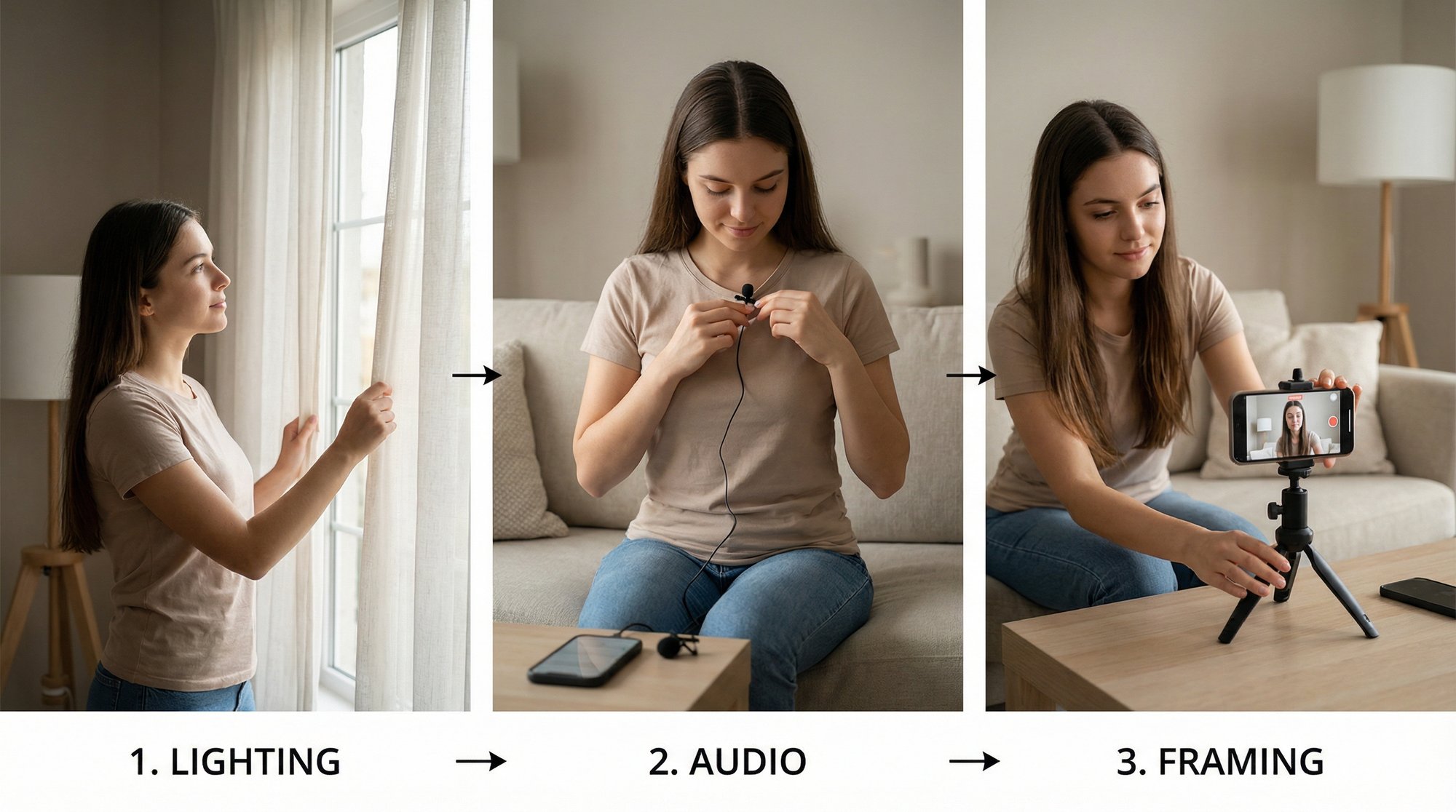
This isn't just about being more efficient; it's about tapping into a creative flow state. The friction of setting up your camera, mic, and lights is a huge barrier for most people. By doing it just once for a batch session, you eliminate that hurdle and can focus 100% on delivering value.
Pro Tip: Block out a recurring "Content Day" on your calendar once a month. Treat it like your most important meeting—because it is. In just a few hours, you can easily record 8-12 short-form videos, giving you enough raw footage for 2-3 posts a week.
Want to make that process even smoother? We've got a full breakdown on how to create Instagram Reels that people actually want to watch.
Create Simple Templates and Scripts
Great systems are built on great templates. To make your batching days incredibly productive, you need to remove as much on-the-spot thinking as possible. This is where simple, reusable templates for your scripts and shot lists come in.
And I don't mean word-for-word monologues. Frankly, those often sound stiff and unnatural. A simple bullet-point structure is usually far more effective and lets your real personality shine through.
Here’s a simple bullet-point script template that just works:
The Hook (1-3 seconds): Hit them with a bold claim or a relatable problem. (e.g., "Stop wasting hours in useless meetings.")
The Core Value (15-20 seconds): Give them 3 quick tips or one powerful insight that solves the problem from the hook.
The Call to Action (3-5 seconds): Tell them exactly what to do next. (e.g., "Follow for more productivity tips.")
Likewise, a basic shot list ensures you capture every angle and shot you need without having to stop and think. It can be as simple as a checklist noting which videos are talking-head shots and which might need a quick screen recording.
By standardizing your pillars, batching your filming, and leaning on templates, you transform content creation from an unpredictable art into a repeatable science. This is the foundation of how to scale content creation without losing your mind. You're no longer just making videos—you're building a content engine that works for you.
Assembling Your Lean Video Content Team

Let's be honest: you can’t scale if you’re doing everything yourself. That’s the hard truth. Even with the best systems and templates in the world, the only way to genuinely multiply your output—and actually get back to running your business—is to start delegating.
Now, building a team probably sounds expensive and complicated. It doesn't have to be. For short-form video, you can accomplish an incredible amount with a small, specialized crew. Forget the idea of a full-blown production agency; you really only need to fill a few key roles to get the engine running.
The Three Core Roles for Scaling Video
You don't need a massive marketing department to make this work. Think of your video operation as a nimble, three-person unit where everyone has a crystal-clear job.
The Strategist (That's You): As the founder or expert, your job is to be the face and the brain of the operation. You’re the one setting the content direction, defining the brand voice, and, most importantly, recording the raw footage. Your insights are the one thing you can't and shouldn't outsource.
The Video Editor: This is your first—and most critical—hire. A great editor is a game-changer. They take your raw, unpolished recordings and spin them into gold: engaging, platform-ready videos. They handle the nitty-gritty of cutting, adding captions, finding the right B-roll, and making sure every second is dialed in for maximum viewer retention.
The Distributor: This person takes the finished product and gets it in front of eyeballs. They’re writing the killer copy, scheduling posts across all your platforms, jumping into the comments to engage, and keeping a close eye on what’s working.
In the beginning, you might wear the Distributor hat yourself. But getting the editing off your plate? That’s the single biggest move you can make to start scaling.
A skilled video editor does so much more than just save you time—they elevate your content. They instinctively get the nuances of pacing, visual storytelling, and the subtle platform trends that can take a good idea and make it a phenomenal video.
Freelancer vs. Full-Time: What’s the Right Move?
When you’re ready to hire that editor, you’ll hit a fork in the road: bring someone in-house or find a great freelancer? There’s no single right answer, but here’s how I think about it.
Freelancers offer fantastic flexibility. You can hire them on a per-project basis, which is perfect when your video volume is just starting to build. This keeps your overhead low while giving you access to a massive global talent pool. The downside? Juggling multiple freelancers can quickly become its own full-time job, and their availability isn't always a sure thing.
An in-house editor, on the other hand, becomes a dedicated resource who lives and breathes your brand. They’ll quickly develop an intuitive feel for your style and can become a true collaborative partner. The trade-off, of course, is a much higher cost and all the responsibilities that come with having an employee.
For most founders just starting to scale, hiring a specialized freelancer or using a dedicated editing service is the smartest play. It gives you that perfect blend of top-tier expertise and cost-efficiency, letting you ramp up output without the heavy commitment of a full-time salary.
How to Find and Vet the Right Video Editor
Finding a killer editor is less about the platform you use and more about your process. Whether you’re on Upwork, a niche creator marketplace, or getting referrals, the goal is to find someone who just gets your vision.
Start with a job description that is painfully clear. Specify the content type (e.g., "fast-paced, talking-head videos for Instagram Reels and LinkedIn") and be upfront about the volume you expect and the turnarounds you need. But the most important part of this whole process is the test project.
Never, ever hire an editor based on their portfolio alone.
Give your top 2-3 candidates the exact same piece of raw footage and a simple creative brief. Yes, you need to pay them for this test. This small investment will reveal everything you need to know about their:
Communication: Were they clear and proactive? Or did you have to chase them for updates?
Creative Instinct: Did they capture your brand's vibe without needing their hand held?
Technical Chops: Was the final video clean, well-paced, and genuinely engaging?
Spending a little bit of time and money on this upfront will save you from a world of headache and costly hiring mistakes later on. You're looking for a true partner. As you grow, you might even find that a service like Unfloppable fits the bill—it essentially acts as a smart, internet-connected editor built to turn your spoken ideas into polished videos, sidestepping the hiring process altogether.
Choosing the Right Tools to Automate Your Workflow
If systems and people get you into the game, the right technology is what lets you lap the competition. After you've mapped out your process and delegated key tasks, the final piece of the scaling puzzle is automation. This is where you build a smart tech stack that acts as the connective tissue for your whole operation, killing off manual work and pushing your output to the max.

Think of it like building an automated assembly line for your video content. Raw materials—your ideas and footage—go in one end, and polished, ready-to-publish videos pop out the other with almost no friction. This isn't just about collecting cool new software; it's about creating an integrated ecosystem where every tool talks to each other.
The right automation turns a clunky, frustrating process into a smooth, predictable flow. It's the difference between emailing massive video files back and forth versus having a central hub where everything is tracked, reviewed, and approved on autopilot.
Building Your Core Automation Stack
You don't need a dozen expensive subscriptions to build a powerful workflow. In fact, you'll get the biggest bang for your buck by starting with just a few core tools that solve your most repetitive headaches.
Your tech stack really only needs to solve three major bottlenecks:
Asset Management: Where do you put all the large video files so they don't get lost in a sea of downloads?
Project Management: How do you know what stage a video is in without having to ask someone?
Editing and Production: How do you actually turn all that raw footage into finished videos at scale?
Let’s walk through what a lean, mean tech stack actually looks like in practice.
From Raw Footage to Polished Asset
Picture this. You finish a batch recording session and dump all the raw footage into a shared media library. From there, your project manager or VA hops into a tool like Trello or Asana and creates a card for each video idea.
Each card is a mini-mission control: it has a simple creative brief, a link to the raw footage, and a due date. That card then gets assigned to your editor.
This is where a service like Unfloppable can completely change the game. It’s not just an editor; it’s more like a smart, internet-connected production partner. It can listen to what you said, search the web or your own library for relevant B-roll, and transform your talking-head clip into something visually engaging and professional.
That single step automates what is easily the most time-consuming part of the whole process. Once the video is done, the editor—whether a human or a service—attaches the final file back to the Trello card and drags it into a "Ready for Review" column. You get a ping, give it a quick watch, and hit approve. It’s that simple.
Your tech stack’s main job is to completely eliminate "Hey, what's the status on that video?" from your vocabulary. A well-built system makes the status of every single asset instantly visible to everyone on the team, from anywhere.
This is the kind of automation you need if you're serious about figuring out how to scale content creation. It creates a pipeline that's both predictable and completely transparent.
Essential Tools Beyond Editing
While editing is the heaviest lift, a few other tools are absolute must-haves for creating a system that truly runs itself. These handle the logistics before and after the video is actually made, making sure nothing ever slips through the cracks.
A smart tech stack should cover these areas:
Project Management (The "Brain"):
Tools: Trello, Asana, Monday.com
Why it's crucial: This is your command center. It’s the visual roadmap for your entire content pipeline, tracking every video from a spark of an idea to a published post. It keeps everyone accountable and on the same page.
Content Scheduling (The "Distributor"):
Tools: Buffer, Later, Sprout Social
Why it's crucial: Manually posting every single video is a soul-crushing time suck. A scheduler lets you batch-upload your approved content and set it to go live at the best times on all your platforms. You maintain a consistent presence without the daily grind.
Idea Generation & Scripting (The "Spark"):
Why it's crucial: AI can't replace your unique expertise, but it’s an amazing brainstorming partner for getting past writer's block. Use it to spitball topic ideas, draft rough script outlines, or even whip up a few post captions. Just be careful you don't fall into the trap of generic, soulless output. To learn more, check out our guide on how to avoid the pitfalls of AI slop in your content and keep things authentic.
By weaving these tools together, you create a powerful, self-sustaining system. Raw ideas get captured and organized, footage gets turned into polished videos, and distribution happens on its own. This is how you finally get off the content treadmill and build a machine that works for you.
Mastering Distribution and Measuring Real Growth
Creating a library of killer video content is a huge win, but honestly, it’s only half the battle. A polished video just sitting on your hard drive has an ROI of exactly zero. The final, and arguably most important, steps in this whole process are mastering a consistent distribution rhythm and measuring what actually moves the needle for your business.

It’s so easy to get lost in the fun of production. But a disciplined approach to getting your content out there and analyzing its performance is what turns this from a creative hobby into a predictable growth engine. Without it, you’re just throwing spaghetti at the wall and hoping something sticks.
Find Your Publishing Rhythm
Consistency is king on social media. The algorithms are literally built to reward creators who show up reliably. This doesn't mean you need to burn yourself out posting five times a day, but it does mean finding a cadence you can realistically stick to, week in and week out.
And thanks to the batching system we talked about, this becomes way more manageable. With a month's worth of videos already in the can, you can schedule everything out and spend your time engaging with your community instead of scrambling for your next post.
Start with a realistic target: Aim for 3-4 short-form videos per week on your main platform. That’s enough to build momentum without overwhelming your team.
Use a scheduling tool: This is non-negotiable for scaling. Tools like Buffer or Later let you load up your content for the week or month in a single session. Set it and forget it.
Post when people are listening: Dive into your analytics and find out when your audience is actually online and active. Publishing during these peak windows gives your content the best shot at getting that crucial early traction.
Get More Mileage by Repurposing Everything
The real secret to maximizing your output without filming more content? Repurpose everything. A single two-minute talking-head video is a goldmine of smaller content pieces just waiting to be extracted. This "create once, distribute many" mindset is the absolute key to scaling your presence.
Think of each core video as a content pillar. From that one pillar, you can spin off a dozen other assets tailored for different platforms and formats.
A single well-crafted video can be the source of an entire week's worth of content. The goal isn't just to make more videos; it's to get more mileage out of every video you make.
Here’s what that looks like in the real world. One video can become:
The Core Reel: A 60-second Instagram Reel with captions, B-roll, and a trending audio track.
The LinkedIn Post: The same video, but paired with a thoughtful caption that adds professional context and asks a question to spark a real conversation.
The Twitter Thread: Pull out the 3 key takeaways from the script and turn them into a punchy, value-packed thread. Drop the video in the final tweet for good measure.
The Quote Graphic: Grab the most powerful line from your video script, slap it on a branded template, and you've got a shareable graphic for Instagram Stories or LinkedIn.
Ditch Vanity Metrics and Focus on Growth KPIs
Likes and views feel good, but they don't pay the bills. If you want to know if your content strategy is actually working, you have to track the metrics that signal real business impact. These are the Key Performance Indicators (KPIs) that prove you're not just getting attention, but you're getting the right kind of attention.
Don't get fooled by vanity metrics. A video with 100,000 views that results in zero website clicks is way less valuable than a video with 5,000 views that brings in 50 qualified leads.
Key Growth Metrics You Should Actually Care About:
Metric | Why It Matters | What to Look For |
|---|---|---|
Engagement Rate | Shows if your content is actually resonating with people. | A healthy percentage of likes, comments, shares, and saves relative to your views or follower count. |
Audience Retention | Pinpoints the exact moment viewers get bored and leave. | You want high retention in the first 3-5 seconds and a gradual decline, not a massive, sudden drop-off. |
Click-Through Rate (CTR) | Measures how many people took the action you wanted them to take. | This is a huge indicator that your content is successfully moving people from viewer to potential customer. |
Follower Growth | Tracks the health and expansion of your community over time. | Look for consistent, steady growth, especially after you post a banger piece of content. |
This shift in focus is more important than ever. Small and medium-sized businesses (SMEs) are projected to control a whopping 62.90% of content creation spending by 2025, largely because accessible tools have finally leveled the playing field. As you can read in this market shift report on mordorintelligence.com, this means the pressure is on to prove ROI, not just reach.
When you tie your content directly to these business-focused KPIs, you create a powerful feedback loop. You'll know exactly which topics and formats are driving real results, letting you double down on what works and build a truly unstoppable growth strategy.
Got Questions About Scaling Your Video Content?
Look, even with a solid playbook in hand, you're going to hit some real-world snags when you start scaling up your video production. I've seen founders run into the same walls time and time again, so let's get right into the most common questions and give you some direct, no-fluff answers. Think of this as your field guide for the practical side of putting this system to work.
How Much Content Is Really Enough to Start?
It's so tempting to think you need to be everywhere, posting multiple times a day from the get-go. That's a classic mistake. The real key to scaling your content is building a rhythm you can actually stick to, not just flooding the zone and burning out.
Focus on a sustainable, consistent pace. A great starting line in the sand is 3-4 high-quality short-form videos per week. This is the sweet spot—it’s frequent enough to keep the algorithms happy and build momentum with your audience, but it's not so much that you'll dread recording day. If you use the batching methods we talked about, you can knock this out in just a couple of hours a month.
Get your rhythm down first. Once that workflow feels like an old habit, then you can think about ramping things up.
What's the Single Biggest Mistake Founders Make When Scaling?
I see this one constantly: hiring an editor or buying expensive software before they have a system in place. It's the ultimate "cart before the horse" scenario. Founders throw money at the problem, hoping a person or a tool will magically create order out of chaos. It never works.
If you don't have your content pillars defined, simple script templates ready to go, and a documented process for handoffs, you’re just paying someone to be confused. You'll end up spending more time managing your new editor's questions than you would have spent just doing it yourself.
Always build the system first. Map out your playbook, even a simple one, and then bring in the people and tools to run it. The system is the track; your team and tech are the train.
I Feel So Awkward on Camera. What Can I Do?
This is probably the number one hang-up I hear from founders. But let me tell you a secret: your audience isn't looking for a polished TV host. They want to hear from you—the real, authentic person behind the business. The trick to getting over camera fright isn't about becoming a great performer; it's about being prepared.
Never, ever try to just wing it. Use a simple bullet-point script for every single video you record. This isn't about reading word-for-word; it's about having a roadmap so you don't freeze up.
Record in short, bite-sized takes. If you stumble on a line, just pause, take a breath, and start that sentence over.
Don't sweat the small stuff. A few "ums" or slight stumbles are human. A good editor can slice those out in seconds anyway.
Just remember, it gets easier. Your first ten videos will probably feel a bit cringey. By your hundredth, it'll feel completely natural.
Should I Be Posting My Videos on Every Single Platform?
Please don't. That’s the fastest way to burn yourself out while getting mediocre results everywhere. When you're just starting to scale, your mission is to dominate on one, maybe two, platforms where you know your ideal customers are hanging out.
If you're a B2B SaaS founder, that's almost certainly LinkedIn, maybe with some Instagram Reels. For a D2C brand, it might be all about TikTok and Pinterest. Master your message and nail your system on your home turf first. Once you have a content machine that runs smoothly, you can start strategically repurposing your top-performing videos for other channels.
The strategy is simple: start focused, win there, then expand.
Ready to stop worrying about editing and just focus on sharing your ideas? With Unfloppable, you can record your thoughts and get polished, ready-to-post videos back—no editing skills required. Try it for free and see how simple scaling can be.
Let's be honest, trying to keep up with the demand for video content feels like being on a hamster wheel. It's a relentless grind that can burn out even the most dedicated founders. But what if I told you the answer isn't to work harder? The real key is to build a predictable engine for your content.
This playbook is built around one core idea: Systemize, Delegate, and Automate. It's the framework that gets you off that wheel and turns your content efforts from a chaotic scramble into a well-oiled machine that builds your brand.
You Can't Afford to Ignore Video Anymore
If you feel like you're constantly fighting to stay relevant, you're not wrong. Platforms like TikTok, Instagram Reels, and YouTube Shorts have completely rewired our brains. We're now conditioned to expect a constant stream of fresh, short-form video. It's not a trend; it's the new standard.
This creates a serious problem for business leaders. You can’t be the one making every video, but you also can’t afford to be invisible. Just posting whenever you find a spare moment won’t cut through the noise. The only way to win this game is to scale.
Ditching the "Hustle" Mentality for Good
So many entrepreneurs get stuck in a trap. They think creating more content means pulling more all-nighters and sacrificing more weekends. That "hustle-and-grind" approach is a one-way ticket to burnout and, worse, wildly inconsistent results.
True scaling isn’t about brute force. It’s about working smarter by building a system that doesn’t depend on you being hands-on 24/7.
It’s time for a mental shift. Stop thinking of content as a series of creative, one-off projects. Start treating it like any other critical business function—like sales or finance—with repeatable processes and predictable outcomes.
The market is screaming for this. The digital content creation market is set to explode from USD 37.05 billion in 2025 to a staggering USD 137.59 billion by 2035. That growth isn’t just about more creators; it's about the urgent need for scalable solutions. You can explore more on this rapid market expansion to see just how big this opportunity is.
Your goal shouldn't be just to make a bunch of videos. It's to build a content asset—an engine that works for you around the clock, building awareness and driving growth even when you’re not there.
The Three Pillars of Scalable Video Content
To really make this happen, we need a simple but powerful framework. Everything in this guide is built on the three pillars that will get you off the content treadmill for good.
This table breaks down the core framework for scaling video content, providing a quick summary of the key actions and goals for each pillar.
Pillar | Core Action | Primary Goal |
|---|---|---|
Systemize | Document repeatable workflows and create templates. | Eliminate guesswork and ensure consistent quality, regardless of who is executing the task. |
Delegate | Outsource specific tasks to skilled professionals or team members. | Free up your time to focus on high-level strategy and running your business. |
Automate | Use technology and tools to handle manual, repetitive processes. | Increase efficiency, reduce human error, and accelerate your entire content production pipeline. |
Getting these three things right—Systemize, Delegate, and Automate—is what transforms content creation from a chaotic, time-sucking chore into a strategic advantage for your business. This is your roadmap to finally building a brand that grows on your terms, not at the expense of your sanity.
Building Your Repeatable Content Engine
Let's be honest: the secret to scaling your video content isn't about having a thousand brilliant ideas. It’s about building a machine. If you’re relying on random bursts of inspiration to post, you’re already on the fast track to burnout and inconsistency.
To really scale, you have to stop thinking, "What should I post today?" and start building a repeatable workflow that churns out high-quality videos like clockwork. The goal is to build a system so solid that it removes the guesswork, freeing you and your team to just execute.
This is the fundamental flow we’ll be building. It’s a simple, three-part journey.

It all starts with creating repeatable processes (Systemize). From there, you bring in help (Delegate), and finally, you use the right tools to put everything on cruise control (Automate).
Define Your Core Content Pillars
Before you can build anything, you need a blueprint. For content, that blueprint comes in the form of content pillars. These are the 3-5 core topics you’re going to completely own.
These aren't just random subjects you enjoy. They live at the intersection of your deep expertise and your audience's biggest pain points. Think of them as the main channels of your brand's station—everything you broadcast fits into one of them.
For example, if you're a SaaS founder selling project management software, your pillars might look like this:
Productivity Hacks: Dead-simple, actionable tips for getting more done.
Team Leadership: Real-world advice on managing and motivating a remote team.
Future of Work: Sharp commentary on industry trends and new tech.
Nailing these pillars is the single most important thing you can do to scale. It narrows your focus and makes coming up with ideas almost effortless. Instead of staring at a blank screen, you’re just asking, "What’s a killer productivity hack I can share this week?" Constraint breeds creativity and ensures every video you post reinforces who you are.
Master the Art of Batching
Batching is the engine of scaled content creation. The concept is simple: you dedicate one block of time to record multiple videos at once. Instead of scrambling to film something every single day, you can knock out an entire month's worth of content in just one afternoon.
This isn't just about being more efficient; it's about tapping into a creative flow state. The friction of setting up your camera, mic, and lights is a huge barrier for most people. By doing it just once for a batch session, you eliminate that hurdle and can focus 100% on delivering value.
Pro Tip: Block out a recurring "Content Day" on your calendar once a month. Treat it like your most important meeting—because it is. In just a few hours, you can easily record 8-12 short-form videos, giving you enough raw footage for 2-3 posts a week.
Want to make that process even smoother? We've got a full breakdown on how to create Instagram Reels that people actually want to watch.
Create Simple Templates and Scripts
Great systems are built on great templates. To make your batching days incredibly productive, you need to remove as much on-the-spot thinking as possible. This is where simple, reusable templates for your scripts and shot lists come in.
And I don't mean word-for-word monologues. Frankly, those often sound stiff and unnatural. A simple bullet-point structure is usually far more effective and lets your real personality shine through.
Here’s a simple bullet-point script template that just works:
The Hook (1-3 seconds): Hit them with a bold claim or a relatable problem. (e.g., "Stop wasting hours in useless meetings.")
The Core Value (15-20 seconds): Give them 3 quick tips or one powerful insight that solves the problem from the hook.
The Call to Action (3-5 seconds): Tell them exactly what to do next. (e.g., "Follow for more productivity tips.")
Likewise, a basic shot list ensures you capture every angle and shot you need without having to stop and think. It can be as simple as a checklist noting which videos are talking-head shots and which might need a quick screen recording.
By standardizing your pillars, batching your filming, and leaning on templates, you transform content creation from an unpredictable art into a repeatable science. This is the foundation of how to scale content creation without losing your mind. You're no longer just making videos—you're building a content engine that works for you.
Assembling Your Lean Video Content Team

Let's be honest: you can’t scale if you’re doing everything yourself. That’s the hard truth. Even with the best systems and templates in the world, the only way to genuinely multiply your output—and actually get back to running your business—is to start delegating.
Now, building a team probably sounds expensive and complicated. It doesn't have to be. For short-form video, you can accomplish an incredible amount with a small, specialized crew. Forget the idea of a full-blown production agency; you really only need to fill a few key roles to get the engine running.
The Three Core Roles for Scaling Video
You don't need a massive marketing department to make this work. Think of your video operation as a nimble, three-person unit where everyone has a crystal-clear job.
The Strategist (That's You): As the founder or expert, your job is to be the face and the brain of the operation. You’re the one setting the content direction, defining the brand voice, and, most importantly, recording the raw footage. Your insights are the one thing you can't and shouldn't outsource.
The Video Editor: This is your first—and most critical—hire. A great editor is a game-changer. They take your raw, unpolished recordings and spin them into gold: engaging, platform-ready videos. They handle the nitty-gritty of cutting, adding captions, finding the right B-roll, and making sure every second is dialed in for maximum viewer retention.
The Distributor: This person takes the finished product and gets it in front of eyeballs. They’re writing the killer copy, scheduling posts across all your platforms, jumping into the comments to engage, and keeping a close eye on what’s working.
In the beginning, you might wear the Distributor hat yourself. But getting the editing off your plate? That’s the single biggest move you can make to start scaling.
A skilled video editor does so much more than just save you time—they elevate your content. They instinctively get the nuances of pacing, visual storytelling, and the subtle platform trends that can take a good idea and make it a phenomenal video.
Freelancer vs. Full-Time: What’s the Right Move?
When you’re ready to hire that editor, you’ll hit a fork in the road: bring someone in-house or find a great freelancer? There’s no single right answer, but here’s how I think about it.
Freelancers offer fantastic flexibility. You can hire them on a per-project basis, which is perfect when your video volume is just starting to build. This keeps your overhead low while giving you access to a massive global talent pool. The downside? Juggling multiple freelancers can quickly become its own full-time job, and their availability isn't always a sure thing.
An in-house editor, on the other hand, becomes a dedicated resource who lives and breathes your brand. They’ll quickly develop an intuitive feel for your style and can become a true collaborative partner. The trade-off, of course, is a much higher cost and all the responsibilities that come with having an employee.
For most founders just starting to scale, hiring a specialized freelancer or using a dedicated editing service is the smartest play. It gives you that perfect blend of top-tier expertise and cost-efficiency, letting you ramp up output without the heavy commitment of a full-time salary.
How to Find and Vet the Right Video Editor
Finding a killer editor is less about the platform you use and more about your process. Whether you’re on Upwork, a niche creator marketplace, or getting referrals, the goal is to find someone who just gets your vision.
Start with a job description that is painfully clear. Specify the content type (e.g., "fast-paced, talking-head videos for Instagram Reels and LinkedIn") and be upfront about the volume you expect and the turnarounds you need. But the most important part of this whole process is the test project.
Never, ever hire an editor based on their portfolio alone.
Give your top 2-3 candidates the exact same piece of raw footage and a simple creative brief. Yes, you need to pay them for this test. This small investment will reveal everything you need to know about their:
Communication: Were they clear and proactive? Or did you have to chase them for updates?
Creative Instinct: Did they capture your brand's vibe without needing their hand held?
Technical Chops: Was the final video clean, well-paced, and genuinely engaging?
Spending a little bit of time and money on this upfront will save you from a world of headache and costly hiring mistakes later on. You're looking for a true partner. As you grow, you might even find that a service like Unfloppable fits the bill—it essentially acts as a smart, internet-connected editor built to turn your spoken ideas into polished videos, sidestepping the hiring process altogether.
Choosing the Right Tools to Automate Your Workflow
If systems and people get you into the game, the right technology is what lets you lap the competition. After you've mapped out your process and delegated key tasks, the final piece of the scaling puzzle is automation. This is where you build a smart tech stack that acts as the connective tissue for your whole operation, killing off manual work and pushing your output to the max.

Think of it like building an automated assembly line for your video content. Raw materials—your ideas and footage—go in one end, and polished, ready-to-publish videos pop out the other with almost no friction. This isn't just about collecting cool new software; it's about creating an integrated ecosystem where every tool talks to each other.
The right automation turns a clunky, frustrating process into a smooth, predictable flow. It's the difference between emailing massive video files back and forth versus having a central hub where everything is tracked, reviewed, and approved on autopilot.
Building Your Core Automation Stack
You don't need a dozen expensive subscriptions to build a powerful workflow. In fact, you'll get the biggest bang for your buck by starting with just a few core tools that solve your most repetitive headaches.
Your tech stack really only needs to solve three major bottlenecks:
Asset Management: Where do you put all the large video files so they don't get lost in a sea of downloads?
Project Management: How do you know what stage a video is in without having to ask someone?
Editing and Production: How do you actually turn all that raw footage into finished videos at scale?
Let’s walk through what a lean, mean tech stack actually looks like in practice.
From Raw Footage to Polished Asset
Picture this. You finish a batch recording session and dump all the raw footage into a shared media library. From there, your project manager or VA hops into a tool like Trello or Asana and creates a card for each video idea.
Each card is a mini-mission control: it has a simple creative brief, a link to the raw footage, and a due date. That card then gets assigned to your editor.
This is where a service like Unfloppable can completely change the game. It’s not just an editor; it’s more like a smart, internet-connected production partner. It can listen to what you said, search the web or your own library for relevant B-roll, and transform your talking-head clip into something visually engaging and professional.
That single step automates what is easily the most time-consuming part of the whole process. Once the video is done, the editor—whether a human or a service—attaches the final file back to the Trello card and drags it into a "Ready for Review" column. You get a ping, give it a quick watch, and hit approve. It’s that simple.
Your tech stack’s main job is to completely eliminate "Hey, what's the status on that video?" from your vocabulary. A well-built system makes the status of every single asset instantly visible to everyone on the team, from anywhere.
This is the kind of automation you need if you're serious about figuring out how to scale content creation. It creates a pipeline that's both predictable and completely transparent.
Essential Tools Beyond Editing
While editing is the heaviest lift, a few other tools are absolute must-haves for creating a system that truly runs itself. These handle the logistics before and after the video is actually made, making sure nothing ever slips through the cracks.
A smart tech stack should cover these areas:
Project Management (The "Brain"):
Tools: Trello, Asana, Monday.com
Why it's crucial: This is your command center. It’s the visual roadmap for your entire content pipeline, tracking every video from a spark of an idea to a published post. It keeps everyone accountable and on the same page.
Content Scheduling (The "Distributor"):
Tools: Buffer, Later, Sprout Social
Why it's crucial: Manually posting every single video is a soul-crushing time suck. A scheduler lets you batch-upload your approved content and set it to go live at the best times on all your platforms. You maintain a consistent presence without the daily grind.
Idea Generation & Scripting (The "Spark"):
Why it's crucial: AI can't replace your unique expertise, but it’s an amazing brainstorming partner for getting past writer's block. Use it to spitball topic ideas, draft rough script outlines, or even whip up a few post captions. Just be careful you don't fall into the trap of generic, soulless output. To learn more, check out our guide on how to avoid the pitfalls of AI slop in your content and keep things authentic.
By weaving these tools together, you create a powerful, self-sustaining system. Raw ideas get captured and organized, footage gets turned into polished videos, and distribution happens on its own. This is how you finally get off the content treadmill and build a machine that works for you.
Mastering Distribution and Measuring Real Growth
Creating a library of killer video content is a huge win, but honestly, it’s only half the battle. A polished video just sitting on your hard drive has an ROI of exactly zero. The final, and arguably most important, steps in this whole process are mastering a consistent distribution rhythm and measuring what actually moves the needle for your business.

It’s so easy to get lost in the fun of production. But a disciplined approach to getting your content out there and analyzing its performance is what turns this from a creative hobby into a predictable growth engine. Without it, you’re just throwing spaghetti at the wall and hoping something sticks.
Find Your Publishing Rhythm
Consistency is king on social media. The algorithms are literally built to reward creators who show up reliably. This doesn't mean you need to burn yourself out posting five times a day, but it does mean finding a cadence you can realistically stick to, week in and week out.
And thanks to the batching system we talked about, this becomes way more manageable. With a month's worth of videos already in the can, you can schedule everything out and spend your time engaging with your community instead of scrambling for your next post.
Start with a realistic target: Aim for 3-4 short-form videos per week on your main platform. That’s enough to build momentum without overwhelming your team.
Use a scheduling tool: This is non-negotiable for scaling. Tools like Buffer or Later let you load up your content for the week or month in a single session. Set it and forget it.
Post when people are listening: Dive into your analytics and find out when your audience is actually online and active. Publishing during these peak windows gives your content the best shot at getting that crucial early traction.
Get More Mileage by Repurposing Everything
The real secret to maximizing your output without filming more content? Repurpose everything. A single two-minute talking-head video is a goldmine of smaller content pieces just waiting to be extracted. This "create once, distribute many" mindset is the absolute key to scaling your presence.
Think of each core video as a content pillar. From that one pillar, you can spin off a dozen other assets tailored for different platforms and formats.
A single well-crafted video can be the source of an entire week's worth of content. The goal isn't just to make more videos; it's to get more mileage out of every video you make.
Here’s what that looks like in the real world. One video can become:
The Core Reel: A 60-second Instagram Reel with captions, B-roll, and a trending audio track.
The LinkedIn Post: The same video, but paired with a thoughtful caption that adds professional context and asks a question to spark a real conversation.
The Twitter Thread: Pull out the 3 key takeaways from the script and turn them into a punchy, value-packed thread. Drop the video in the final tweet for good measure.
The Quote Graphic: Grab the most powerful line from your video script, slap it on a branded template, and you've got a shareable graphic for Instagram Stories or LinkedIn.
Ditch Vanity Metrics and Focus on Growth KPIs
Likes and views feel good, but they don't pay the bills. If you want to know if your content strategy is actually working, you have to track the metrics that signal real business impact. These are the Key Performance Indicators (KPIs) that prove you're not just getting attention, but you're getting the right kind of attention.
Don't get fooled by vanity metrics. A video with 100,000 views that results in zero website clicks is way less valuable than a video with 5,000 views that brings in 50 qualified leads.
Key Growth Metrics You Should Actually Care About:
Metric | Why It Matters | What to Look For |
|---|---|---|
Engagement Rate | Shows if your content is actually resonating with people. | A healthy percentage of likes, comments, shares, and saves relative to your views or follower count. |
Audience Retention | Pinpoints the exact moment viewers get bored and leave. | You want high retention in the first 3-5 seconds and a gradual decline, not a massive, sudden drop-off. |
Click-Through Rate (CTR) | Measures how many people took the action you wanted them to take. | This is a huge indicator that your content is successfully moving people from viewer to potential customer. |
Follower Growth | Tracks the health and expansion of your community over time. | Look for consistent, steady growth, especially after you post a banger piece of content. |
This shift in focus is more important than ever. Small and medium-sized businesses (SMEs) are projected to control a whopping 62.90% of content creation spending by 2025, largely because accessible tools have finally leveled the playing field. As you can read in this market shift report on mordorintelligence.com, this means the pressure is on to prove ROI, not just reach.
When you tie your content directly to these business-focused KPIs, you create a powerful feedback loop. You'll know exactly which topics and formats are driving real results, letting you double down on what works and build a truly unstoppable growth strategy.
Got Questions About Scaling Your Video Content?
Look, even with a solid playbook in hand, you're going to hit some real-world snags when you start scaling up your video production. I've seen founders run into the same walls time and time again, so let's get right into the most common questions and give you some direct, no-fluff answers. Think of this as your field guide for the practical side of putting this system to work.
How Much Content Is Really Enough to Start?
It's so tempting to think you need to be everywhere, posting multiple times a day from the get-go. That's a classic mistake. The real key to scaling your content is building a rhythm you can actually stick to, not just flooding the zone and burning out.
Focus on a sustainable, consistent pace. A great starting line in the sand is 3-4 high-quality short-form videos per week. This is the sweet spot—it’s frequent enough to keep the algorithms happy and build momentum with your audience, but it's not so much that you'll dread recording day. If you use the batching methods we talked about, you can knock this out in just a couple of hours a month.
Get your rhythm down first. Once that workflow feels like an old habit, then you can think about ramping things up.
What's the Single Biggest Mistake Founders Make When Scaling?
I see this one constantly: hiring an editor or buying expensive software before they have a system in place. It's the ultimate "cart before the horse" scenario. Founders throw money at the problem, hoping a person or a tool will magically create order out of chaos. It never works.
If you don't have your content pillars defined, simple script templates ready to go, and a documented process for handoffs, you’re just paying someone to be confused. You'll end up spending more time managing your new editor's questions than you would have spent just doing it yourself.
Always build the system first. Map out your playbook, even a simple one, and then bring in the people and tools to run it. The system is the track; your team and tech are the train.
I Feel So Awkward on Camera. What Can I Do?
This is probably the number one hang-up I hear from founders. But let me tell you a secret: your audience isn't looking for a polished TV host. They want to hear from you—the real, authentic person behind the business. The trick to getting over camera fright isn't about becoming a great performer; it's about being prepared.
Never, ever try to just wing it. Use a simple bullet-point script for every single video you record. This isn't about reading word-for-word; it's about having a roadmap so you don't freeze up.
Record in short, bite-sized takes. If you stumble on a line, just pause, take a breath, and start that sentence over.
Don't sweat the small stuff. A few "ums" or slight stumbles are human. A good editor can slice those out in seconds anyway.
Just remember, it gets easier. Your first ten videos will probably feel a bit cringey. By your hundredth, it'll feel completely natural.
Should I Be Posting My Videos on Every Single Platform?
Please don't. That’s the fastest way to burn yourself out while getting mediocre results everywhere. When you're just starting to scale, your mission is to dominate on one, maybe two, platforms where you know your ideal customers are hanging out.
If you're a B2B SaaS founder, that's almost certainly LinkedIn, maybe with some Instagram Reels. For a D2C brand, it might be all about TikTok and Pinterest. Master your message and nail your system on your home turf first. Once you have a content machine that runs smoothly, you can start strategically repurposing your top-performing videos for other channels.
The strategy is simple: start focused, win there, then expand.
Ready to stop worrying about editing and just focus on sharing your ideas? With Unfloppable, you can record your thoughts and get polished, ready-to-post videos back—no editing skills required. Try it for free and see how simple scaling can be.