Thought leadership content strategy: Build authority with measurable growth
Discover how to craft and distribute a thought leadership content strategy that earns trust, boosts visibility, and drives real growth.
Mar 8, 2026
Let's get one thing straight: a thought leadership content strategy isn’t about randomly posting your thoughts online. It's a deliberate, systematic plan for becoming the undisputed expert in your field. The goal is to consistently share unique and valuable insights that build unshakable trust, credibility, and authority with the people you want to reach.
Done right, this isn't just content. It's a magnet for business growth.
Why Thought Leadership Is Your Greatest Business Advantage

Today’s market is flooded with generic blog posts and marketing that all looks the same. A great product or service just isn't enough to cut through the noise anymore. Your most powerful differentiator? Authentic, expert-led content.
This approach completely reframes your relationship with potential customers. You stop being just another vendor and become their trusted advisor—the first person they think of when they need help. This isn't a vanity project; it's about turning your hard-earned expertise into tangible business results. When people already trust your point of view, sales cycles get shorter, deal sizes get bigger, and your brand becomes impossible to ignore.
The Shift to Human-Centric Content
Here's a simple truth: people don't connect with logos. They connect with other people. This is precisely why putting a founder or key executive front and center is such a powerful move. Their personal brand, driven by genuine insights and authentic stories, builds a level of trust that no faceless corporate campaign can ever hope to match. This human touch is absolutely essential for anyone looking to build executive presence and real influence.
It's also why unscripted, spoken-word content is so incredibly effective right now. It captures your true voice, personality, and expertise in a way that polished text can't, forging a direct and powerful connection with your audience.
Thought leadership has moved from a "nice-to-have" marketing tactic to a core business function. It’s no longer about just participating in the conversation; it’s about owning it.
A Proven Engine for Business Growth
The numbers don't lie. In the B2B world, thought leadership is a powerhouse. An incredible 97% of B2B marketers now see it as critical, especially when economic uncertainty makes audiences crave trustworthy guidance. The top performers in every industry are using it as their primary content engine to stand out.
This guide is your playbook for building that engine. We’re going to walk you through, step-by-step, how to turn the unique insights you already have into a measurable strategy that builds your authority and delivers real, bottom-line impact.
Find Your Angle, Then Build Your Pillars
So many founders get this wrong. They start creating content about "growth" or "marketing," and it just disappears into the noise. Why? Because it sounds exactly like everyone else. The single biggest lever you have is a specific, defensible point of view that only you can own.
This isn't about shouting the loudest. It's about being distinct. Real authority isn't built on generic topics; it's carved out from a specific "expertise niche." This sweet spot is where your hard-won professional experience meets your audience's biggest frustrations and the blind spots in your market.
How to Unearth Your Unique Angle
Here’s the thing: you already have a unique perspective. It's been forged through every project, every win, and especially every failure. Your job now is to dig it up and put it into words.
Forget about just listing what your competitors are talking about. Instead, listen for the lazy, mainstream assumptions they all echo. Where are the contrarian—but true—ideas hiding? What’s the one thing everyone in your industry accepts as fact that you know is wrong? That’s where the gold is.
A great way to get the wheels turning is to study some potent thought leadership content examples and see how others have done it. Seeing their success can spark ideas for your own unique space.
Your real goal is to land on a perspective that feels both completely authentic to you and refreshingly new to your audience. This is where influence is born—not from repeating old wisdom, but from challenging it with insights you’ve earned in the trenches.
Ask yourself these questions. Be brutally honest.
What popular industry belief do I completely disagree with, and why?
What’s a frustrating problem my ideal customer has that nobody seems to be solving the right way?
If I could teach only one lesson from my entire journey, what would it be?
Answering these questions pulls you away from bland, forgettable advice. It helps you plant a flag and claim your territory. This is the heart of niching down, a critical step in building a brand that actually gets noticed. You can learn more about niching down in our article on the topic.
Turning Your Perspective into Content Pillars
Once you’ve sharpened your core message, you need to break it down into 3-5 content pillars. These are the foundational themes you’ll return to again and again. They're the guardrails that keep your content focused, ensuring every post and video reinforces your specific expertise.
Think of them as the major chapters in your personal "book of knowledge." They need to be specific enough that you can truly own them, yet broad enough that you can pull endless content ideas from them.
Let's make this real.
Imagine you're the founder of a bootstrapped SaaS company.
Generic Pillar: "SaaS Growth" (You'll be competing with thousands of VCs and growth hackers.)
Specific Pillar: "Scrappy Growth for Bootstrappers" (Now that’s a perspective you can own.)
With a pillar like that, the content practically writes itself. You could create videos on hiring your first developer without offering crazy equity, write posts on pricing strategies that don't depend on a nine-figure fundraise, or share stories about landing your first 100 customers with a $0 marketing budget. Every single piece reinforces your unique angle.
Brainstorming Your Own Pillars
Ready to define yours? Grab a notebook and write your core perspective at the very top of the page. Now, just start brainstorming all the sub-topics, stories, and lessons that support that big idea. Group them together until 3 to 5 clear, powerful themes emerge.
Here’s one more example to get you thinking:
A marketing consultant who works with D2C brands might land on this:
Core Perspective: "D2C brands fail because they build products before they build an audience."
Pillar 1: The Audience-First Flywheel
Pillar 2: Building Community on a $0 Budget
Pillar 3: Using Content to Prototype Your Next Product
See how that works? The pillars are sharp, they offer a clear promise, and they all flow directly from a strong, contrarian thesis. This simple framework is the bedrock of a content strategy that actually works, giving every piece of content you create a clear and compelling job to do.
Build an Efficient Spoken-First Content Engine
Alright, let's get tactical. This is where your thought leadership strategy stops being an idea and starts becoming a real, repeatable process. If you’ve ever stared at a blank page or felt the dread of a content calendar, I'm going to show you a better way.
The most efficient—and authentic—way to create high-value content is to simply start talking. This is what I call the spoken-first content engine. It's a workflow designed from the ground up to get more content out of you in less time, all by starting with what you already know and can say off the cuff.
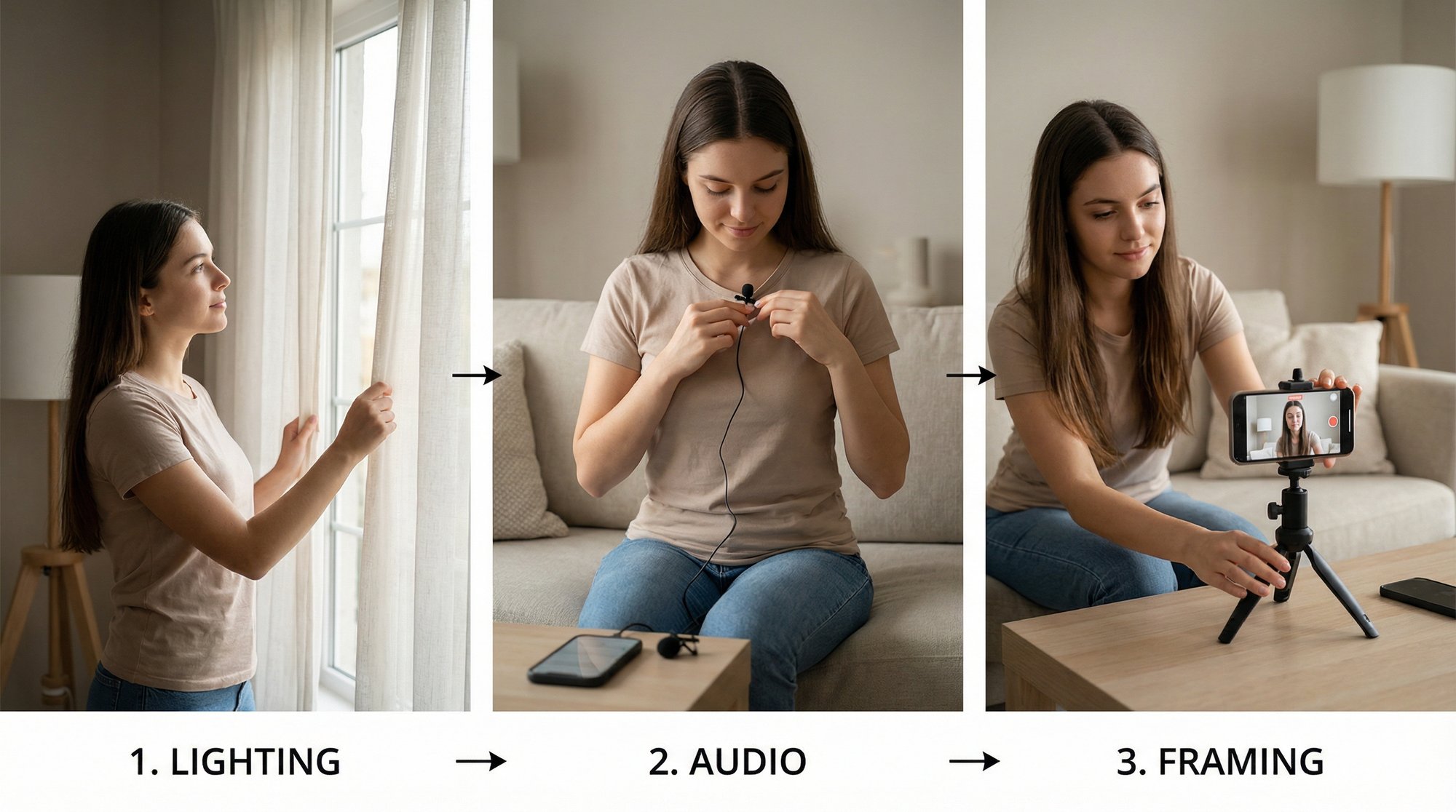
The idea couldn't be simpler: record yourself speaking. Seriously. Pull out your phone, hit record, and just talk about a topic from one of your content pillars for 15-20 minutes. No script, no fancy lighting, just your raw, unfiltered expertise. This one recording is the seed from which an entire forest of content will grow. It completely sidesteps writer's block and, more importantly, captures your authentic voice—the very thing that builds a real connection with your audience.
From Spoken Idea to Content Ecosystem
Think about this: one unscripted video could fuel your entire marketing presence for a week. We're not just talking about being efficient; we're talking about smart multiplication. You’re turning a tiny time investment into a steady stream of content, each piece perfectly suited for different platforms and how people consume information there.
From that one piece of raw footage, you can easily spin off:
A dozen short-form videos: These are the polished, punchy clips for platforms like Instagram Reels, TikTok, and LinkedIn. Each clip hones in on a single powerful moment or idea from your original ramble.
A detailed blog post: That video transcript is now the skeleton of an in-depth article. All you have to do is flesh it out, add some details, and hit publish.
A LinkedIn carousel: Pull out the key takeaways or a step-by-step process from your talk and visualize them in a swipeable, engaging carousel post.
A weekly newsletter: The core theme of your video becomes the perfect anchor for your newsletter. You can add some personal commentary and behind-the-scenes flavor to make it exclusive.
The whole system starts with having a sharp, well-defined niche. When you know exactly who you're talking to and what problems you solve, every piece of content you create will land with impact.

As you can see, a powerful engine needs high-octane fuel. A clear niche—the intersection of your expertise, your audience's needs, and a gap in the market—is that fuel.
To show how this works in practice, here is a breakdown of how a single spoken asset can be multiplied across your channels.
Spoken-First Content Repurposing Workflow
Source Asset | Repurposed Format | Target Platform | Key Benefit |
|---|---|---|---|
20-min unscripted video | 1-min vertical video clip | Instagram Reels, TikTok | High engagement, algorithm-friendly |
20-min unscripted video | LinkedIn Carousel (PDF) | Educational, high-shareability | |
20-min unscripted video | Full-length blog post | Website/Blog | SEO value, long-term asset |
20-min unscripted video | Email Newsletter | Email List | Nurtures community, drives traffic |
20-min unscripted video | Quote graphics | Twitter, Instagram Stories | Quick, snackable content |
This table isn't just a theory; it's a playbook for dominating your niche without burning out. You record once and publish everywhere, all week long.
Why This System Works
Just "winging it" is not a strategy. The spoken-first model is a system, and the difference between amateurs and pros is that the pros document their systems. The data backs this up: companies with a documented strategy see 46% higher conversion rates. For a founder, this means systematically turning a quick video recording into a series of professional Reels that actually drive business goals.
And people are watching. With short-form video usage now over 60% and interactive content users reporting 44.4% success rates, this workflow puts you squarely in front of your audience where they're already spending their time.
The goal is to make your expertise the hero, not your production skills. You talk, and the system creates. This frees you up to focus on running your business while your personal brand grows on autopilot.
This system is all about getting the maximum possible output from the minimum input, without sacrificing an ounce of quality or authenticity. For more on this, check out our guide on how to scale content creation.
A Real-World Workflow Example
Let’s make this concrete. Say you’re a SaaS founder, and one of your content pillars is "Bootstrapping to Your First 100 Customers."
Here’s what your week could look like:
Monday (Record): You block off 30 minutes. You hit record on your phone and talk about "The three non-obvious ways we got our first 10 customers without a marketing budget."
Tuesday (Produce): You upload that single video file. It gets transcribed and cleverly edited into multiple short video clips, each highlighting one of your three "non-obvious" customer acquisition tactics.
Wednesday (Distribute): You post the first short video to LinkedIn and Reels, telling the compelling story of how you landed your very first customer.
Thursday (Repurpose): The transcript is polished into a full blog post and published on your site, titled "My Playbook for Landing Your First 10 SaaS Customers."
Friday (Engage): You share a second video clip about a unique outreach method you used. Then, you send your weekly newsletter, linking to the full blog post and adding a few extra personal thoughts.
In one week, from just one 30-minute recording session, you've created two videos, a full blog post, and a newsletter. Every single piece is aligned, valuable, and authentic. This is how you build a powerful and efficient thought leadership machine that works for you, not the other way around.
Master Your Distribution and Engagement Strategy

Look, creating incredible content is a huge win, but it’s only half the job. If no one sees your brilliant insights, they don’t actually exist. This is the moment your strategy shifts from creation to distribution—and it needs to be just as intentional. The goal isn't just to post things online; it's to spark real conversations and build a community that hangs on your every word.
To do that, you need a system. A repeatable weekly cadence is what separates the pros from the people just shouting into the void. It’s about getting your content in front of the right eyeballs at the right time. But it's so much more than scheduling posts. True engagement means actively starting dialogues, adding value in the comments, and forging genuine relationships.
Define Your Primary and Secondary Platforms
You can't be everywhere at once. Don't even try—it's a recipe for burnout and mediocre results. The smart move is to focus your energy where it will have the most impact. For most founders and professionals, that means picking one primary platform and a couple of secondary ones for support.
Primary Platform: This is your home base. It’s where your ideal audience hangs out and talks shop. For anyone in B2B, LinkedIn is the undisputed king. This is where you’ll post your most in-depth thoughts, share compelling stories, and dedicate the bulk of your engagement time.
Secondary Platforms: Think of these as your amplifiers. Channels like X (formerly Twitter), Instagram Reels, or even TikTok are perfect for sharing repurposed video clips and bite-sized takeaways. The goal here is to drive awareness and pull people back to your main hub on LinkedIn or your website.
The real trick is to treat each platform like its own unique ecosystem. A thoughtful, text-heavy post that absolutely kills it on LinkedIn will fall completely flat as an Instagram Reel. Your distribution plan has to respect the native format and culture of each channel.
A Practical Weekly Distribution Cadence
Consistency is the engine that builds authority. When you have a structured weekly plan, you eliminate the daily "what should I post?" scramble and ensure you're consistently delivering value.
Here's a simple, effective cadence that works perfectly with the spoken-first content engine we've been talking about.
Day | Action | Platform | Goal |
|---|---|---|---|
Monday | Post a thought-provoking video clip, wrapping it in a personal story or sharp insight. | Kick off the week with strong engagement and set the theme. | |
Tuesday | Share a different clip from that same recording on a secondary channel. | Instagram/X | Reach a different slice of your audience and build cross-platform buzz. |
Thursday | Post a text-only deep dive or a carousel that expands on the week's core topic. | Deliver deeper value and showcase your expertise in a new format. | |
Friday | Share your content in relevant niche communities ('Dark Social'). | Slack/Discords | Get targeted feedback, drive initial traffic, and connect with die-hard fans. |
This rhythm ensures you’re not just being repetitive. You're exploring one core idea from multiple angles and in different formats, which keeps your audience hooked and hammers your message home.
Go Beyond Posting—Start Engaging
Dropping a link and walking away is not a strategy. It's spam. The real magic, the part that builds a loyal tribe, happens in the conversation that follows your post. You should make it your mission to respond to every single comment. And a simple "thanks!" doesn't count.
The quality of your engagement is a direct reflection of your authority. Acknowledge comments, ask follow-up questions, and tag other experts when relevant. This transforms your post from a monologue into a valuable community discussion.
When someone takes the time to leave a thoughtful comment, treat it like gold. Ask them to expand on their point or share a related experience. Not only does this make them feel seen and valued, but it also enriches the conversation for everyone else reading the thread. This is how you build a real following.
The Power of Dark Social
Some of your most valuable distribution opportunities are the ones happening behind the scenes. 'Dark social' is the term for sharing content in private channels—think Slack communities, Discord servers, or even group DMs. These closed-off groups often contain your most engaged and relevant audience.
But don't just drop a link and run. Provide context. Try something like, "Hey team, this topic came up in our chat last week, so I recorded a short video with my take on it. I'd love to hear what you all think." That approach feels collaborative and personal, not self-promotional. It’s an incredibly powerful way to get early traction on a post while building deep connections with influential people in your niche. Master both public and private distribution, and your thought leadership will build unstoppable momentum.
Measure What Matters to Prove Your ROI

Let’s be honest for a second. It's time to kill the obsession with likes, views, and follower counts. These are vanity metrics. They feel great, sure, but they tell you next to nothing about your business.
A real thought leadership strategy draws a straight line from your content to actual business outcomes. Are people booking demos after seeing your LinkedIn videos? Are inbound leads telling your sales team, "I've been following your founder's stuff for months"? These are the signals that prove your effort is paying off.
Moving Beyond Feel-Good Numbers
The big trap with vanity metrics is that they’re easy to chase and often meaningless. A viral video might rack up 100,000 views from an audience that will never buy from you. On the other hand, a single, targeted video that brings one perfect-fit customer to your door is infinitely more valuable.
You have to shift your entire mindset. Stop asking, "How many people saw this?" and start asking, "What did the right people do after they saw this?" This simple reframe is the secret to proving the actual return on your investment.
Your time and expertise are valuable. Proving ROI isn't just for your boss or board—it's for you. It confirms you're investing your energy in a system that delivers compounding returns, not just shouting into the void.
This measurement problem is a huge deal in the industry. While 96% of marketers are out there creating thought leadership, a tiny 4% feel their programs are actually "leading" in their space. A big reason for this disconnect is a failure to measure what matters, even though 65% of decision-makers spend at least an hour every week consuming this exact type of content to vet vendors. It shows that consistent, high-quality content tied to business goals is what truly builds trust and influences buyers—not just volume.
The Business Metrics That Truly Matter
To prove your strategy is delivering, you need to track numbers that connect directly to your business goals. These are the metrics that will justify every minute and dollar you invest.
Here's what you should be laser-focused on:
Content-Attributed Leads: This is your bread and butter. How many demo requests or contact form submissions came directly from a piece of content? You absolutely must have a "How did you hear about us?" field on your forms to capture this data. Make it a required field.
Sales Cycle Velocity: Are the leads who engaged with your content closing faster than those who didn't? Track the time from their first touchpoint to the moment the deal is signed. Shorter sales cycles mean you're saving time and money.
Conversation Quality: This one is qualitative but incredibly powerful. When you get on a sales call, do prospects already get your philosophy? When they say things like, "I already know about your approach from your videos," you've won half the battle before the call even started.
Of course, your content doesn't live in a vacuum. To really see results, you need to ensure every piece of content is working overtime. By exploring different content repurposing strategies, you can dramatically extend the life and reach of your best ideas, making sure every insight contributes to that compounding ROI.
Set Up a Monthly Review
Data is completely useless if you don't look at it. You need to set aside time every single month to review what’s happening. This isn't just about glancing at a dashboard; it's about asking tough questions and finding real answers.
During your monthly review, dig into these questions:
Which topics hit a nerve? Look for the themes that generated the most thoughtful comments, DMs, and actual lead inquiries.
Which formats performed best? Did your short video clips crush your text-only posts? Did carousels drive more shares and saves?
Which channels actually drove results? Is LinkedIn sending you qualified leads while X (formerly Twitter) is just generating noise?
This simple review process turns your content strategy from a static document into a living, breathing system. It helps you double down on what’s working and mercilessly cut what isn’t, ensuring your effort always delivers a measurable impact.
Common Questions (and Real Answers) About Thought Leadership
Even with the best strategy in hand, you're bound to hit a few mental roadblocks. It happens to everyone. Let's walk through the most common questions I hear from founders and get you the straight-up, practical answers you need to keep moving forward.
How in the World Do I Find Time for This?
This is, without a doubt, the number one question. The answer isn't about finding more hours in the day—it's about radically changing how you create. The whole "spoken-first" approach is built for people like you.
Seriously, forget blocking off half a day to stare at a blank page. Instead, find one 30-minute slot in your week. Just one. Use it to talk, unscripted, about something you know inside and out. No fancy setup, no script—just you, your phone, and your genuine insights. A good production partner can take that raw recording and spin it into a full week’s worth of great videos and posts.
This completely flips the script. You stop being a bottleneck and get back to running your business, while your content engine runs on its own.
What if I Have Nothing New or Unique to Say?
I hear this all the time, and it’s almost always a classic case of imposter syndrome. You're not alone in feeling this way. But here's the secret: your unique angle doesn't come from having some earth-shattering, never-before-heard idea. It comes from your unique story.
Your most powerful asset is your personal journey. Stop trying to be the ultimate authority on everything and just start documenting what you're actually doing and learning. Specificity is always more interesting than generic advice.
Don't just talk about "marketing." Talk about the scrappy tactics you used to land your first 50 customers with a $100 budget. Don't pontificate on "hiring." Share the one interview question that told you everything you needed to know about a candidate’s grit.
That’s your gold. Your perspective, your wins, your screw-ups—that's what no one else has.
How Long Does This Actually Take to Work?
Let’s be real: thought leadership is a long game. It's a marathon, not a sprint. While you might see some encouraging signs early on—like better comments or more profile views in the first month—the real business impact, like a steady stream of people reaching out to you, usually starts to show up after 3 to 6 months of consistent posting.
Consistency is the whole game.
Putting out valuable content once or twice a week for six months is infinitely better than posting every day for two weeks and then burning out. The momentum you build is cumulative. Look for these early signs that you’re on the right track:
The DMs and comments you get start to feel more like real conversations.
You see more connection requests from the exact people you want to work with.
People start mentioning you or your ideas in their own posts.
Those are the green shoots. They're proof that a real harvest is on its way.
Should I Be Professional or Personal?
The magic happens when you're both. The sweet spot is being "professionally personal."
Your content should be rooted in your professional expertise, but it needs to be delivered with your authentic human voice. People don't connect with logos; they connect with other people. This is precisely why unscripted video is so effective—it’s the perfect blend of your hard-earned knowledge and your real personality. It builds trust faster than a dry, corporate-sounding blog post ever could.
So share your opinions. Tell stories about your struggles and what you learned. Don't be afraid to be a real person. Your audience will reward you for it with their attention, and eventually, their trust.
Tired of the video editing grind? Unfloppable turns your spoken ideas into a week's worth of polished, ready-to-post short-form videos. You talk, we handle the rest. Try it now and get your first three videos for free.
Let's get one thing straight: a thought leadership content strategy isn’t about randomly posting your thoughts online. It's a deliberate, systematic plan for becoming the undisputed expert in your field. The goal is to consistently share unique and valuable insights that build unshakable trust, credibility, and authority with the people you want to reach.
Done right, this isn't just content. It's a magnet for business growth.
Why Thought Leadership Is Your Greatest Business Advantage

Today’s market is flooded with generic blog posts and marketing that all looks the same. A great product or service just isn't enough to cut through the noise anymore. Your most powerful differentiator? Authentic, expert-led content.
This approach completely reframes your relationship with potential customers. You stop being just another vendor and become their trusted advisor—the first person they think of when they need help. This isn't a vanity project; it's about turning your hard-earned expertise into tangible business results. When people already trust your point of view, sales cycles get shorter, deal sizes get bigger, and your brand becomes impossible to ignore.
The Shift to Human-Centric Content
Here's a simple truth: people don't connect with logos. They connect with other people. This is precisely why putting a founder or key executive front and center is such a powerful move. Their personal brand, driven by genuine insights and authentic stories, builds a level of trust that no faceless corporate campaign can ever hope to match. This human touch is absolutely essential for anyone looking to build executive presence and real influence.
It's also why unscripted, spoken-word content is so incredibly effective right now. It captures your true voice, personality, and expertise in a way that polished text can't, forging a direct and powerful connection with your audience.
Thought leadership has moved from a "nice-to-have" marketing tactic to a core business function. It’s no longer about just participating in the conversation; it’s about owning it.
A Proven Engine for Business Growth
The numbers don't lie. In the B2B world, thought leadership is a powerhouse. An incredible 97% of B2B marketers now see it as critical, especially when economic uncertainty makes audiences crave trustworthy guidance. The top performers in every industry are using it as their primary content engine to stand out.
This guide is your playbook for building that engine. We’re going to walk you through, step-by-step, how to turn the unique insights you already have into a measurable strategy that builds your authority and delivers real, bottom-line impact.
Find Your Angle, Then Build Your Pillars
So many founders get this wrong. They start creating content about "growth" or "marketing," and it just disappears into the noise. Why? Because it sounds exactly like everyone else. The single biggest lever you have is a specific, defensible point of view that only you can own.
This isn't about shouting the loudest. It's about being distinct. Real authority isn't built on generic topics; it's carved out from a specific "expertise niche." This sweet spot is where your hard-won professional experience meets your audience's biggest frustrations and the blind spots in your market.
How to Unearth Your Unique Angle
Here’s the thing: you already have a unique perspective. It's been forged through every project, every win, and especially every failure. Your job now is to dig it up and put it into words.
Forget about just listing what your competitors are talking about. Instead, listen for the lazy, mainstream assumptions they all echo. Where are the contrarian—but true—ideas hiding? What’s the one thing everyone in your industry accepts as fact that you know is wrong? That’s where the gold is.
A great way to get the wheels turning is to study some potent thought leadership content examples and see how others have done it. Seeing their success can spark ideas for your own unique space.
Your real goal is to land on a perspective that feels both completely authentic to you and refreshingly new to your audience. This is where influence is born—not from repeating old wisdom, but from challenging it with insights you’ve earned in the trenches.
Ask yourself these questions. Be brutally honest.
What popular industry belief do I completely disagree with, and why?
What’s a frustrating problem my ideal customer has that nobody seems to be solving the right way?
If I could teach only one lesson from my entire journey, what would it be?
Answering these questions pulls you away from bland, forgettable advice. It helps you plant a flag and claim your territory. This is the heart of niching down, a critical step in building a brand that actually gets noticed. You can learn more about niching down in our article on the topic.
Turning Your Perspective into Content Pillars
Once you’ve sharpened your core message, you need to break it down into 3-5 content pillars. These are the foundational themes you’ll return to again and again. They're the guardrails that keep your content focused, ensuring every post and video reinforces your specific expertise.
Think of them as the major chapters in your personal "book of knowledge." They need to be specific enough that you can truly own them, yet broad enough that you can pull endless content ideas from them.
Let's make this real.
Imagine you're the founder of a bootstrapped SaaS company.
Generic Pillar: "SaaS Growth" (You'll be competing with thousands of VCs and growth hackers.)
Specific Pillar: "Scrappy Growth for Bootstrappers" (Now that’s a perspective you can own.)
With a pillar like that, the content practically writes itself. You could create videos on hiring your first developer without offering crazy equity, write posts on pricing strategies that don't depend on a nine-figure fundraise, or share stories about landing your first 100 customers with a $0 marketing budget. Every single piece reinforces your unique angle.
Brainstorming Your Own Pillars
Ready to define yours? Grab a notebook and write your core perspective at the very top of the page. Now, just start brainstorming all the sub-topics, stories, and lessons that support that big idea. Group them together until 3 to 5 clear, powerful themes emerge.
Here’s one more example to get you thinking:
A marketing consultant who works with D2C brands might land on this:
Core Perspective: "D2C brands fail because they build products before they build an audience."
Pillar 1: The Audience-First Flywheel
Pillar 2: Building Community on a $0 Budget
Pillar 3: Using Content to Prototype Your Next Product
See how that works? The pillars are sharp, they offer a clear promise, and they all flow directly from a strong, contrarian thesis. This simple framework is the bedrock of a content strategy that actually works, giving every piece of content you create a clear and compelling job to do.
Build an Efficient Spoken-First Content Engine
Alright, let's get tactical. This is where your thought leadership strategy stops being an idea and starts becoming a real, repeatable process. If you’ve ever stared at a blank page or felt the dread of a content calendar, I'm going to show you a better way.
The most efficient—and authentic—way to create high-value content is to simply start talking. This is what I call the spoken-first content engine. It's a workflow designed from the ground up to get more content out of you in less time, all by starting with what you already know and can say off the cuff.
The idea couldn't be simpler: record yourself speaking. Seriously. Pull out your phone, hit record, and just talk about a topic from one of your content pillars for 15-20 minutes. No script, no fancy lighting, just your raw, unfiltered expertise. This one recording is the seed from which an entire forest of content will grow. It completely sidesteps writer's block and, more importantly, captures your authentic voice—the very thing that builds a real connection with your audience.
From Spoken Idea to Content Ecosystem
Think about this: one unscripted video could fuel your entire marketing presence for a week. We're not just talking about being efficient; we're talking about smart multiplication. You’re turning a tiny time investment into a steady stream of content, each piece perfectly suited for different platforms and how people consume information there.
From that one piece of raw footage, you can easily spin off:
A dozen short-form videos: These are the polished, punchy clips for platforms like Instagram Reels, TikTok, and LinkedIn. Each clip hones in on a single powerful moment or idea from your original ramble.
A detailed blog post: That video transcript is now the skeleton of an in-depth article. All you have to do is flesh it out, add some details, and hit publish.
A LinkedIn carousel: Pull out the key takeaways or a step-by-step process from your talk and visualize them in a swipeable, engaging carousel post.
A weekly newsletter: The core theme of your video becomes the perfect anchor for your newsletter. You can add some personal commentary and behind-the-scenes flavor to make it exclusive.
The whole system starts with having a sharp, well-defined niche. When you know exactly who you're talking to and what problems you solve, every piece of content you create will land with impact.

As you can see, a powerful engine needs high-octane fuel. A clear niche—the intersection of your expertise, your audience's needs, and a gap in the market—is that fuel.
To show how this works in practice, here is a breakdown of how a single spoken asset can be multiplied across your channels.
Spoken-First Content Repurposing Workflow
Source Asset | Repurposed Format | Target Platform | Key Benefit |
|---|---|---|---|
20-min unscripted video | 1-min vertical video clip | Instagram Reels, TikTok | High engagement, algorithm-friendly |
20-min unscripted video | LinkedIn Carousel (PDF) | Educational, high-shareability | |
20-min unscripted video | Full-length blog post | Website/Blog | SEO value, long-term asset |
20-min unscripted video | Email Newsletter | Email List | Nurtures community, drives traffic |
20-min unscripted video | Quote graphics | Twitter, Instagram Stories | Quick, snackable content |
This table isn't just a theory; it's a playbook for dominating your niche without burning out. You record once and publish everywhere, all week long.
Why This System Works
Just "winging it" is not a strategy. The spoken-first model is a system, and the difference between amateurs and pros is that the pros document their systems. The data backs this up: companies with a documented strategy see 46% higher conversion rates. For a founder, this means systematically turning a quick video recording into a series of professional Reels that actually drive business goals.
And people are watching. With short-form video usage now over 60% and interactive content users reporting 44.4% success rates, this workflow puts you squarely in front of your audience where they're already spending their time.
The goal is to make your expertise the hero, not your production skills. You talk, and the system creates. This frees you up to focus on running your business while your personal brand grows on autopilot.
This system is all about getting the maximum possible output from the minimum input, without sacrificing an ounce of quality or authenticity. For more on this, check out our guide on how to scale content creation.
A Real-World Workflow Example
Let’s make this concrete. Say you’re a SaaS founder, and one of your content pillars is "Bootstrapping to Your First 100 Customers."
Here’s what your week could look like:
Monday (Record): You block off 30 minutes. You hit record on your phone and talk about "The three non-obvious ways we got our first 10 customers without a marketing budget."
Tuesday (Produce): You upload that single video file. It gets transcribed and cleverly edited into multiple short video clips, each highlighting one of your three "non-obvious" customer acquisition tactics.
Wednesday (Distribute): You post the first short video to LinkedIn and Reels, telling the compelling story of how you landed your very first customer.
Thursday (Repurpose): The transcript is polished into a full blog post and published on your site, titled "My Playbook for Landing Your First 10 SaaS Customers."
Friday (Engage): You share a second video clip about a unique outreach method you used. Then, you send your weekly newsletter, linking to the full blog post and adding a few extra personal thoughts.
In one week, from just one 30-minute recording session, you've created two videos, a full blog post, and a newsletter. Every single piece is aligned, valuable, and authentic. This is how you build a powerful and efficient thought leadership machine that works for you, not the other way around.
Master Your Distribution and Engagement Strategy

Look, creating incredible content is a huge win, but it’s only half the job. If no one sees your brilliant insights, they don’t actually exist. This is the moment your strategy shifts from creation to distribution—and it needs to be just as intentional. The goal isn't just to post things online; it's to spark real conversations and build a community that hangs on your every word.
To do that, you need a system. A repeatable weekly cadence is what separates the pros from the people just shouting into the void. It’s about getting your content in front of the right eyeballs at the right time. But it's so much more than scheduling posts. True engagement means actively starting dialogues, adding value in the comments, and forging genuine relationships.
Define Your Primary and Secondary Platforms
You can't be everywhere at once. Don't even try—it's a recipe for burnout and mediocre results. The smart move is to focus your energy where it will have the most impact. For most founders and professionals, that means picking one primary platform and a couple of secondary ones for support.
Primary Platform: This is your home base. It’s where your ideal audience hangs out and talks shop. For anyone in B2B, LinkedIn is the undisputed king. This is where you’ll post your most in-depth thoughts, share compelling stories, and dedicate the bulk of your engagement time.
Secondary Platforms: Think of these as your amplifiers. Channels like X (formerly Twitter), Instagram Reels, or even TikTok are perfect for sharing repurposed video clips and bite-sized takeaways. The goal here is to drive awareness and pull people back to your main hub on LinkedIn or your website.
The real trick is to treat each platform like its own unique ecosystem. A thoughtful, text-heavy post that absolutely kills it on LinkedIn will fall completely flat as an Instagram Reel. Your distribution plan has to respect the native format and culture of each channel.
A Practical Weekly Distribution Cadence
Consistency is the engine that builds authority. When you have a structured weekly plan, you eliminate the daily "what should I post?" scramble and ensure you're consistently delivering value.
Here's a simple, effective cadence that works perfectly with the spoken-first content engine we've been talking about.
Day | Action | Platform | Goal |
|---|---|---|---|
Monday | Post a thought-provoking video clip, wrapping it in a personal story or sharp insight. | Kick off the week with strong engagement and set the theme. | |
Tuesday | Share a different clip from that same recording on a secondary channel. | Instagram/X | Reach a different slice of your audience and build cross-platform buzz. |
Thursday | Post a text-only deep dive or a carousel that expands on the week's core topic. | Deliver deeper value and showcase your expertise in a new format. | |
Friday | Share your content in relevant niche communities ('Dark Social'). | Slack/Discords | Get targeted feedback, drive initial traffic, and connect with die-hard fans. |
This rhythm ensures you’re not just being repetitive. You're exploring one core idea from multiple angles and in different formats, which keeps your audience hooked and hammers your message home.
Go Beyond Posting—Start Engaging
Dropping a link and walking away is not a strategy. It's spam. The real magic, the part that builds a loyal tribe, happens in the conversation that follows your post. You should make it your mission to respond to every single comment. And a simple "thanks!" doesn't count.
The quality of your engagement is a direct reflection of your authority. Acknowledge comments, ask follow-up questions, and tag other experts when relevant. This transforms your post from a monologue into a valuable community discussion.
When someone takes the time to leave a thoughtful comment, treat it like gold. Ask them to expand on their point or share a related experience. Not only does this make them feel seen and valued, but it also enriches the conversation for everyone else reading the thread. This is how you build a real following.
The Power of Dark Social
Some of your most valuable distribution opportunities are the ones happening behind the scenes. 'Dark social' is the term for sharing content in private channels—think Slack communities, Discord servers, or even group DMs. These closed-off groups often contain your most engaged and relevant audience.
But don't just drop a link and run. Provide context. Try something like, "Hey team, this topic came up in our chat last week, so I recorded a short video with my take on it. I'd love to hear what you all think." That approach feels collaborative and personal, not self-promotional. It’s an incredibly powerful way to get early traction on a post while building deep connections with influential people in your niche. Master both public and private distribution, and your thought leadership will build unstoppable momentum.
Measure What Matters to Prove Your ROI

Let’s be honest for a second. It's time to kill the obsession with likes, views, and follower counts. These are vanity metrics. They feel great, sure, but they tell you next to nothing about your business.
A real thought leadership strategy draws a straight line from your content to actual business outcomes. Are people booking demos after seeing your LinkedIn videos? Are inbound leads telling your sales team, "I've been following your founder's stuff for months"? These are the signals that prove your effort is paying off.
Moving Beyond Feel-Good Numbers
The big trap with vanity metrics is that they’re easy to chase and often meaningless. A viral video might rack up 100,000 views from an audience that will never buy from you. On the other hand, a single, targeted video that brings one perfect-fit customer to your door is infinitely more valuable.
You have to shift your entire mindset. Stop asking, "How many people saw this?" and start asking, "What did the right people do after they saw this?" This simple reframe is the secret to proving the actual return on your investment.
Your time and expertise are valuable. Proving ROI isn't just for your boss or board—it's for you. It confirms you're investing your energy in a system that delivers compounding returns, not just shouting into the void.
This measurement problem is a huge deal in the industry. While 96% of marketers are out there creating thought leadership, a tiny 4% feel their programs are actually "leading" in their space. A big reason for this disconnect is a failure to measure what matters, even though 65% of decision-makers spend at least an hour every week consuming this exact type of content to vet vendors. It shows that consistent, high-quality content tied to business goals is what truly builds trust and influences buyers—not just volume.
The Business Metrics That Truly Matter
To prove your strategy is delivering, you need to track numbers that connect directly to your business goals. These are the metrics that will justify every minute and dollar you invest.
Here's what you should be laser-focused on:
Content-Attributed Leads: This is your bread and butter. How many demo requests or contact form submissions came directly from a piece of content? You absolutely must have a "How did you hear about us?" field on your forms to capture this data. Make it a required field.
Sales Cycle Velocity: Are the leads who engaged with your content closing faster than those who didn't? Track the time from their first touchpoint to the moment the deal is signed. Shorter sales cycles mean you're saving time and money.
Conversation Quality: This one is qualitative but incredibly powerful. When you get on a sales call, do prospects already get your philosophy? When they say things like, "I already know about your approach from your videos," you've won half the battle before the call even started.
Of course, your content doesn't live in a vacuum. To really see results, you need to ensure every piece of content is working overtime. By exploring different content repurposing strategies, you can dramatically extend the life and reach of your best ideas, making sure every insight contributes to that compounding ROI.
Set Up a Monthly Review
Data is completely useless if you don't look at it. You need to set aside time every single month to review what’s happening. This isn't just about glancing at a dashboard; it's about asking tough questions and finding real answers.
During your monthly review, dig into these questions:
Which topics hit a nerve? Look for the themes that generated the most thoughtful comments, DMs, and actual lead inquiries.
Which formats performed best? Did your short video clips crush your text-only posts? Did carousels drive more shares and saves?
Which channels actually drove results? Is LinkedIn sending you qualified leads while X (formerly Twitter) is just generating noise?
This simple review process turns your content strategy from a static document into a living, breathing system. It helps you double down on what’s working and mercilessly cut what isn’t, ensuring your effort always delivers a measurable impact.
Common Questions (and Real Answers) About Thought Leadership
Even with the best strategy in hand, you're bound to hit a few mental roadblocks. It happens to everyone. Let's walk through the most common questions I hear from founders and get you the straight-up, practical answers you need to keep moving forward.
How in the World Do I Find Time for This?
This is, without a doubt, the number one question. The answer isn't about finding more hours in the day—it's about radically changing how you create. The whole "spoken-first" approach is built for people like you.
Seriously, forget blocking off half a day to stare at a blank page. Instead, find one 30-minute slot in your week. Just one. Use it to talk, unscripted, about something you know inside and out. No fancy setup, no script—just you, your phone, and your genuine insights. A good production partner can take that raw recording and spin it into a full week’s worth of great videos and posts.
This completely flips the script. You stop being a bottleneck and get back to running your business, while your content engine runs on its own.
What if I Have Nothing New or Unique to Say?
I hear this all the time, and it’s almost always a classic case of imposter syndrome. You're not alone in feeling this way. But here's the secret: your unique angle doesn't come from having some earth-shattering, never-before-heard idea. It comes from your unique story.
Your most powerful asset is your personal journey. Stop trying to be the ultimate authority on everything and just start documenting what you're actually doing and learning. Specificity is always more interesting than generic advice.
Don't just talk about "marketing." Talk about the scrappy tactics you used to land your first 50 customers with a $100 budget. Don't pontificate on "hiring." Share the one interview question that told you everything you needed to know about a candidate’s grit.
That’s your gold. Your perspective, your wins, your screw-ups—that's what no one else has.
How Long Does This Actually Take to Work?
Let’s be real: thought leadership is a long game. It's a marathon, not a sprint. While you might see some encouraging signs early on—like better comments or more profile views in the first month—the real business impact, like a steady stream of people reaching out to you, usually starts to show up after 3 to 6 months of consistent posting.
Consistency is the whole game.
Putting out valuable content once or twice a week for six months is infinitely better than posting every day for two weeks and then burning out. The momentum you build is cumulative. Look for these early signs that you’re on the right track:
The DMs and comments you get start to feel more like real conversations.
You see more connection requests from the exact people you want to work with.
People start mentioning you or your ideas in their own posts.
Those are the green shoots. They're proof that a real harvest is on its way.
Should I Be Professional or Personal?
The magic happens when you're both. The sweet spot is being "professionally personal."
Your content should be rooted in your professional expertise, but it needs to be delivered with your authentic human voice. People don't connect with logos; they connect with other people. This is precisely why unscripted video is so effective—it’s the perfect blend of your hard-earned knowledge and your real personality. It builds trust faster than a dry, corporate-sounding blog post ever could.
So share your opinions. Tell stories about your struggles and what you learned. Don't be afraid to be a real person. Your audience will reward you for it with their attention, and eventually, their trust.
Tired of the video editing grind? Unfloppable turns your spoken ideas into a week's worth of polished, ready-to-post short-form videos. You talk, we handle the rest. Try it now and get your first three videos for free.