How to Monetize YouTube Shorts A Founder's Guide to Real Revenue

Learn how to monetize YouTube Shorts beyond basic ads. Discover proven strategies for sponsorships, affiliate marketing, and driving business growth.

Feb 6, 2026

Let's cut right to the chase. Making money on YouTube Shorts isn’t just about getting a slice of ad revenue. For founders and entrepreneurs, it’s about building a powerful, audience-driven engine for your business.

The most obvious path is the YouTube Partner Program (YPP), and yes, the entry requirements are steep: 1,000 subscribers and 10 million valid Shorts views in the last 90 days. Getting into the YPP unlocks that direct ad revenue, but honestly, that's just the tip of the iceberg.

Your Roadmap To Monetizing YouTube Shorts

The real money for a business owner isn't in the fractional cents per view. It's in using your Shorts audience for far more lucrative strategies—think affiliate marketing, high-ticket brand sponsorships, and, most importantly, driving sales for your own products and services.

Think of your Shorts channel as the ultimate top-of-funnel machine. It's built to rapidly attract an audience that you can then guide toward your core business offerings. This guide will walk you through exactly how to do that, focusing on real-world tactics that deliver tangible results, not just vanity metrics.

The Three Pillars Of Shorts Monetization

When you boil it down, earning a real income from Shorts comes down to three main avenues. You can pick one and go deep, but the smartest creators I know blend all three into a cohesive strategy. This diversification protects you from the notoriously unpredictable nature of ad revenue.

Here’s a quick look at the core ways you can turn your Shorts views into dollars, from direct platform payouts to fully integrated business income.

Infographic detailing three primary methods for YouTube Shorts monetization: YPP, Brands, and Products.

As you can see, the journey starts with hitting those YPP milestones but quickly evolves into brand collaborations and selling your own stuff. Each step represents a significant leap in your potential earnings.

To give you a clearer picture, here’s a quick breakdown of how these different paths stack up.

YouTube Shorts Monetization Pathways at a Glance

This table summarizes the main ways you can make money with Shorts, giving you a realistic look at what's required and what you can expect to earn.

Monetization Method

Requirements

Earning Potential (Example)

YouTube Partner Program (YPP)

1,000 subs & 10M Shorts views (90 days)

$100 - $600 per month for a channel with several million views.

Brand Sponsorships & Deals

Engaged audience, consistent niche, media kit.

$500 - $5,000+ per video for a mid-sized creator.

Affiliate Marketing

Trust with your audience, relevant products.

$200 - $2,000+ per month, highly dependent on product price and conversion.

Selling Your Own Products/Services

A clear offer (course, coaching, SaaS, etc.).

Unlimited. Can easily become your primary revenue stream.

Ultimately, the best strategy is a mix-and-match approach. You can use YPP revenue to cover operational costs while affiliate income provides a steady baseline and your own product sales create exponential growth.

How To Build A Sustainable Content Machine

Consistency is everything on Shorts. But for a founder who’s already wearing a dozen hats, the time commitment can feel completely overwhelming. The secret isn't to work harder; it's to build a smarter system that lets you publish consistently without derailing your actual business.

The biggest mistake I see founders make is treating content creation like a separate, time-sucking chore. The ones who win integrate it into their workflow. They batch their core ideas and then delegate everything else. It’s about building a scalable content machine, not giving yourself a second job.

A streamlined workflow is absolutely non-negotiable. This means you focus your limited time on what only you can do—sharing your expertise—and offload the tedious, technical post-production work. For example, a founder could record 10-15 raw video ideas in an hour and then use a service like Unfloppable to handle all the editing, captioning, and polishing. That’s how you scale.

Your monetization plan is worthless if you can't produce the content to fuel it. We’re going to cover how to master:

  • Direct Monetization: Getting into the YPP and understanding how the Shorts ad revenue share actually works.

  • Indirect Monetization: Landing brand deals, finding the right affiliate partners, and negotiating your worth.

  • Business Integration: Using Shorts as a lead magnet to drive traffic and sales for your own offers.

This guide is your roadmap. Let’s start with the foundational piece of the puzzle: getting accepted into the YouTube Partner Program.

Cracking the Code of the YouTube Partner Program

If you want to earn money directly from your Shorts, the first stop is the YouTube Partner Program (YPP). This is your official ticket to getting a piece of the ad revenue action, and YouTube has laid out a very specific path for Shorts creators.

A person holds a smartphone displaying a logo, next to a laptop screen showing 'Monetize Shorts' and the same logo.

Before a single dollar comes your way from ads, your channel needs to hit some key milestones. While the traditional route for long-form video is still an option, YouTube created a high-speed lane just for Shorts creators.

Meeting the Shorts Eligibility Threshold

To qualify for the YPP purely through your Shorts, you need to hit two main targets. Think of it less like a marathon and more like a sprint that rewards viral moments and consistent, high-impact content.

Here are the magic numbers:

  • 1,000 Subscribers: This is the bedrock. It proves you're building an actual community, not just getting fleeting views.

  • 10 Million Public Shorts Views in 90 Days: This is the big one. Hitting this number shows YouTube your content has mass appeal and can hold its own in the fast-paced Shorts feed.

Once you’ve conquered these goals, you can head straight to the "Earn" tab in your YouTube Studio and apply. The review is usually pretty quick, mostly to make sure your channel plays by the rules and follows all of YouTube’s community and monetization policies.

For founders, don't just see these as numbers to unlock ad revenue. Hitting 10 million views is a massive proof of concept. It means you’ve found a message that grabs attention—an audience you can eventually guide toward your actual products or services.

How Shorts Ad Revenue Actually Works

Okay, so you made it into the YPP. Congrats! Now, how does the money actually get from an advertiser to your bank account? It's a bit different from how traditional YouTube videos work, and wrapping your head around it is crucial for setting expectations.

With Shorts, ads don't play before or during your video. Instead, they pop up between videos as people swipe through the feed. Because of this, the revenue from those ads gets pooled together and then distributed to all the eligible creators.

It's a multi-step process:

  1. Revenue Pooling: All the money from ads that run in the Shorts feed gets tossed into one big pot.

  2. Covering Music Costs: First, YouTube uses some of that money to pay for music licensing. So, if you used a trending song, this is where the artists and labels get their cut.

  3. The Creator Pool: Whatever is left over becomes the "Creator Pool." This is the money that will be divided among creators.

  4. Your Slice of the Pie: The pool is then distributed based on your share of total views. If your Shorts got 1% of all eligible views in your country this month, you get 1% of the Creator Pool.

  5. The Final Payout: You keep 45% of whatever amount was allocated to you.

The system is built to reward volume and consistency. The more views you rack up, the bigger your share of the Creator Pool.

Setting Realistic Earning Expectations

Let's get down to brass tacks: how much cash are we talking about? While hitting millions of views sounds like you'll be rolling in dough, Shorts ad revenue is very much a volume game.

The RPM (Revenue Per Mille), which is what you earn for every 1,000 views, is way lower for Shorts than for long-form videos. Let's say you hit that 10 million view goal in 90 days. While that's your golden ticket into the YPP, the payout might be more modest than you think.

With average RPMs for Shorts sitting between $0.03 and $0.10, those 10 million views could translate to anywhere from $300 to $1,000. The exact amount really depends on your audience's location and your niche. For example, finance and business Shorts often command higher RPMs ($0.08-$0.20), while a gaming channel might be closer to $0.02-$0.06. You can dig deeper into how Shorts monetization works in 2026 on YouTube Tools Hub.

This is why your niche matters so much. A channel breaking down stock market trends will attract higher-paying advertisers than one showing cat videos. As a founder, this is actually great news—your content is likely focused on business, tech, or finance, which naturally sits at the higher end of the RPM spectrum. You have a built-in advantage from day one.

Moving Beyond Ad Revenue: The Real Money-Makers

Let's be blunt: you're not going to get rich from the Shorts ad revenue share alone. While it's a nice little bonus, thinking of it as your primary income source is a mistake. The real power of Shorts isn't the direct payout—it's the massive, top-of-funnel attention it generates.

For founders and entrepreneurs, this is where the lightbulb should go on. Every 60-second video is a potential lead magnet, a brand-building powerhouse, and a direct path to customers. You're using the Shorts feed's incredible reach to build an audience you can then guide toward far more lucrative opportunities.

Here are the strategies that separate the hobbyists from the serious business builders.

Cashing In On Brand Deals and Sponsorships

Once you've carved out a dedicated audience in a specific niche, your channel becomes valuable digital real estate. Brands are desperate to connect with engaged communities, and they'll pay good money to do it through a voice people trust. Honestly, a single sponsored Short can easily eclipse what you'd make in a month from ad revenue.

But these deals don't just fall into your lap. You have to be proactive.

  • Build Your Creator "Resume": Get a professional media kit together. This isn't optional. It needs to showcase your channel analytics (subs, average views, audience demographics), highlight your best-performing videos, and clearly define who your audience is.

  • Find the Right Fit: Make a dream list of brands whose products you actually use and respect. If you're a founder who talks about productivity, you should be pitching SaaS companies, not the latest fashion trend. Your audience can smell a disingenuous partnership from a mile away.

  • Nail the Pitch: Find the right marketing contact and send a sharp, concise email. Introduce yourself, attach the media kit, and—this is key—propose a specific video idea. It shows you've done your homework and aren't just spamming for a handout.

The best sponsorships never feel like ads. They feel like a genuine recommendation from a trusted source. When you can seamlessly weave a product into your content, it’s a win for you, the brand, and your audience. That’s the gold standard.

Unlocking Affiliate Marketing

Affiliate marketing is probably the most organic way to monetize your content because it’s built on the trust you’ve already earned. You find a product you love, recommend it to your audience, and get a commission when they buy through your link. Simple. You're helping your viewers find cool stuff and building a passive income stream at the same time.

The biggest challenge is getting people from the video to your link, since Shorts themselves aren't clickable. You have to be smart about it.

  • The Pinned Comment Trick: This is your go-to move. Mention the product in your Short and tell people—literally say the words—"the link is in the pinned comment below." It's direct and effective.

  • Flash a QR Code: For a more tech-savvy approach, you can pop a QR code on screen for a few seconds. This is brilliant for physical products or software, as people can just point their phone at the screen while watching.

  • The Classic "Link in Bio": A tried-and-true method. Funnel all your traffic to the main link on your channel's profile. This is perfect if you have a page with a collection of your favorite tools or products.

Just remember, your credibility is your most valuable asset. Don't shill for products you don't believe in just to make a quick buck. It's a short-sighted strategy that will burn your audience's trust.

Selling Your Own Stuff (The End Game)

For any founder or entrepreneur on YouTube, this is the ultimate goal. Brand deals are great, and affiliate links are a nice bonus, but nothing beats the margin and control you get from selling your own products and services. Your Shorts essentially become a free, massive advertising engine.

It doesn't matter if you're selling a digital course, a SaaS subscription, physical goods, or consulting services. The playbook is the same.

You create Shorts that provide upfront value, establish your expertise, and position your product as the natural next step for your audience. A software founder might share quick tips that secretly showcase their app's features. A fitness coach could post workout clips that lead to a full program.

The strategy is always to educate and entertain first. You build a community that trusts you, and when you finally ask for the sale, they're ready and willing to buy.

How to Optimize Shorts for Maximum Revenue

Just throwing Shorts out there and hoping for the best isn't a strategy—it's a lottery ticket. If you're serious about making money with YouTube Shorts, you need to be deliberate. Every single second of your video has to be engineered to grab attention and refuse to let go. This isn't just about views; it's about building a system where more views translate directly into more ad revenue, more subscribers, and ultimately, more business.

A laptop displaying an analytics dashboard sits on a wooden desk next to a black box labeled 'Multiple Income Streams'.

Forget chasing viral fads. Let's dig into the repeatable tactics that turn a simple Short from just another piece of content into a profitable asset for your brand.

Master the Three-Second Hook

The Shorts feed is brutal. You have, at most, three seconds to stop someone from swiping away. If your opening is weak, you're done. Your first few frames must act as a "pattern interrupt"—something that jolts the viewer out of their mindless scrolling.

Here’s how to do it:

  • Ask a Provocative Question: Start with something your ideal customer is desperate to know. A marketing channel might kick off with, "Is your landing page leaking money?" It's direct and creates an immediate need for the answer.

  • Make a Bold Statement: Lead with a surprising or controversial claim that makes people stop and think. For example, a finance creator could say, "This one investment mistake is costing you thousands." Curiosity is a powerful force.

  • Use Abrupt Visuals or Motion: A quick zoom, a sudden jump cut, or an unexpected visual can physically stop the thumb. It signals that something dynamic and interesting is about to happen.

Keep It Short and Sweet for Maximum Retention

Shorts can technically be up to 60 seconds, but that doesn't mean they should be. The YouTube algorithm is obsessed with audience retention, rewarding videos that people watch all the way through.

For most topics, the sweet spot is around 20-30 seconds. This is just enough time to deliver a nugget of value without giving your audience a chance to get antsy. Shorter videos also get rewatched more often, which is a massive signal to the algorithm to push your content even further.

Think of each Short as a single, powerful punch. Deliver one key idea, one powerful tip, or one compelling story. Overloading a Short with too much information is the fastest way to lose your audience.

Why Trending Audio Is Your Secret Weapon

Riding the wave of trending audio is one of the smartest ways to get your Shorts in front of a whole new audience. When a sound takes off, YouTube's algorithm actively looks for more content using it. The trick is to be strategic.

Don't shoehorn your message into a random sound. Instead, find audio that actually fits the vibe of your content. A great pro-tip is to add the trending track in the background at a very low volume, almost inaudibly. This way, you get the algorithmic boost while your own voiceover and on-screen text do the heavy lifting. You can check out our guide on how to create Instagram Reels for more cross-platform tips on this.

Technical Tweaks That Drive Engagement

A few small technical details can be the difference between a flop and a high-performing Short. These aren't just suggestions; they're non-negotiables for anyone serious about this.

  • Captions Are Essential: A huge percentage of people watch Shorts with the sound off. If you don't have big, bold, easy-to-read captions, you're immediately losing a massive chunk of potential viewers. Make them pop.

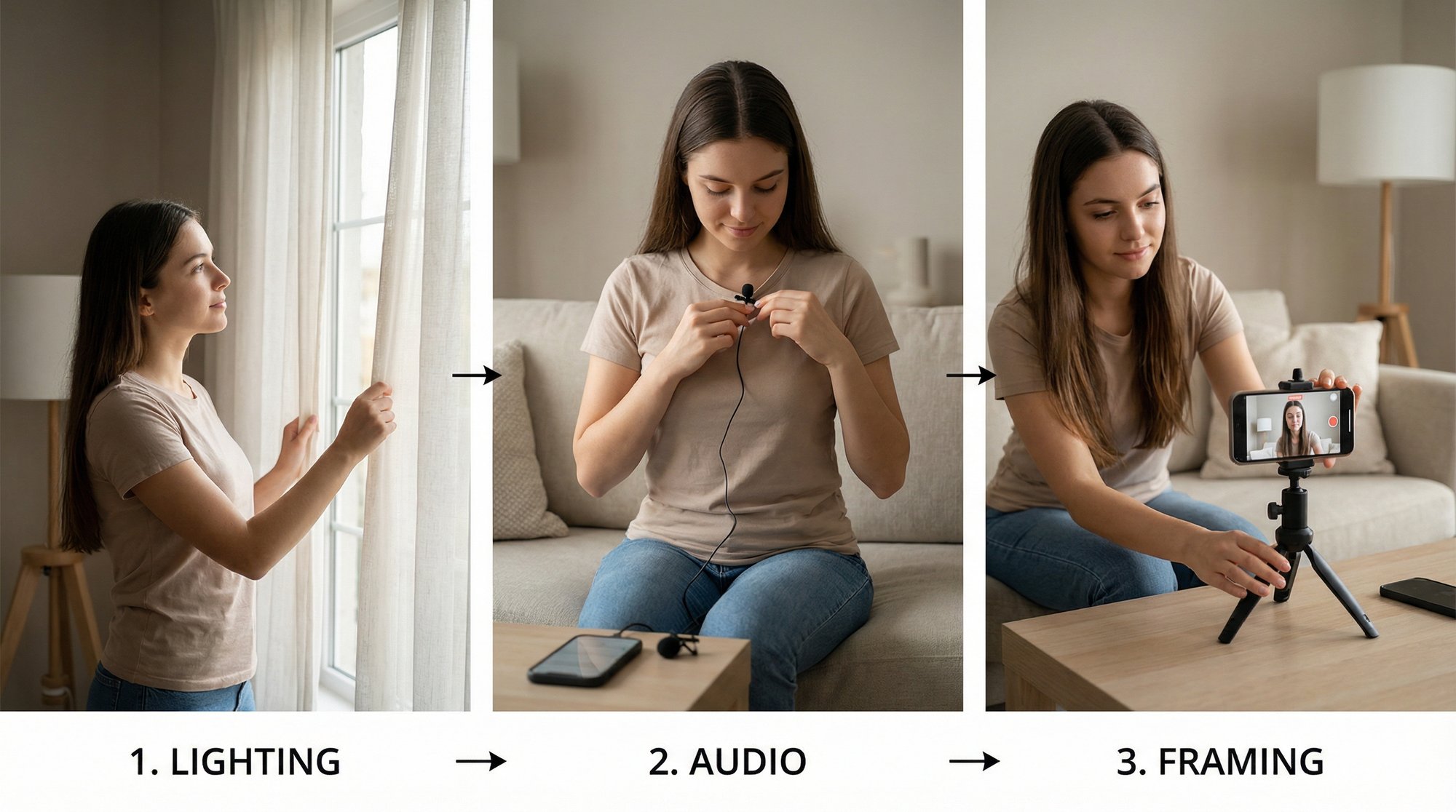
  • Bright and Clear Visuals: The Shorts feed is a sea of content. Dark, grainy, or shaky video gets ignored. Make sure your lighting is solid and your subject is crystal clear.

  • Include a Call-to-Action (CTA): You have to tell people what to do next. "Subscribe for more," "Link in the pinned comment," "Visit our website"—whatever it is, a clear CTA is what turns a passive viewer into an active follower or customer.

Remember, direct ad revenue is only one piece of the monetization puzzle. With an RPM for Shorts often hovering around a tiny $0.05 per 1,000 views, it's a fraction of what long-form videos make. The real magic of Shorts is using them as a powerful top-of-funnel tool to attract a massive audience, which you can then direct to your more profitable ventures.

A Sustainable Workflow for Consistent Content

For most founders, the biggest thing stopping them from cashing in on YouTube Shorts isn't a lack of good ideas—it's a brutal lack of time. The algorithm rewards consistency above all else, but how are you supposed to churn out great Shorts every single day while also, you know, running your actual business?

The answer isn't to hustle harder or sleep less. It's to build a smarter system.

Most people get stuck in a terrible, time-sucking loop. They brainstorm an idea, film a one-off video, agonize over the edits, hunt for the right song, and then manually type out captions. It’s a reactive, inefficient mess that leads straight to burnout and a ghost town of a channel.

The Shift to a Founder-Friendly Workflow

The only way to win this game as a founder is to embrace one simple principle: delegation.

Your real value is your expertise and your unique perspective, not your video editing skills. The goal is to set up a workflow where you only do what you're best at, and then hand off the rest.

Picture this: once a month, you block off two hours. That’s it. You sit down and just talk, recording 20-30 short clips about topics you know like the back of your hand. No fancy lighting, no complicated scripts—just raw, authentic footage of you sharing your knowledge.

And then… you’re done.

You zip up that folder of raw clips and send it off. A few days later, a batch of perfectly polished, ready-to-post Shorts appears in your inbox. This isn't some fantasy. It's a strategic process that turns content creation from a daily headache into a scalable part of your business.

Leveraging Services to Build Your Content Machine

This is where a dedicated video service becomes a founder’s secret weapon. Think of it as having a skilled post-production team on retainer, one that lives and breathes short-form video. They take your raw footage and handle all the technical and creative heavy lifting.

A good service will handle things like:

  • Intelligent Editing: They'll chop out all the pauses, "ums," and dead air to create a tight, punchy video that holds attention.

  • Engaging B-Roll: They’ll add relevant stock clips, animations, and on-screen graphics to visually illustrate your points and keep viewers glued to the screen.

  • Dynamic Captions: You get those eye-catching, animated captions that are an absolute must for mobile, where most people watch with the sound off.

  • Sound and Music: They find the right royalty-free music or trending audio that fits the vibe, making sure your videos are still eligible for monetization.

This specialized approach keeps your content quality high and ensures you don't fall into the trap of producing generic, low-effort videos that look like AI slop and fail to build a real connection.

The most successful founder-creators I know don't try to do it all. They treat content like any other business function: they set the strategy, create the core material, and then delegate the execution to specialists.

The screenshot below from Unfloppable's homepage shows exactly how a service like this can frame the offer—turning a founder's raw ideas into content that's ready for the world.

This whole model is built on one truth: a founder's time is their most valuable asset. It should be spent on strategy and growth, not tedious editing tasks.

The True ROI of a Delegated Workflow

When you outsource the grunt work, you're doing more than just buying back time. You're investing in a system that dramatically increases your odds of actually succeeding with monetizing YouTube Shorts.

Consistency feeds the algorithm, which gets you more views. More views lead to faster subscriber growth, getting you to YPP eligibility sooner. It also means a bigger audience for your affiliate links and more potential customers for your courses and products.

Ultimately, this workflow transforms you from a stressed-out content creator into a strategic thought leader. You get to focus on the "what"—the ideas and insights—while your production partner handles the "how." It’s the only sustainable way to build a powerful personal brand on Shorts without it completely taking over your life.

Common Questions About Monetizing Shorts

Jumping into the world of Shorts can feel like you're learning a whole new language. It's totally normal to have questions, and getting them answered is the key to moving forward with confidence instead of getting stuck wondering what to do next. Let's dig into some of the most common questions I hear from creators trying to make money with Shorts.

A desk with stacked papers, a computer monitor, and a camera on a tripod, illustrating efficient workflow.

How Long Does It Realistically Take to Monetize a Shorts Channel?

There’s no single answer, but we can look at the patterns. If you're in a broad entertainment niche and posting consistently every day, hitting that 10 million view milestone to qualify for the YPP often takes about 4-6 months.

But for a founder in a more specific, professional niche? The timeline might stretch closer to 6-9 months. The tradeoff here is huge, though. While the views might build more slowly, the audience you're attracting is incredibly targeted and far more valuable from a business perspective.

Here's the thing: "Monetization" can start on day one. You don't need YPP approval to drop an affiliate link in your pinned comment or use a Short to push traffic to a lead magnet. The smartest founders start monetizing their audience's attention long before YouTube sends them that first ad revenue payment.

Does Using Copyrighted Music Hurt My Earnings?

Absolutely, and it's a direct hit to your wallet. It's tempting to use that trending song to get a quick viral boost, but there’s a major catch.

When you use copyrighted music, you're forced to split the ad revenue from your video with the music rights holders. This can carve out a huge chunk of your potential earnings from the Creator Pool.

For founders and businesses, the strategic play is always to use royalty-free music from YouTube's own Audio Library or, even better, just let your voice and sharp on-screen text do the talking. This simple choice ensures you keep 100% of the creator's portion of the revenue, maximizing your direct income.

Are Shorts Better for Making Money Than Long-Form Videos?

This is a big point of confusion. The reality is, they're not in competition with each other; they're two parts of a much larger, smarter monetization machine.

  • Long-Form Videos are the undisputed kings of direct ad revenue. Their RPMs can be 50 to 100 times higher than what you'll see on Shorts. This makes them the primary engine for YPP income.

  • YouTube Shorts are your secret weapon for growth and discovery. Their viral potential is off the charts, letting you connect with a massive audience that might never have stumbled upon your channel otherwise.

The most successful creators are running a hybrid model. They use Shorts like a powerful magnet to attract thousands of new subscribers, then they guide that traffic over to their more profitable long-form content, affiliate offers, and business funnels.

What Are the Biggest Mistakes That Stop Channels from Monetizing?

I see the same few mistakes sink channels over and over again. Knowing what they are is the first step to avoiding them.

The number one channel killer is inconsistency. The YouTube algorithm rewards a steady, predictable content schedule. If you post a flurry of videos and then disappear for a few weeks, your reach will completely flatline.

Another classic error is a lack of focus. If your channel is a random mix of tech reviews, cooking videos, and travel vlogs, you'll never build a loyal, niche audience. And a dedicated audience is what advertisers and potential customers are actually looking for.

Finally, so many creators just ignore the fundamentals of short-form video. They fail to hook the viewer in the first three seconds, or they forget to include a clear call-to-action. You have to explicitly tell people what to do next—subscribe, click the link, visit your site. Leaving that out is just leaving money on the table.

For any busy founder, the biggest challenge is turning raw ideas into a steady stream of high-quality Shorts. That's exactly why we built Unfloppable. It's a video content service where you just record your thoughts, and our team handles the entire post-production process. We turn your expertise into engaging, publish-ready videos, so you can get back to running your business. Try it for free and see how simple it can be.

Let's cut right to the chase. Making money on YouTube Shorts isn’t just about getting a slice of ad revenue. For founders and entrepreneurs, it’s about building a powerful, audience-driven engine for your business.

The most obvious path is the YouTube Partner Program (YPP), and yes, the entry requirements are steep: 1,000 subscribers and 10 million valid Shorts views in the last 90 days. Getting into the YPP unlocks that direct ad revenue, but honestly, that's just the tip of the iceberg.

Your Roadmap To Monetizing YouTube Shorts

The real money for a business owner isn't in the fractional cents per view. It's in using your Shorts audience for far more lucrative strategies—think affiliate marketing, high-ticket brand sponsorships, and, most importantly, driving sales for your own products and services.

Think of your Shorts channel as the ultimate top-of-funnel machine. It's built to rapidly attract an audience that you can then guide toward your core business offerings. This guide will walk you through exactly how to do that, focusing on real-world tactics that deliver tangible results, not just vanity metrics.

The Three Pillars Of Shorts Monetization

When you boil it down, earning a real income from Shorts comes down to three main avenues. You can pick one and go deep, but the smartest creators I know blend all three into a cohesive strategy. This diversification protects you from the notoriously unpredictable nature of ad revenue.

Here’s a quick look at the core ways you can turn your Shorts views into dollars, from direct platform payouts to fully integrated business income.

Infographic detailing three primary methods for YouTube Shorts monetization: YPP, Brands, and Products.

As you can see, the journey starts with hitting those YPP milestones but quickly evolves into brand collaborations and selling your own stuff. Each step represents a significant leap in your potential earnings.

To give you a clearer picture, here’s a quick breakdown of how these different paths stack up.

YouTube Shorts Monetization Pathways at a Glance

This table summarizes the main ways you can make money with Shorts, giving you a realistic look at what's required and what you can expect to earn.

Monetization Method

Requirements

Earning Potential (Example)

YouTube Partner Program (YPP)

1,000 subs & 10M Shorts views (90 days)

$100 - $600 per month for a channel with several million views.

Brand Sponsorships & Deals

Engaged audience, consistent niche, media kit.

$500 - $5,000+ per video for a mid-sized creator.

Affiliate Marketing

Trust with your audience, relevant products.

$200 - $2,000+ per month, highly dependent on product price and conversion.

Selling Your Own Products/Services

A clear offer (course, coaching, SaaS, etc.).

Unlimited. Can easily become your primary revenue stream.

Ultimately, the best strategy is a mix-and-match approach. You can use YPP revenue to cover operational costs while affiliate income provides a steady baseline and your own product sales create exponential growth.

How To Build A Sustainable Content Machine

Consistency is everything on Shorts. But for a founder who’s already wearing a dozen hats, the time commitment can feel completely overwhelming. The secret isn't to work harder; it's to build a smarter system that lets you publish consistently without derailing your actual business.

The biggest mistake I see founders make is treating content creation like a separate, time-sucking chore. The ones who win integrate it into their workflow. They batch their core ideas and then delegate everything else. It’s about building a scalable content machine, not giving yourself a second job.

A streamlined workflow is absolutely non-negotiable. This means you focus your limited time on what only you can do—sharing your expertise—and offload the tedious, technical post-production work. For example, a founder could record 10-15 raw video ideas in an hour and then use a service like Unfloppable to handle all the editing, captioning, and polishing. That’s how you scale.

Your monetization plan is worthless if you can't produce the content to fuel it. We’re going to cover how to master:

  • Direct Monetization: Getting into the YPP and understanding how the Shorts ad revenue share actually works.

  • Indirect Monetization: Landing brand deals, finding the right affiliate partners, and negotiating your worth.

  • Business Integration: Using Shorts as a lead magnet to drive traffic and sales for your own offers.

This guide is your roadmap. Let’s start with the foundational piece of the puzzle: getting accepted into the YouTube Partner Program.

Cracking the Code of the YouTube Partner Program

If you want to earn money directly from your Shorts, the first stop is the YouTube Partner Program (YPP). This is your official ticket to getting a piece of the ad revenue action, and YouTube has laid out a very specific path for Shorts creators.

A person holds a smartphone displaying a logo, next to a laptop screen showing 'Monetize Shorts' and the same logo.

Before a single dollar comes your way from ads, your channel needs to hit some key milestones. While the traditional route for long-form video is still an option, YouTube created a high-speed lane just for Shorts creators.

Meeting the Shorts Eligibility Threshold

To qualify for the YPP purely through your Shorts, you need to hit two main targets. Think of it less like a marathon and more like a sprint that rewards viral moments and consistent, high-impact content.

Here are the magic numbers:

  • 1,000 Subscribers: This is the bedrock. It proves you're building an actual community, not just getting fleeting views.

  • 10 Million Public Shorts Views in 90 Days: This is the big one. Hitting this number shows YouTube your content has mass appeal and can hold its own in the fast-paced Shorts feed.

Once you’ve conquered these goals, you can head straight to the "Earn" tab in your YouTube Studio and apply. The review is usually pretty quick, mostly to make sure your channel plays by the rules and follows all of YouTube’s community and monetization policies.

For founders, don't just see these as numbers to unlock ad revenue. Hitting 10 million views is a massive proof of concept. It means you’ve found a message that grabs attention—an audience you can eventually guide toward your actual products or services.

How Shorts Ad Revenue Actually Works

Okay, so you made it into the YPP. Congrats! Now, how does the money actually get from an advertiser to your bank account? It's a bit different from how traditional YouTube videos work, and wrapping your head around it is crucial for setting expectations.

With Shorts, ads don't play before or during your video. Instead, they pop up between videos as people swipe through the feed. Because of this, the revenue from those ads gets pooled together and then distributed to all the eligible creators.

It's a multi-step process:

  1. Revenue Pooling: All the money from ads that run in the Shorts feed gets tossed into one big pot.

  2. Covering Music Costs: First, YouTube uses some of that money to pay for music licensing. So, if you used a trending song, this is where the artists and labels get their cut.

  3. The Creator Pool: Whatever is left over becomes the "Creator Pool." This is the money that will be divided among creators.

  4. Your Slice of the Pie: The pool is then distributed based on your share of total views. If your Shorts got 1% of all eligible views in your country this month, you get 1% of the Creator Pool.

  5. The Final Payout: You keep 45% of whatever amount was allocated to you.

The system is built to reward volume and consistency. The more views you rack up, the bigger your share of the Creator Pool.

Setting Realistic Earning Expectations

Let's get down to brass tacks: how much cash are we talking about? While hitting millions of views sounds like you'll be rolling in dough, Shorts ad revenue is very much a volume game.

The RPM (Revenue Per Mille), which is what you earn for every 1,000 views, is way lower for Shorts than for long-form videos. Let's say you hit that 10 million view goal in 90 days. While that's your golden ticket into the YPP, the payout might be more modest than you think.

With average RPMs for Shorts sitting between $0.03 and $0.10, those 10 million views could translate to anywhere from $300 to $1,000. The exact amount really depends on your audience's location and your niche. For example, finance and business Shorts often command higher RPMs ($0.08-$0.20), while a gaming channel might be closer to $0.02-$0.06. You can dig deeper into how Shorts monetization works in 2026 on YouTube Tools Hub.

This is why your niche matters so much. A channel breaking down stock market trends will attract higher-paying advertisers than one showing cat videos. As a founder, this is actually great news—your content is likely focused on business, tech, or finance, which naturally sits at the higher end of the RPM spectrum. You have a built-in advantage from day one.

Moving Beyond Ad Revenue: The Real Money-Makers

Let's be blunt: you're not going to get rich from the Shorts ad revenue share alone. While it's a nice little bonus, thinking of it as your primary income source is a mistake. The real power of Shorts isn't the direct payout—it's the massive, top-of-funnel attention it generates.

For founders and entrepreneurs, this is where the lightbulb should go on. Every 60-second video is a potential lead magnet, a brand-building powerhouse, and a direct path to customers. You're using the Shorts feed's incredible reach to build an audience you can then guide toward far more lucrative opportunities.

Here are the strategies that separate the hobbyists from the serious business builders.

Cashing In On Brand Deals and Sponsorships

Once you've carved out a dedicated audience in a specific niche, your channel becomes valuable digital real estate. Brands are desperate to connect with engaged communities, and they'll pay good money to do it through a voice people trust. Honestly, a single sponsored Short can easily eclipse what you'd make in a month from ad revenue.

But these deals don't just fall into your lap. You have to be proactive.

  • Build Your Creator "Resume": Get a professional media kit together. This isn't optional. It needs to showcase your channel analytics (subs, average views, audience demographics), highlight your best-performing videos, and clearly define who your audience is.

  • Find the Right Fit: Make a dream list of brands whose products you actually use and respect. If you're a founder who talks about productivity, you should be pitching SaaS companies, not the latest fashion trend. Your audience can smell a disingenuous partnership from a mile away.

  • Nail the Pitch: Find the right marketing contact and send a sharp, concise email. Introduce yourself, attach the media kit, and—this is key—propose a specific video idea. It shows you've done your homework and aren't just spamming for a handout.

The best sponsorships never feel like ads. They feel like a genuine recommendation from a trusted source. When you can seamlessly weave a product into your content, it’s a win for you, the brand, and your audience. That’s the gold standard.

Unlocking Affiliate Marketing

Affiliate marketing is probably the most organic way to monetize your content because it’s built on the trust you’ve already earned. You find a product you love, recommend it to your audience, and get a commission when they buy through your link. Simple. You're helping your viewers find cool stuff and building a passive income stream at the same time.

The biggest challenge is getting people from the video to your link, since Shorts themselves aren't clickable. You have to be smart about it.

  • The Pinned Comment Trick: This is your go-to move. Mention the product in your Short and tell people—literally say the words—"the link is in the pinned comment below." It's direct and effective.

  • Flash a QR Code: For a more tech-savvy approach, you can pop a QR code on screen for a few seconds. This is brilliant for physical products or software, as people can just point their phone at the screen while watching.

  • The Classic "Link in Bio": A tried-and-true method. Funnel all your traffic to the main link on your channel's profile. This is perfect if you have a page with a collection of your favorite tools or products.

Just remember, your credibility is your most valuable asset. Don't shill for products you don't believe in just to make a quick buck. It's a short-sighted strategy that will burn your audience's trust.

Selling Your Own Stuff (The End Game)

For any founder or entrepreneur on YouTube, this is the ultimate goal. Brand deals are great, and affiliate links are a nice bonus, but nothing beats the margin and control you get from selling your own products and services. Your Shorts essentially become a free, massive advertising engine.

It doesn't matter if you're selling a digital course, a SaaS subscription, physical goods, or consulting services. The playbook is the same.

You create Shorts that provide upfront value, establish your expertise, and position your product as the natural next step for your audience. A software founder might share quick tips that secretly showcase their app's features. A fitness coach could post workout clips that lead to a full program.

The strategy is always to educate and entertain first. You build a community that trusts you, and when you finally ask for the sale, they're ready and willing to buy.

How to Optimize Shorts for Maximum Revenue

Just throwing Shorts out there and hoping for the best isn't a strategy—it's a lottery ticket. If you're serious about making money with YouTube Shorts, you need to be deliberate. Every single second of your video has to be engineered to grab attention and refuse to let go. This isn't just about views; it's about building a system where more views translate directly into more ad revenue, more subscribers, and ultimately, more business.

A laptop displaying an analytics dashboard sits on a wooden desk next to a black box labeled 'Multiple Income Streams'.

Forget chasing viral fads. Let's dig into the repeatable tactics that turn a simple Short from just another piece of content into a profitable asset for your brand.

Master the Three-Second Hook

The Shorts feed is brutal. You have, at most, three seconds to stop someone from swiping away. If your opening is weak, you're done. Your first few frames must act as a "pattern interrupt"—something that jolts the viewer out of their mindless scrolling.

Here’s how to do it:

  • Ask a Provocative Question: Start with something your ideal customer is desperate to know. A marketing channel might kick off with, "Is your landing page leaking money?" It's direct and creates an immediate need for the answer.

  • Make a Bold Statement: Lead with a surprising or controversial claim that makes people stop and think. For example, a finance creator could say, "This one investment mistake is costing you thousands." Curiosity is a powerful force.

  • Use Abrupt Visuals or Motion: A quick zoom, a sudden jump cut, or an unexpected visual can physically stop the thumb. It signals that something dynamic and interesting is about to happen.

Keep It Short and Sweet for Maximum Retention

Shorts can technically be up to 60 seconds, but that doesn't mean they should be. The YouTube algorithm is obsessed with audience retention, rewarding videos that people watch all the way through.

For most topics, the sweet spot is around 20-30 seconds. This is just enough time to deliver a nugget of value without giving your audience a chance to get antsy. Shorter videos also get rewatched more often, which is a massive signal to the algorithm to push your content even further.

Think of each Short as a single, powerful punch. Deliver one key idea, one powerful tip, or one compelling story. Overloading a Short with too much information is the fastest way to lose your audience.

Why Trending Audio Is Your Secret Weapon

Riding the wave of trending audio is one of the smartest ways to get your Shorts in front of a whole new audience. When a sound takes off, YouTube's algorithm actively looks for more content using it. The trick is to be strategic.

Don't shoehorn your message into a random sound. Instead, find audio that actually fits the vibe of your content. A great pro-tip is to add the trending track in the background at a very low volume, almost inaudibly. This way, you get the algorithmic boost while your own voiceover and on-screen text do the heavy lifting. You can check out our guide on how to create Instagram Reels for more cross-platform tips on this.

Technical Tweaks That Drive Engagement

A few small technical details can be the difference between a flop and a high-performing Short. These aren't just suggestions; they're non-negotiables for anyone serious about this.

  • Captions Are Essential: A huge percentage of people watch Shorts with the sound off. If you don't have big, bold, easy-to-read captions, you're immediately losing a massive chunk of potential viewers. Make them pop.

  • Bright and Clear Visuals: The Shorts feed is a sea of content. Dark, grainy, or shaky video gets ignored. Make sure your lighting is solid and your subject is crystal clear.

  • Include a Call-to-Action (CTA): You have to tell people what to do next. "Subscribe for more," "Link in the pinned comment," "Visit our website"—whatever it is, a clear CTA is what turns a passive viewer into an active follower or customer.

Remember, direct ad revenue is only one piece of the monetization puzzle. With an RPM for Shorts often hovering around a tiny $0.05 per 1,000 views, it's a fraction of what long-form videos make. The real magic of Shorts is using them as a powerful top-of-funnel tool to attract a massive audience, which you can then direct to your more profitable ventures.

A Sustainable Workflow for Consistent Content

For most founders, the biggest thing stopping them from cashing in on YouTube Shorts isn't a lack of good ideas—it's a brutal lack of time. The algorithm rewards consistency above all else, but how are you supposed to churn out great Shorts every single day while also, you know, running your actual business?

The answer isn't to hustle harder or sleep less. It's to build a smarter system.

Most people get stuck in a terrible, time-sucking loop. They brainstorm an idea, film a one-off video, agonize over the edits, hunt for the right song, and then manually type out captions. It’s a reactive, inefficient mess that leads straight to burnout and a ghost town of a channel.

The Shift to a Founder-Friendly Workflow

The only way to win this game as a founder is to embrace one simple principle: delegation.

Your real value is your expertise and your unique perspective, not your video editing skills. The goal is to set up a workflow where you only do what you're best at, and then hand off the rest.

Picture this: once a month, you block off two hours. That’s it. You sit down and just talk, recording 20-30 short clips about topics you know like the back of your hand. No fancy lighting, no complicated scripts—just raw, authentic footage of you sharing your knowledge.

And then… you’re done.

You zip up that folder of raw clips and send it off. A few days later, a batch of perfectly polished, ready-to-post Shorts appears in your inbox. This isn't some fantasy. It's a strategic process that turns content creation from a daily headache into a scalable part of your business.

Leveraging Services to Build Your Content Machine

This is where a dedicated video service becomes a founder’s secret weapon. Think of it as having a skilled post-production team on retainer, one that lives and breathes short-form video. They take your raw footage and handle all the technical and creative heavy lifting.

A good service will handle things like:

  • Intelligent Editing: They'll chop out all the pauses, "ums," and dead air to create a tight, punchy video that holds attention.

  • Engaging B-Roll: They’ll add relevant stock clips, animations, and on-screen graphics to visually illustrate your points and keep viewers glued to the screen.

  • Dynamic Captions: You get those eye-catching, animated captions that are an absolute must for mobile, where most people watch with the sound off.

  • Sound and Music: They find the right royalty-free music or trending audio that fits the vibe, making sure your videos are still eligible for monetization.

This specialized approach keeps your content quality high and ensures you don't fall into the trap of producing generic, low-effort videos that look like AI slop and fail to build a real connection.

The most successful founder-creators I know don't try to do it all. They treat content like any other business function: they set the strategy, create the core material, and then delegate the execution to specialists.

The screenshot below from Unfloppable's homepage shows exactly how a service like this can frame the offer—turning a founder's raw ideas into content that's ready for the world.

This whole model is built on one truth: a founder's time is their most valuable asset. It should be spent on strategy and growth, not tedious editing tasks.

The True ROI of a Delegated Workflow

When you outsource the grunt work, you're doing more than just buying back time. You're investing in a system that dramatically increases your odds of actually succeeding with monetizing YouTube Shorts.

Consistency feeds the algorithm, which gets you more views. More views lead to faster subscriber growth, getting you to YPP eligibility sooner. It also means a bigger audience for your affiliate links and more potential customers for your courses and products.

Ultimately, this workflow transforms you from a stressed-out content creator into a strategic thought leader. You get to focus on the "what"—the ideas and insights—while your production partner handles the "how." It’s the only sustainable way to build a powerful personal brand on Shorts without it completely taking over your life.

Common Questions About Monetizing Shorts

Jumping into the world of Shorts can feel like you're learning a whole new language. It's totally normal to have questions, and getting them answered is the key to moving forward with confidence instead of getting stuck wondering what to do next. Let's dig into some of the most common questions I hear from creators trying to make money with Shorts.

A desk with stacked papers, a computer monitor, and a camera on a tripod, illustrating efficient workflow.

How Long Does It Realistically Take to Monetize a Shorts Channel?

There’s no single answer, but we can look at the patterns. If you're in a broad entertainment niche and posting consistently every day, hitting that 10 million view milestone to qualify for the YPP often takes about 4-6 months.

But for a founder in a more specific, professional niche? The timeline might stretch closer to 6-9 months. The tradeoff here is huge, though. While the views might build more slowly, the audience you're attracting is incredibly targeted and far more valuable from a business perspective.

Here's the thing: "Monetization" can start on day one. You don't need YPP approval to drop an affiliate link in your pinned comment or use a Short to push traffic to a lead magnet. The smartest founders start monetizing their audience's attention long before YouTube sends them that first ad revenue payment.

Does Using Copyrighted Music Hurt My Earnings?

Absolutely, and it's a direct hit to your wallet. It's tempting to use that trending song to get a quick viral boost, but there’s a major catch.

When you use copyrighted music, you're forced to split the ad revenue from your video with the music rights holders. This can carve out a huge chunk of your potential earnings from the Creator Pool.

For founders and businesses, the strategic play is always to use royalty-free music from YouTube's own Audio Library or, even better, just let your voice and sharp on-screen text do the talking. This simple choice ensures you keep 100% of the creator's portion of the revenue, maximizing your direct income.

Are Shorts Better for Making Money Than Long-Form Videos?

This is a big point of confusion. The reality is, they're not in competition with each other; they're two parts of a much larger, smarter monetization machine.

  • Long-Form Videos are the undisputed kings of direct ad revenue. Their RPMs can be 50 to 100 times higher than what you'll see on Shorts. This makes them the primary engine for YPP income.

  • YouTube Shorts are your secret weapon for growth and discovery. Their viral potential is off the charts, letting you connect with a massive audience that might never have stumbled upon your channel otherwise.

The most successful creators are running a hybrid model. They use Shorts like a powerful magnet to attract thousands of new subscribers, then they guide that traffic over to their more profitable long-form content, affiliate offers, and business funnels.

What Are the Biggest Mistakes That Stop Channels from Monetizing?

I see the same few mistakes sink channels over and over again. Knowing what they are is the first step to avoiding them.

The number one channel killer is inconsistency. The YouTube algorithm rewards a steady, predictable content schedule. If you post a flurry of videos and then disappear for a few weeks, your reach will completely flatline.

Another classic error is a lack of focus. If your channel is a random mix of tech reviews, cooking videos, and travel vlogs, you'll never build a loyal, niche audience. And a dedicated audience is what advertisers and potential customers are actually looking for.

Finally, so many creators just ignore the fundamentals of short-form video. They fail to hook the viewer in the first three seconds, or they forget to include a clear call-to-action. You have to explicitly tell people what to do next—subscribe, click the link, visit your site. Leaving that out is just leaving money on the table.

For any busy founder, the biggest challenge is turning raw ideas into a steady stream of high-quality Shorts. That's exactly why we built Unfloppable. It's a video content service where you just record your thoughts, and our team handles the entire post-production process. We turn your expertise into engaging, publish-ready videos, so you can get back to running your business. Try it for free and see how simple it can be.