A Founder's Guide to Personal Branding for Entrepreneurs

Build a powerful personal brand that drives growth. This guide covers everything on personal branding for entrepreneurs, from strategy to execution with video.

Feb 27, 2026

Let's be honest—personal branding for entrepreneurs used to feel like a "nice-to-have." Something you'd get around to eventually. Not anymore. Today, it’s a powerful engine for growth and your most strategic tool for cutting through the noise.

This isn't about vanity metrics or chasing trends. It's about using your unique voice to attract top-tier talent, win over skeptical investors, and build the kind of customer trust that your competitors can only dream of.

Why Founder Branding Is No Longer a Choice

In a world full of faceless corporations, your personal brand is the first real handshake. It's the human connection that ties your company's mission to the people you want to reach, turning them from passive observers into genuine fans. When you, the founder, step up to share your vision and expertise, you build a layer of authenticity that no corporate marketing budget can buy.

This guide is your playbook for making that connection happen. We’re going to bust some myths—you don’t need to be a social media wizard or a born extrovert. Instead, we'll focus on a practical, sustainable system for building a real brand with simple video content, minus the headache of heavy editing and production.

A professional man stands confidently in an office with a 'FOUNDER BRAND MATTERS' sign, a laptop, and mug.

Unlocking Inaccessible Opportunities

Think of your personal brand as a master key. It unlocks doors you didn't even know were there and creates inbound opportunities that money can't buy. Instead of constantly chasing leads, you become a magnet for them.

  • Investor Confidence: VCs and angel investors don't just back ideas; they back founders. When they see you clearly articulating your vision online, you instantly become a more bankable bet.

  • Customer Trust: People buy from people. It's that simple. Sharing your journey and your "why" makes customers feel like they're part of your story, not just another transaction.

  • Talent Attraction: The best people want to work for leaders who inspire them. Your personal brand showcases your vision and culture, drawing A-players directly to you.

The numbers don't lie, especially when it comes to hiring. New research shows that a staggering 85% of hiring decisions are influenced by a candidate's personal brand. Even more telling, 44% of employers have hired someone specifically because of the positive content on their social media. As you can see in these insights on personal branding's impact on hiring from Human to Brand, a strong online presence creates real, tangible opportunities.

A powerful personal brand is your ultimate unfair advantage. It's the one thing no competitor can ever replicate because it’s built on your unique story, expertise, and personality.

This guide will show you exactly how to build that advantage, one step at a time.

How to Define Your Authentic Brand Pillars

Let's be honest, "find your niche" is some of the most generic and unhelpful advice out there. To build a personal brand that actually cuts through the noise, you need something far more concrete. You need a foundation.

This is where your Brand Pillars come in. Think of them as the 3-5 core themes you can own, talk about endlessly, and become known for. They’re the sweet spot where your deep expertise, genuine passion, and strategic business goals all overlap.

A man placing green sticky notes on a clear board next to

Get these right, and creating content stops feeling like a chore. Suddenly, you have a powerful system that ensures everything you post is sharp, consistent, and authentically you. It’s like having the main channels for your personal TV network—your audience knows exactly what to tune in for.

The Intersection of You and Your Audience

The most powerful brand pillars are never created in a vacuum. They form a bridge between what you're brilliant at and what your ideal customer is desperate to know. The whole game is finding that unique overlap where you can provide undeniable value.

To get there, you need to ask yourself some tough questions. Seriously, don't rush this part. Your answers are the DNA of your entire content strategy for the months and years ahead.

  • Expertise: What could you talk about for hours with zero prep? What hard-won skills do you have from being in the trenches, not just from reading a book?

  • Passion: What topics get you fired up, even on a Saturday morning? Is there an industry problem or a new trend that you can't stop thinking about?

  • Business Goals: What kind of knowledge naturally leads people to your product or service? What expertise builds the kind of trust that makes a sale feel inevitable?

This isn’t just a thought exercise. It’s about finding themes you can sustain for the long haul. Passion without expertise comes off as amateurish. Expertise without a connection to your business is just a hobby. You need all three to build a brand that actually moves the needle. If you're still working through what it means to narrow your focus, our guide on the real definition of niching down can help clear things up.

From Vague Ideas to Concrete Pillars

Okay, once you've brainstormed some answers, it's time to get sharp. A pillar isn't just a broad topic like "marketing" or "wellness." That's way too generic. A true pillar is a specific point of view—a unique angle that makes you the go-to authority.

To help you turn abstract ideas into solid pillars, I've put together a simple framework. Think through each category and see what comes up for your own brand.

Brand Pillar Content Framework

Pillar Category

Guiding Question

Example (SaaS Founder)

Expertise

What have I mastered through years of experience?

Bootstrapped Growth Tactics - Sharing real, scrappy strategies to grow without VC funding.

Passion

What problem in my industry do I want to solve?

Asynchronous Communication - A philosophy for reducing meetings and empowering remote teams.

Business Goal

What insight positions my product as the solution?

Product-Led Storytelling - Using product updates as a way to engage our community.

See how specific that gets? Each pillar is a well-defined territory you can completely own.

Let’s hammer this home with a couple more real-world examples of how different entrepreneurs could define their pillars.

Example 1: A D2C Founder with a Sustainable Skincare Brand

  • Supply Chain Transparency: Going beyond just "eco-friendly" to document the entire journey of her ingredients, building radical trust.

  • Minimalist Skincare Routines: Pushing back against the complicated 10-step routine by advocating for simplicity and effectiveness.

  • Community-Driven Product Development: Actively showing how customer feedback shapes new products, making the audience feel like co-creators.

Example 2: A Consultant for Creative Agencies

  • Scaling Agency Profitability: Focusing only on the financial and operational systems that allow agencies to grow without chaos.

  • Winning High-Ticket Retainers: Teaching the art of the proposal and the sales process for landing bigger, better clients.

  • Building a Founder-Proof Team: Sharing frameworks for hiring and training a team that can run the agency without the founder's constant oversight.

Your pillars are your promise to your audience. They set expectations and build a loyal following because people know exactly what kind of value you will deliver every single time.

These pillars are more than just content topics; they are a declaration of your unique perspective on your industry. This is the secret to turning generic advice into a memorable personal brand. It gives you a repeatable framework to generate an endless stream of on-brand content ideas that feel authentic because they truly are.

The Unbeatable Advantage of Founder-Led Video

Let’s get one thing straight. The most powerful tool in your personal branding arsenal isn’t a fancy camera or a professional studio. It’s the smartphone in your pocket and your willingness to actually talk to your audience.

So many entrepreneurs get stuck right here. They think video content has to be this polished, corporate-style production. Frankly, that’s the single biggest thing holding them back from building a real connection with customers.

The truth is, raw authenticity builds trust way faster than hyper-produced content. When people see you—the founder—sharing your insights, unscripted and real, it creates a human connection that text and images just can't touch.

Why Your Unpolished Voice Is Your Greatest Asset

In a world drowning in perfectly curated content, your audience is starved for reality. They don’t want another flawless commercial; they want to see the person behind the business. Talking-head videos, even with the occasional "um" or stumble, are your secret weapon.

This works because it taps directly into human psychology. Seeing your facial expressions and hearing the passion in your voice builds a subconscious layer of trust. It’s the digital version of a face-to-face conversation.

Your audience isn't looking for perfection; they are looking for connection. Raw, founder-led video is the fastest path to building that bridge, turning passive followers into true believers in your mission.

This is where the trust that comes with a strong personal brand becomes a tangible asset. Research shows that when founders maintain an active, authentic presence, 82% of people are more likely to trust the company itself. That trust has a direct line to your revenue, because customers invest in founders they believe in. You can dig into more stats on how personal brands create a trust premium over at dsmn8.com.

Overcoming the Fear of the Camera

Let's be real—the fear isn't just about production quality. It’s about vulnerability. Putting yourself on camera feels exposed. But what feels like a weakness is actually your competitive edge.

  • Forget Perfection. Aim for clarity and conviction, not a flawless delivery. People connect with your message, not your teleprompter skills.

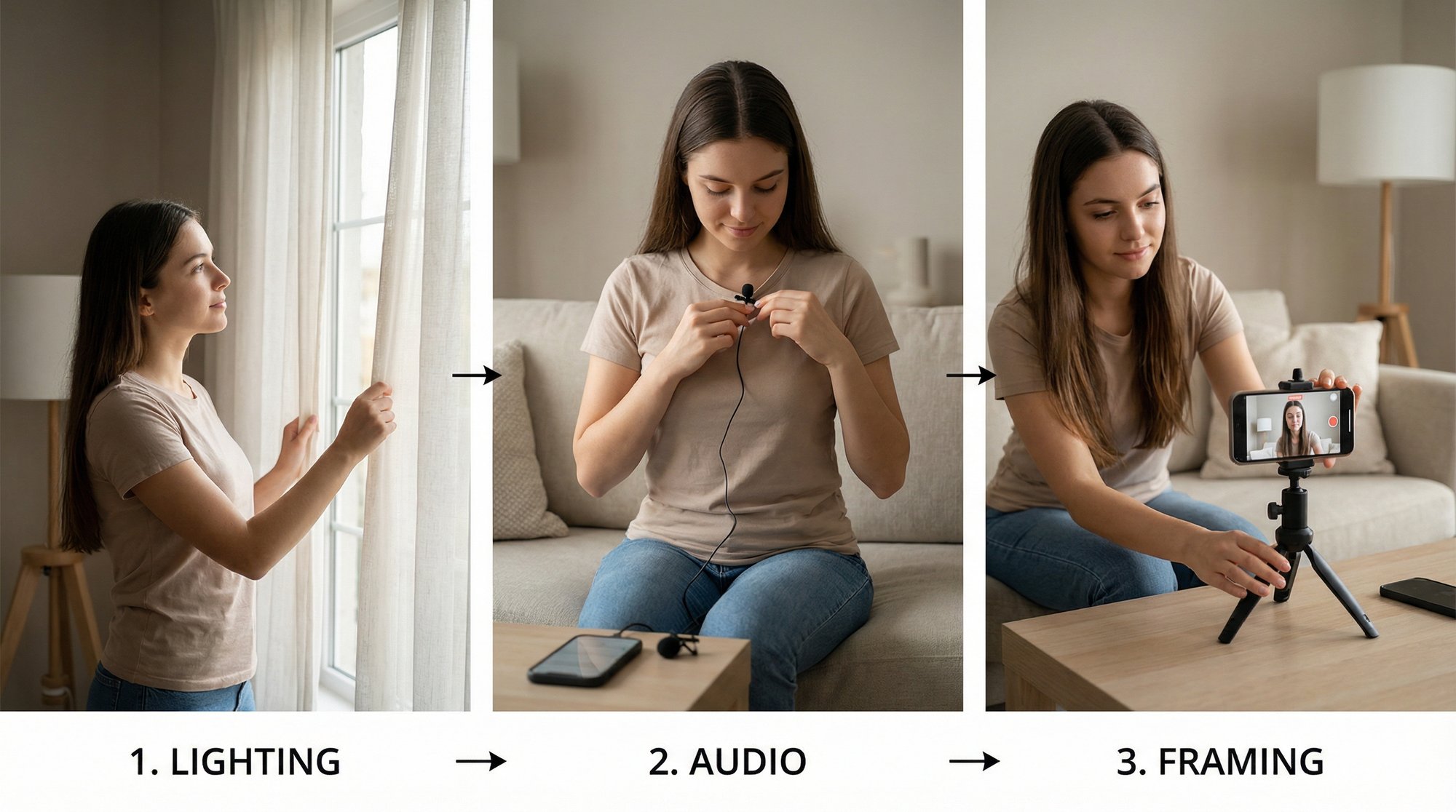
  • Embrace Simplicity. You don’t need expensive gear. Your smartphone, good lighting from a window, and clear audio are all you need to start.

  • Focus on Value. Shift your mindset from "performing" to "helping." Each video is a chance to solve a problem or share a valuable insight for your audience.

The goal isn't to become a professional videographer; it's to become a trusted voice. This is exactly why services that handle the post-production are so valuable. Modern tools can take your raw footage and add the necessary polish—like captions, branding, and relevant b-roll—so you can focus entirely on sharing your vision.

Turning Brand Pillars into Endless Video Ideas

This is where all your upfront work defining your Brand Pillars pays off. Each pillar isn't just a vague category; it's a deep well of video topics you can speak about with genuine authority and passion. No more staring at a blank screen trying to come up with ideas.

Let’s go back to our SaaS founder example:

  • Pillar: Bootstrapped Growth Tactics. This single pillar could fuel dozens of short videos. Think: "The one metric we tracked to get our first 100 users," or "Why we chose not to raise a seed round," or even "My biggest mistake in early-stage marketing."

  • Pillar: Asynchronous Communication. Video ideas just flow from this. "How we run our company with almost zero internal meetings," or "My favorite tool for team alignment," or "A contrarian take on company culture."

This systematic approach makes content creation sustainable. You're not just posting randomly; you're methodically building a library of content that proves your expertise and reinforces what your brand stands for. To go deeper, check out our complete guide on how to build a personal brand from the ground up.

Your Workflow for Effortless Video Creation

Let's be honest. As an entrepreneur, you're already wearing a dozen hats. The idea of adding "video creator" to your job description probably sounds exhausting. What if I told you that you could create an entire month's worth of polished, on-brand video content in just a few hours?

This isn't about becoming a video editing guru. It's about implementing a smart, repeatable system that frees up your time and puts your expertise front and center. I've designed this workflow to build consistency without leading to burnout, breaking the whole thing down into three simple, manageable stages you can actually stick with.

Ideation and Batch Scripting Your Expertise

The single biggest time-suck in making content? Staring at a blank screen, wondering what on earth to talk about next. This is where your Brand Pillars, which we defined earlier, become your secret weapon. Instead of pulling ideas out of thin air, you'll pull them directly from the core themes you've already established.

The key is to batch this entire process. Block out just one or two hours at the start of the month to generate and outline all your video ideas. This focused sprint is infinitely more effective than the daily grind of trying to be creative on demand.

Here’s how you can turn your pillars into a content-generating machine:

  1. Pick One Pillar: Don't overwhelm yourself. Start with a single pillar to keep your focus sharp.

  2. Brainstorm 5-10 Topics: Just ask yourself a few questions about that pillar. What are the biggest mistakes people make here? What’s a controversial opinion you have? What's a simple framework you could explain in 60 seconds?

  3. Write Bullet-Point Scripts: Whatever you do, do not write a word-for-word script. It's the fastest way to sound robotic on camera. Instead, jot down 3-5 bullet points for each video idea. These are just your talking points—enough structure to keep you on track but loose enough to let your personality shine through.

This simple method turns content creation from a daily source of dread into a strategic, once-a-month task. You’ll walk away with a clear roadmap for every single video you need to shoot.

Recording With Confidence, Not Memorization

Now we get to the part that trips up most entrepreneurs: hitting "record." The trick is to stop chasing perfection and start focusing on connection. You're not delivering a formal keynote; you're just having a chat with one person through your phone's camera.

Set aside another hour or two and record all of your videos in one go. This is called batch recording, and it's a total game-changer. You’re already in the zone, the lighting is set, and you can find a natural rhythm without constant setup and teardown.

To make this feel less like a performance and more like a conversation:

  • Use Your Bullet Points: Prop your laptop or notepad up right next to your camera lens. This lets you glance at your next point without ever really breaking eye contact with your future viewer.

  • Record in Short Bursts: Don't try to nail a 60-second video in one perfect take. That’s a recipe for frustration. Instead, record each bullet point as its own separate clip. Pause, take a breath, and then record the next one. It makes the whole process so much less intimidating.

  • Embrace the Flubs: Stumble over a word? Who cares. Just pause and start that sentence again. Those little imperfections are what make you human and relatable. Don't burn precious time trying to get a flawless delivery.

The most magnetic personal brands are built on real authenticity, not sterile perfection. Your audience is there for your message and your passion, not your ability to flawlessly read a teleprompter.

When you batch your recording and film in these bite-sized chunks, you strip away all the pressure. You'll be amazed at how quickly you can film a month's worth of raw video.

The Effortless Polishing Phase

Here’s the real secret weapon for busy founders: you don't need to become a video editor. In fact, you absolutely shouldn't be one. Your time is far too valuable to be spent fumbling with clip timelines, adding captions, and sourcing stock footage.

This final stage is all about smart delegation—handing off your raw footage to a service that does the heavy lifting. This is the one step that makes the entire workflow sustainable long-term. You've already done the hard part by recording your clips. Now, you just upload them and walk away.

Modern editing services can take your raw, separate takes and spin them into gold. They’ll handle all the crucial (and incredibly time-consuming) tasks:

  • Stitching your separate clips into one seamless, coherent video.

  • Adding dynamic, easy-to-read captions (since 92% of users watch videos with the sound off).

  • Weaving in your brand’s colors and logo to keep everything consistent.

  • Finding relevant B-roll or stock footage to make your points more visually engaging.

This is the ultimate form of leverage for your personal brand. You get to stay in your zone of genius—sharing what you know best—while the technical production gets handled by pros. This system lets you build a powerful content library that keeps working for you long after you've hit stop on the recording. If you want to take this even further, a systemized approach can be a game-changer. To see how, check out our guide on how you can truly scale your content creation.

A Smart Distribution Strategy That Actually Works

So you’ve created some great videos. Awesome. But let’s be real: creating the content is only half the battle. Without a smart plan to get it in front of the right people, even the most brilliant video is just a file taking up space on your phone.

Too many entrepreneurs fall into the trap of trying to be everywhere at once. They spray their content across every platform, hoping something sticks. This is a fast track to burnout and, worse, mediocre results across the board.

The real secret is to focus on depth, not breadth. You’ll get way more traction by truly mastering one or two channels where your ideal customers actually hang out. This is strategic distribution, not just mindless posting.

Our simple video workflow—ideate, record, and polish—is designed to give you a steady stream of high-quality content that’s ready to go.

An infographic detailing an effortless three-step video creation process: ideate, record, and polish.

This whole system is about moving from a simple idea to a finished video with as little friction as possible, making the entire process repeatable and stress-free.

Master Your Primary Platform First

Before you even think about cross-posting, you need a home base. A digital headquarters. Pick the one platform where you can make the biggest splash.

If you’re a B2B SaaS founder, that’s almost certainly LinkedIn. Running a direct-to-consumer brand? Instagram or TikTok is probably your best bet.

Your first job is to become a student of this platform. Seriously, geek out on it. Learn its algorithm, understand its unique culture, and figure out what kind of content makes its users tick. On LinkedIn, for instance, a thoughtful story accompanying your video can spark incredible discussions. On Instagram, the visual hook in the first three seconds is absolutely everything.

Once you’ve built real momentum and a genuinely engaged community on that one channel, then you can start thinking about expanding. Starting with a narrow focus prevents you from diluting your efforts and gives you a rock-solid foundation to build on.

Adapt and Repurpose for Each Channel

"Post everywhere" is terrible advice. The real key to building a powerful personal brand is to "repurpose intelligently."

This means taking one core video and skillfully adapting it into multiple native pieces of content, each one perfectly tailored to a different platform's audience and algorithm.

And I don't just mean changing the file format. It's about understanding the context.

  • For LinkedIn: Take your video and wrap it in a longer, text-based post. Share a personal story, offer a strong opinion, or ask a question that gets other professionals talking in the comments.

  • For Instagram Reels: Here, the caption is an afterthought. Your entire focus needs to be on a killer visual hook and bold on-screen text that stops the scroll. If a trending audio fits your brand, use it.

  • For X (formerly Twitter): Pull out the most powerful quote or a surprising statistic from your video. Post that as a punchy, text-based tweet. Then, drop the full video in a reply to your own tweet for anyone who wants to go deeper.

The best distribution strategies recognize that every platform has its own language. Speaking that language fluently is how you earn attention and build a loyal following.

This approach lets you squeeze every last drop of value out of each video you create. You’re not just reposting; you're re-contextualizing. You’re making sure your message hits home with maximum impact, no matter where it’s seen. It’s the smartest way to grow your presence without having to create ten times the content.

Plan for Consistency with a Simple Calendar

In the world of personal branding, consistency is king. Sporadic posting kills your momentum flat and makes it impossible to build a real audience. But don’t worry, being consistent doesn’t mean you have to live on social media.

All you need is a simple content calendar to keep you on track. And no, it doesn’t have to be some complex, color-coded beast. A basic spreadsheet is perfect.

Here’s a dead-simple structure you can steal:

Column

Purpose

Example

Publish Date

When the content goes live.

Monday, Oct 21

Core Video Topic

The main idea from your batch-scripting session.

"My Biggest Mistake in Early-Stage Marketing"

Platform

Where you will post this piece of content.

LinkedIn

Hook & Caption

The platform-specific copy you'll use.

Hook: "I almost tanked my startup with this one mistake..."

Status

A simple tracker for your workflow.

Ready to Post

This kind of system gives you just enough structure to stay organized without feeling rigid. By planning your posts out, you get rid of that daily "what on earth do I post today?" pressure. Instead, you can focus your energy on engaging with the conversations your content actually starts.

This is how you build a visible, consistent personal brand without letting content creation completely take over your life.

Is Any of This Actually Working? Measuring What Matters

You've done the work. You've mapped out your content pillars, recorded a batch of videos, and pushed them out into the world. Now what? You refresh your screen, waiting for the numbers to climb.

But this is the exact spot where so many entrepreneurs get completely sidetracked. They fall in love with the sugar rush of vanity metrics—the likes, the views, the follower counts.

Those numbers feel great, but they don't pay the invoices. Building a real personal brand isn't about getting famous; it’s about earning the kind of influence that drives your business forward. It's time to ditch the vanity metrics and start tracking what actually moves the needle.

Look Past the Likes: The KPIs That Signal Real Interest

The true health of your brand has nothing to do with how many people see your content. It’s about whether the right people are seeing it, and more importantly, what they do next.

Forget getting lost in the weeds of a dozen different platform analytics. You only need to track a handful of high-signal KPIs that tell you if you're building genuine connections.

  • Inbound DMs from Ideal Customers: A direct message from a potential client is pure gold. It's a clear sign that your content didn't just get a "like," it sparked a real-life business conversation. This is worth more than a thousand views.

  • Profile Clicks to Your Website: This is the digital equivalent of someone walking into your store. They saw your video, felt a pull to learn more, and took the critical step of visiting your home base online. You've officially captured their interest.

  • High-Quality Comments: I’m not talking about fire emojis or "Great post!" A truly valuable comment is one that asks a smart question, shares a personal story, or adds to the conversation. This shows you're not just broadcasting; you're building a community.

The real win isn't being seen by everyone; it's being trusted by the right someone. Focus on the metrics that prove trust and intent, and you'll get a crystal-clear picture of the impact you're making.

You don't need fancy software for this. Seriously, a simple spreadsheet where you log these moments each week is all it takes. This gives you a tangible pulse on your brand's growth that a follower count never will.

Let the Feedback Guide Your Next Move

This data isn't just for a weekly report card—it's your roadmap. It’s direct, unfiltered feedback from the market on what’s working and what’s falling flat.

Let's say every video you post about "Bootstrapped Growth Tactics" lights up your DMs and sends a wave of traffic to your site. That’s a massive green light from your audience saying, "More of this, please!" That's your cue to go all-in on that pillar, creating deeper content and exploring new angles on the topic you know they love.

On the flip side, what if a pillar you were excited about gets nothing but crickets? That's not a failure, it’s just feedback. Maybe the topic isn't as urgent for your audience as you thought, or maybe the way you're talking about it isn't connecting. This feedback loop helps you stay nimble, shaping your message based on how people actually react, not on your own assumptions.

Scaling Your Authority, Not Just Your Output

Once you start building this targeted influence, you'll find that scaling your brand isn't about churning out more and more content. It's about using the authority you've built to open bigger doors.

When you become the go-to person for a specific topic, the game changes. Opportunities start coming to you.

  • Podcast Appearances: Instead of you sending out dozens of cold pitches, podcast hosts will start reaching out, asking you to share your expertise with their audience.

  • Strategic Partnerships: Other founders and brands will want to collaborate, giving you a direct line to the communities they've already built.

  • Speaking Gigs & Guest Posts: Your library of short-form videos acts as your living, breathing portfolio. It proves you know your stuff and makes you a no-brainer choice for industry events and publications.

This is the ultimate goal. Your personal brand becomes a powerful asset that works for you around the clock, creating opportunities and building a protective moat around your business that no competitor can touch. And it all starts by measuring what truly matters.

Stop letting video editing be the bottleneck in building your brand. Unfloppable turns your raw footage into polished, ready-to-post videos, so you can focus on sharing your expertise, not fighting with software. Upload your ideas, and we’ll handle the rest. Try it free and see how effortless video can be at https://unfloppable.com.

Let's be honest—personal branding for entrepreneurs used to feel like a "nice-to-have." Something you'd get around to eventually. Not anymore. Today, it’s a powerful engine for growth and your most strategic tool for cutting through the noise.

This isn't about vanity metrics or chasing trends. It's about using your unique voice to attract top-tier talent, win over skeptical investors, and build the kind of customer trust that your competitors can only dream of.

Why Founder Branding Is No Longer a Choice

In a world full of faceless corporations, your personal brand is the first real handshake. It's the human connection that ties your company's mission to the people you want to reach, turning them from passive observers into genuine fans. When you, the founder, step up to share your vision and expertise, you build a layer of authenticity that no corporate marketing budget can buy.

This guide is your playbook for making that connection happen. We’re going to bust some myths—you don’t need to be a social media wizard or a born extrovert. Instead, we'll focus on a practical, sustainable system for building a real brand with simple video content, minus the headache of heavy editing and production.

A professional man stands confidently in an office with a 'FOUNDER BRAND MATTERS' sign, a laptop, and mug.

Unlocking Inaccessible Opportunities

Think of your personal brand as a master key. It unlocks doors you didn't even know were there and creates inbound opportunities that money can't buy. Instead of constantly chasing leads, you become a magnet for them.

  • Investor Confidence: VCs and angel investors don't just back ideas; they back founders. When they see you clearly articulating your vision online, you instantly become a more bankable bet.

  • Customer Trust: People buy from people. It's that simple. Sharing your journey and your "why" makes customers feel like they're part of your story, not just another transaction.

  • Talent Attraction: The best people want to work for leaders who inspire them. Your personal brand showcases your vision and culture, drawing A-players directly to you.

The numbers don't lie, especially when it comes to hiring. New research shows that a staggering 85% of hiring decisions are influenced by a candidate's personal brand. Even more telling, 44% of employers have hired someone specifically because of the positive content on their social media. As you can see in these insights on personal branding's impact on hiring from Human to Brand, a strong online presence creates real, tangible opportunities.

A powerful personal brand is your ultimate unfair advantage. It's the one thing no competitor can ever replicate because it’s built on your unique story, expertise, and personality.

This guide will show you exactly how to build that advantage, one step at a time.

How to Define Your Authentic Brand Pillars

Let's be honest, "find your niche" is some of the most generic and unhelpful advice out there. To build a personal brand that actually cuts through the noise, you need something far more concrete. You need a foundation.

This is where your Brand Pillars come in. Think of them as the 3-5 core themes you can own, talk about endlessly, and become known for. They’re the sweet spot where your deep expertise, genuine passion, and strategic business goals all overlap.

A man placing green sticky notes on a clear board next to

Get these right, and creating content stops feeling like a chore. Suddenly, you have a powerful system that ensures everything you post is sharp, consistent, and authentically you. It’s like having the main channels for your personal TV network—your audience knows exactly what to tune in for.

The Intersection of You and Your Audience

The most powerful brand pillars are never created in a vacuum. They form a bridge between what you're brilliant at and what your ideal customer is desperate to know. The whole game is finding that unique overlap where you can provide undeniable value.

To get there, you need to ask yourself some tough questions. Seriously, don't rush this part. Your answers are the DNA of your entire content strategy for the months and years ahead.

  • Expertise: What could you talk about for hours with zero prep? What hard-won skills do you have from being in the trenches, not just from reading a book?

  • Passion: What topics get you fired up, even on a Saturday morning? Is there an industry problem or a new trend that you can't stop thinking about?

  • Business Goals: What kind of knowledge naturally leads people to your product or service? What expertise builds the kind of trust that makes a sale feel inevitable?

This isn’t just a thought exercise. It’s about finding themes you can sustain for the long haul. Passion without expertise comes off as amateurish. Expertise without a connection to your business is just a hobby. You need all three to build a brand that actually moves the needle. If you're still working through what it means to narrow your focus, our guide on the real definition of niching down can help clear things up.

From Vague Ideas to Concrete Pillars

Okay, once you've brainstormed some answers, it's time to get sharp. A pillar isn't just a broad topic like "marketing" or "wellness." That's way too generic. A true pillar is a specific point of view—a unique angle that makes you the go-to authority.

To help you turn abstract ideas into solid pillars, I've put together a simple framework. Think through each category and see what comes up for your own brand.

Brand Pillar Content Framework

Pillar Category

Guiding Question

Example (SaaS Founder)

Expertise

What have I mastered through years of experience?

Bootstrapped Growth Tactics - Sharing real, scrappy strategies to grow without VC funding.

Passion

What problem in my industry do I want to solve?

Asynchronous Communication - A philosophy for reducing meetings and empowering remote teams.

Business Goal

What insight positions my product as the solution?

Product-Led Storytelling - Using product updates as a way to engage our community.

See how specific that gets? Each pillar is a well-defined territory you can completely own.

Let’s hammer this home with a couple more real-world examples of how different entrepreneurs could define their pillars.

Example 1: A D2C Founder with a Sustainable Skincare Brand

  • Supply Chain Transparency: Going beyond just "eco-friendly" to document the entire journey of her ingredients, building radical trust.

  • Minimalist Skincare Routines: Pushing back against the complicated 10-step routine by advocating for simplicity and effectiveness.

  • Community-Driven Product Development: Actively showing how customer feedback shapes new products, making the audience feel like co-creators.

Example 2: A Consultant for Creative Agencies

  • Scaling Agency Profitability: Focusing only on the financial and operational systems that allow agencies to grow without chaos.

  • Winning High-Ticket Retainers: Teaching the art of the proposal and the sales process for landing bigger, better clients.

  • Building a Founder-Proof Team: Sharing frameworks for hiring and training a team that can run the agency without the founder's constant oversight.

Your pillars are your promise to your audience. They set expectations and build a loyal following because people know exactly what kind of value you will deliver every single time.

These pillars are more than just content topics; they are a declaration of your unique perspective on your industry. This is the secret to turning generic advice into a memorable personal brand. It gives you a repeatable framework to generate an endless stream of on-brand content ideas that feel authentic because they truly are.

The Unbeatable Advantage of Founder-Led Video

Let’s get one thing straight. The most powerful tool in your personal branding arsenal isn’t a fancy camera or a professional studio. It’s the smartphone in your pocket and your willingness to actually talk to your audience.

So many entrepreneurs get stuck right here. They think video content has to be this polished, corporate-style production. Frankly, that’s the single biggest thing holding them back from building a real connection with customers.

The truth is, raw authenticity builds trust way faster than hyper-produced content. When people see you—the founder—sharing your insights, unscripted and real, it creates a human connection that text and images just can't touch.

Why Your Unpolished Voice Is Your Greatest Asset

In a world drowning in perfectly curated content, your audience is starved for reality. They don’t want another flawless commercial; they want to see the person behind the business. Talking-head videos, even with the occasional "um" or stumble, are your secret weapon.

This works because it taps directly into human psychology. Seeing your facial expressions and hearing the passion in your voice builds a subconscious layer of trust. It’s the digital version of a face-to-face conversation.

Your audience isn't looking for perfection; they are looking for connection. Raw, founder-led video is the fastest path to building that bridge, turning passive followers into true believers in your mission.

This is where the trust that comes with a strong personal brand becomes a tangible asset. Research shows that when founders maintain an active, authentic presence, 82% of people are more likely to trust the company itself. That trust has a direct line to your revenue, because customers invest in founders they believe in. You can dig into more stats on how personal brands create a trust premium over at dsmn8.com.

Overcoming the Fear of the Camera

Let's be real—the fear isn't just about production quality. It’s about vulnerability. Putting yourself on camera feels exposed. But what feels like a weakness is actually your competitive edge.

  • Forget Perfection. Aim for clarity and conviction, not a flawless delivery. People connect with your message, not your teleprompter skills.

  • Embrace Simplicity. You don’t need expensive gear. Your smartphone, good lighting from a window, and clear audio are all you need to start.

  • Focus on Value. Shift your mindset from "performing" to "helping." Each video is a chance to solve a problem or share a valuable insight for your audience.

The goal isn't to become a professional videographer; it's to become a trusted voice. This is exactly why services that handle the post-production are so valuable. Modern tools can take your raw footage and add the necessary polish—like captions, branding, and relevant b-roll—so you can focus entirely on sharing your vision.

Turning Brand Pillars into Endless Video Ideas

This is where all your upfront work defining your Brand Pillars pays off. Each pillar isn't just a vague category; it's a deep well of video topics you can speak about with genuine authority and passion. No more staring at a blank screen trying to come up with ideas.

Let’s go back to our SaaS founder example:

  • Pillar: Bootstrapped Growth Tactics. This single pillar could fuel dozens of short videos. Think: "The one metric we tracked to get our first 100 users," or "Why we chose not to raise a seed round," or even "My biggest mistake in early-stage marketing."

  • Pillar: Asynchronous Communication. Video ideas just flow from this. "How we run our company with almost zero internal meetings," or "My favorite tool for team alignment," or "A contrarian take on company culture."

This systematic approach makes content creation sustainable. You're not just posting randomly; you're methodically building a library of content that proves your expertise and reinforces what your brand stands for. To go deeper, check out our complete guide on how to build a personal brand from the ground up.

Your Workflow for Effortless Video Creation

Let's be honest. As an entrepreneur, you're already wearing a dozen hats. The idea of adding "video creator" to your job description probably sounds exhausting. What if I told you that you could create an entire month's worth of polished, on-brand video content in just a few hours?

This isn't about becoming a video editing guru. It's about implementing a smart, repeatable system that frees up your time and puts your expertise front and center. I've designed this workflow to build consistency without leading to burnout, breaking the whole thing down into three simple, manageable stages you can actually stick with.

Ideation and Batch Scripting Your Expertise

The single biggest time-suck in making content? Staring at a blank screen, wondering what on earth to talk about next. This is where your Brand Pillars, which we defined earlier, become your secret weapon. Instead of pulling ideas out of thin air, you'll pull them directly from the core themes you've already established.

The key is to batch this entire process. Block out just one or two hours at the start of the month to generate and outline all your video ideas. This focused sprint is infinitely more effective than the daily grind of trying to be creative on demand.

Here’s how you can turn your pillars into a content-generating machine:

  1. Pick One Pillar: Don't overwhelm yourself. Start with a single pillar to keep your focus sharp.

  2. Brainstorm 5-10 Topics: Just ask yourself a few questions about that pillar. What are the biggest mistakes people make here? What’s a controversial opinion you have? What's a simple framework you could explain in 60 seconds?

  3. Write Bullet-Point Scripts: Whatever you do, do not write a word-for-word script. It's the fastest way to sound robotic on camera. Instead, jot down 3-5 bullet points for each video idea. These are just your talking points—enough structure to keep you on track but loose enough to let your personality shine through.

This simple method turns content creation from a daily source of dread into a strategic, once-a-month task. You’ll walk away with a clear roadmap for every single video you need to shoot.

Recording With Confidence, Not Memorization

Now we get to the part that trips up most entrepreneurs: hitting "record." The trick is to stop chasing perfection and start focusing on connection. You're not delivering a formal keynote; you're just having a chat with one person through your phone's camera.

Set aside another hour or two and record all of your videos in one go. This is called batch recording, and it's a total game-changer. You’re already in the zone, the lighting is set, and you can find a natural rhythm without constant setup and teardown.

To make this feel less like a performance and more like a conversation:

  • Use Your Bullet Points: Prop your laptop or notepad up right next to your camera lens. This lets you glance at your next point without ever really breaking eye contact with your future viewer.

  • Record in Short Bursts: Don't try to nail a 60-second video in one perfect take. That’s a recipe for frustration. Instead, record each bullet point as its own separate clip. Pause, take a breath, and then record the next one. It makes the whole process so much less intimidating.

  • Embrace the Flubs: Stumble over a word? Who cares. Just pause and start that sentence again. Those little imperfections are what make you human and relatable. Don't burn precious time trying to get a flawless delivery.

The most magnetic personal brands are built on real authenticity, not sterile perfection. Your audience is there for your message and your passion, not your ability to flawlessly read a teleprompter.

When you batch your recording and film in these bite-sized chunks, you strip away all the pressure. You'll be amazed at how quickly you can film a month's worth of raw video.

The Effortless Polishing Phase

Here’s the real secret weapon for busy founders: you don't need to become a video editor. In fact, you absolutely shouldn't be one. Your time is far too valuable to be spent fumbling with clip timelines, adding captions, and sourcing stock footage.

This final stage is all about smart delegation—handing off your raw footage to a service that does the heavy lifting. This is the one step that makes the entire workflow sustainable long-term. You've already done the hard part by recording your clips. Now, you just upload them and walk away.

Modern editing services can take your raw, separate takes and spin them into gold. They’ll handle all the crucial (and incredibly time-consuming) tasks:

  • Stitching your separate clips into one seamless, coherent video.

  • Adding dynamic, easy-to-read captions (since 92% of users watch videos with the sound off).

  • Weaving in your brand’s colors and logo to keep everything consistent.

  • Finding relevant B-roll or stock footage to make your points more visually engaging.

This is the ultimate form of leverage for your personal brand. You get to stay in your zone of genius—sharing what you know best—while the technical production gets handled by pros. This system lets you build a powerful content library that keeps working for you long after you've hit stop on the recording. If you want to take this even further, a systemized approach can be a game-changer. To see how, check out our guide on how you can truly scale your content creation.

A Smart Distribution Strategy That Actually Works

So you’ve created some great videos. Awesome. But let’s be real: creating the content is only half the battle. Without a smart plan to get it in front of the right people, even the most brilliant video is just a file taking up space on your phone.

Too many entrepreneurs fall into the trap of trying to be everywhere at once. They spray their content across every platform, hoping something sticks. This is a fast track to burnout and, worse, mediocre results across the board.

The real secret is to focus on depth, not breadth. You’ll get way more traction by truly mastering one or two channels where your ideal customers actually hang out. This is strategic distribution, not just mindless posting.

Our simple video workflow—ideate, record, and polish—is designed to give you a steady stream of high-quality content that’s ready to go.

An infographic detailing an effortless three-step video creation process: ideate, record, and polish.

This whole system is about moving from a simple idea to a finished video with as little friction as possible, making the entire process repeatable and stress-free.

Master Your Primary Platform First

Before you even think about cross-posting, you need a home base. A digital headquarters. Pick the one platform where you can make the biggest splash.

If you’re a B2B SaaS founder, that’s almost certainly LinkedIn. Running a direct-to-consumer brand? Instagram or TikTok is probably your best bet.

Your first job is to become a student of this platform. Seriously, geek out on it. Learn its algorithm, understand its unique culture, and figure out what kind of content makes its users tick. On LinkedIn, for instance, a thoughtful story accompanying your video can spark incredible discussions. On Instagram, the visual hook in the first three seconds is absolutely everything.

Once you’ve built real momentum and a genuinely engaged community on that one channel, then you can start thinking about expanding. Starting with a narrow focus prevents you from diluting your efforts and gives you a rock-solid foundation to build on.

Adapt and Repurpose for Each Channel

"Post everywhere" is terrible advice. The real key to building a powerful personal brand is to "repurpose intelligently."

This means taking one core video and skillfully adapting it into multiple native pieces of content, each one perfectly tailored to a different platform's audience and algorithm.

And I don't just mean changing the file format. It's about understanding the context.

  • For LinkedIn: Take your video and wrap it in a longer, text-based post. Share a personal story, offer a strong opinion, or ask a question that gets other professionals talking in the comments.

  • For Instagram Reels: Here, the caption is an afterthought. Your entire focus needs to be on a killer visual hook and bold on-screen text that stops the scroll. If a trending audio fits your brand, use it.

  • For X (formerly Twitter): Pull out the most powerful quote or a surprising statistic from your video. Post that as a punchy, text-based tweet. Then, drop the full video in a reply to your own tweet for anyone who wants to go deeper.

The best distribution strategies recognize that every platform has its own language. Speaking that language fluently is how you earn attention and build a loyal following.

This approach lets you squeeze every last drop of value out of each video you create. You’re not just reposting; you're re-contextualizing. You’re making sure your message hits home with maximum impact, no matter where it’s seen. It’s the smartest way to grow your presence without having to create ten times the content.

Plan for Consistency with a Simple Calendar

In the world of personal branding, consistency is king. Sporadic posting kills your momentum flat and makes it impossible to build a real audience. But don’t worry, being consistent doesn’t mean you have to live on social media.

All you need is a simple content calendar to keep you on track. And no, it doesn’t have to be some complex, color-coded beast. A basic spreadsheet is perfect.

Here’s a dead-simple structure you can steal:

Column

Purpose

Example

Publish Date

When the content goes live.

Monday, Oct 21

Core Video Topic

The main idea from your batch-scripting session.

"My Biggest Mistake in Early-Stage Marketing"

Platform

Where you will post this piece of content.

LinkedIn

Hook & Caption

The platform-specific copy you'll use.

Hook: "I almost tanked my startup with this one mistake..."

Status

A simple tracker for your workflow.

Ready to Post

This kind of system gives you just enough structure to stay organized without feeling rigid. By planning your posts out, you get rid of that daily "what on earth do I post today?" pressure. Instead, you can focus your energy on engaging with the conversations your content actually starts.

This is how you build a visible, consistent personal brand without letting content creation completely take over your life.

Is Any of This Actually Working? Measuring What Matters

You've done the work. You've mapped out your content pillars, recorded a batch of videos, and pushed them out into the world. Now what? You refresh your screen, waiting for the numbers to climb.

But this is the exact spot where so many entrepreneurs get completely sidetracked. They fall in love with the sugar rush of vanity metrics—the likes, the views, the follower counts.

Those numbers feel great, but they don't pay the invoices. Building a real personal brand isn't about getting famous; it’s about earning the kind of influence that drives your business forward. It's time to ditch the vanity metrics and start tracking what actually moves the needle.

Look Past the Likes: The KPIs That Signal Real Interest

The true health of your brand has nothing to do with how many people see your content. It’s about whether the right people are seeing it, and more importantly, what they do next.

Forget getting lost in the weeds of a dozen different platform analytics. You only need to track a handful of high-signal KPIs that tell you if you're building genuine connections.

  • Inbound DMs from Ideal Customers: A direct message from a potential client is pure gold. It's a clear sign that your content didn't just get a "like," it sparked a real-life business conversation. This is worth more than a thousand views.

  • Profile Clicks to Your Website: This is the digital equivalent of someone walking into your store. They saw your video, felt a pull to learn more, and took the critical step of visiting your home base online. You've officially captured their interest.

  • High-Quality Comments: I’m not talking about fire emojis or "Great post!" A truly valuable comment is one that asks a smart question, shares a personal story, or adds to the conversation. This shows you're not just broadcasting; you're building a community.

The real win isn't being seen by everyone; it's being trusted by the right someone. Focus on the metrics that prove trust and intent, and you'll get a crystal-clear picture of the impact you're making.

You don't need fancy software for this. Seriously, a simple spreadsheet where you log these moments each week is all it takes. This gives you a tangible pulse on your brand's growth that a follower count never will.

Let the Feedback Guide Your Next Move

This data isn't just for a weekly report card—it's your roadmap. It’s direct, unfiltered feedback from the market on what’s working and what’s falling flat.

Let's say every video you post about "Bootstrapped Growth Tactics" lights up your DMs and sends a wave of traffic to your site. That’s a massive green light from your audience saying, "More of this, please!" That's your cue to go all-in on that pillar, creating deeper content and exploring new angles on the topic you know they love.

On the flip side, what if a pillar you were excited about gets nothing but crickets? That's not a failure, it’s just feedback. Maybe the topic isn't as urgent for your audience as you thought, or maybe the way you're talking about it isn't connecting. This feedback loop helps you stay nimble, shaping your message based on how people actually react, not on your own assumptions.

Scaling Your Authority, Not Just Your Output

Once you start building this targeted influence, you'll find that scaling your brand isn't about churning out more and more content. It's about using the authority you've built to open bigger doors.

When you become the go-to person for a specific topic, the game changes. Opportunities start coming to you.

  • Podcast Appearances: Instead of you sending out dozens of cold pitches, podcast hosts will start reaching out, asking you to share your expertise with their audience.

  • Strategic Partnerships: Other founders and brands will want to collaborate, giving you a direct line to the communities they've already built.

  • Speaking Gigs & Guest Posts: Your library of short-form videos acts as your living, breathing portfolio. It proves you know your stuff and makes you a no-brainer choice for industry events and publications.

This is the ultimate goal. Your personal brand becomes a powerful asset that works for you around the clock, creating opportunities and building a protective moat around your business that no competitor can touch. And it all starts by measuring what truly matters.

Stop letting video editing be the bottleneck in building your brand. Unfloppable turns your raw footage into polished, ready-to-post videos, so you can focus on sharing your expertise, not fighting with software. Upload your ideas, and we’ll handle the rest. Try it free and see how effortless video can be at https://unfloppable.com.