Your 2026 Playbook: how to make viral video
Master how to make viral video with our 2026 playbook. Get step-by-step strategies for hooks, scripts, & editing to maximize TikTok & Reels views.
Apr 26, 2026
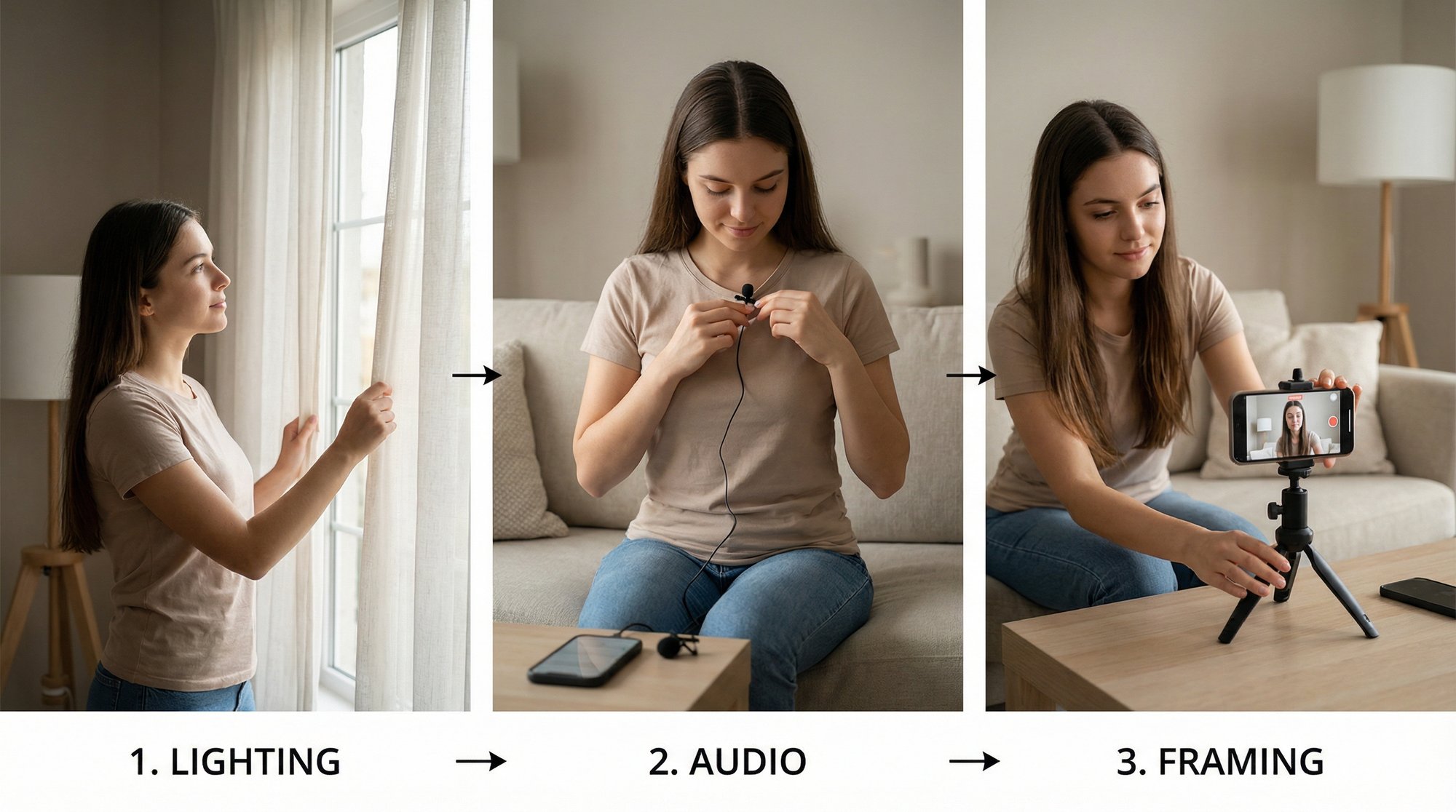
Most advice about how to make viral video is too shallow to help and too optimistic to trust. It tells you to use better lighting, copy trends, add captions, and hope the algorithm smiles on you. That’s not a strategy. That’s a checklist for posting more polished losers.
Virality isn’t random as often assumed. The hit still looks spontaneous to viewers, but under the hood it follows a pattern. Strong idea selection. A sharp opening. editing built for retention. distribution timed to platform behavior. Then disciplined iteration after the post goes live.
That matters because founders and operators usually waste time on the wrong problem. They obsess over gear, visual polish, and one magic trend, while the essential work happens earlier and later. Earlier in the scripting. Later in the analytics. If you understand those two ends, you stop treating short-form as a slot machine and start building videos that have a genuine chance to travel.
The Repeatable Science Behind Going Viral
The biggest myth in short-form is that viral videos happen by accident. Luck still exists, but it shows up after you’ve done the controllable work. Platforms don’t distribute content because it “feels good.” They test it, measure it, and either expand it or kill it.
Short-form algorithms are built around behavior, not intention. A creator can swear a video is valuable. The platform only cares whether people watch it, rewatch it, comment on it, and send it to someone else. That’s why good creators talk less about inspiration and more about inputs.
What virality actually rewards
A useful way to think about virality is simple. You are not making a video for your audience alone. You are making a video for a test audience first. If that first group responds well, the platform earns confidence and pushes it wider.
That’s why “make better content” is weak advice. Better by what standard? The practical standard is performance under distribution pressure. Does the first version of your idea survive contact with real scrolling behavior?
Three inputs matter most:
A clear promise early: people need to understand why they should keep watching
A payoff that arrives quickly: the video can’t feel like homework
A format the platform can categorize fast: niche, topic, and intent should be obvious
Practical rule: Don’t ask whether a video is good. Ask whether a stranger can understand its value in seconds.
If you want a useful outside framework, the team behind Postiz content creation breaks down the distribution side in a way that aligns with what practitioners already see in the wild. Viral content is usually designed for response, not just expression.
Why niche clarity comes before scale
Broad content doesn’t spread because it’s broad. It spreads because it’s specific enough for a platform to know who should care first. Founders miss this constantly. They try to sound relevant to everyone, and the result lands with no one.
A sharp niche gives the algorithm a cleaner initial audience and gives your script stronger edges. If you haven’t done that work, review your own positioning before chasing virality. This explanation of niching and what it really means is useful because “being niche” is often confused with “being small.” In content, niche is usually what makes reach possible.
The creators who seem lucky usually aren’t. They’ve built repeatable taste about what to say, how to say it, and who should hear it first. That’s the science behind the magic.
Ideation and Scripting for Maximum Impact
Most viral videos are won or lost before filming starts. Weak ideas can’t be rescued by jump cuts. Flat scripts can’t be saved by captions. If the concept doesn’t create tension, curiosity, identification, or a useful payoff, the edit will only make the failure faster.

Start with audience friction, not random inspiration
The fastest way to come up with stronger video ideas is to stop asking, “What should I post?” and start asking, “What does my audience already struggle to explain, decide, or avoid?”
That creates built-in energy. People stop scrolling when they recognize themselves in the problem. They stay when they sense a useful or surprising resolution coming.
Use these idea buckets:
Misbeliefs your market still holds
Good for contrarian takes. These work when you can challenge a common habit, assumption, or best practice without sounding theatrical.Expensive mistakes people repeat
Good for founders, SaaS, and service businesses. If a bad decision costs time, money, or reputation, it carries emotional weight.Simple frameworks that reduce confusion
Clean mental models spread because people can repeat them. If your idea is easy to retell, it has better sharing potential.Personal stories with a business lesson
These work because they feel human first and instructional second. The lesson shouldn’t arrive as a lecture. It should fall out of the story.
Build the hook before the body
In short-form, the first line is doing almost all the heavy lifting. A weak opening isn’t just a slower start. It poisons the rest of the clip because viewers never stay long enough to discover the good part.
A usable hook usually does one of four jobs:
Hook type | What it does | Example pattern |
|---|---|---|
Contrarian hook | Challenges accepted advice | “Most founders are posting the wrong kind of short-form.” |
Pain hook | Names a frustrating problem | “If your videos die after a few hundred views, this is usually why.” |
Curiosity hook | Opens an information gap | “One edit change makes business videos much easier to finish.” |
Identity hook | Calls out a specific viewer | “If you sell complex software, trend content usually hurts more than it helps.” |
Don’t write your hook like a title. Write it like a spoken interruption. It should sound natural on camera and clear without context.
A hook should create a question in the viewer’s head that only the next few seconds can answer.
Use a micro-script, not a full script
Most founders get stiff when they read. Most ramble when they freestyle. The middle ground is a micro-script. It gives structure without killing delivery.
A simple short-form script can look like this:
Line 1: stop the scroll
Line 2: define the problem or tension
Line 3: add proof, mechanism, or story detail
Line 4: deliver the payoff
Line 5: end with a next-step prompt, open loop, or opinion
That’s enough for most talking-head clips. The point isn’t literary quality. The point is momentum.
Three script templates that keep working
Contrarian take
This format performs well when your market is overloaded with repeated advice.
Open with the popular advice you disagree with
Explain why it sounds right
Show where it fails in practice
Give the better operating principle
Example flow:
“Stop trying to look viral.”
“That advice sounds wrong, but most business videos fail because they imitate creators, not buyers.”
“Trend formats get attention fast and trust slowly.”
“The better move is to package expertise so strangers can consume it quickly.”
Problem and solution
This is the safest format for most businesses because it’s naturally useful.
Name the problem in direct language
Agitate it with a consequence
Present one clear fix
Show what changes after the fix
Keep it narrow. “How to grow on social” is weak. “Why your product videos lose viewers in the opening seconds” is stronger.
Relatable story
This works when you want comments, saves, and stronger affinity.
Start with a specific moment
Add the mistake, awkward realization, or surprise
Pull out a lesson the audience can use
End with a pointed question or takeaway
The story must earn its lesson. If the moral feels pasted on, retention drops because the viewer feels manipulated.
A fast idea filter before filming
Before you record anything, run the concept through this short test:
Is the audience obvious? If not, the platform will struggle too.
Is the payoff clear? People won’t stay for vague value.
Can the idea survive in under a minute? If not, it may belong in long-form.
Would someone send this to a colleague or friend? If the answer is no, it may still be useful, but it probably isn’t built for spread.
The strongest scripts don’t try to say everything. They make one sharp point and make it fast.
Editing for Retention The Ultimate Growth Hack
Editing is where most videos become competitive. Not because fancy transitions make content viral, but because editing controls retention, and retention controls distribution.
Short-form videos that achieve 80 to 100% completion rates are far more likely to go viral, because platforms expand the reach of videos that people finish. The same platform behavior explains why high-performing clips move from small test audiences to wider distribution, and why 70% of TikTok’s billion-view videos maintain 85%+ completion rates, according to Clipping Agency’s viral video analysis.

What retention editing actually means
Retention editing is not “make it flashy.” It means removing every reason a viewer might leave. Different words. Different standard.
If the spoken point is slow, tighten it. If a sentence is useful but visually static, support it with B-roll, screenshots, text, or cutaways. If the opening takes too long to clarify the payoff, move the payoff earlier.
The best editors think like ruthless viewers. They cut according to friction, not attachment.
The practical editing stack
Here’s the stack that matters most for business short-form:
Pacing: trim dead air, filler words, throat-clearing, and repeated points
Captioning: use readable on-screen text to support silent viewing and emphasis
Pattern interruption: change framing, zoom, B-roll, text treatment, or visual context before the video feels static
Visual relevance: every cutaway should clarify the idea, not decorate it
Audio clarity: viewers forgive average visuals faster than muddy sound
A lot of founders over-edit the wrong layer. They chase effects and ignore pace. Viewers don’t leave because you skipped a fancy preset. They leave because nothing new happened.
Where most talking-head videos lose people
The most common retention killers are boring and fixable.
Retention problem | What viewers feel | Better edit choice |
|---|---|---|
Long setup | “Get to the point.” | Open on the strongest claim or result |
Static visuals | “I already get it.” | Add relevant motion, screenshots, or B-roll |
Verbal clutter | “This is slower than it needs to be.” | Cut filler and combine repeated thoughts |
Weak scene changes | “Nothing is progressing.” | Use strategic zooms, cuts, and text shifts |
Editing rule: Every few seconds, the viewer should get either a new idea, a new visual, or a stronger version of the same point.
Fast edits work because they reduce cognitive drift
People don’t consciously decide to abandon a short-form video. They drift. Their thumb moves before they think about it. Good editing reduces that drift by compressing time and keeping the brain occupied with forward motion.
That doesn’t mean every clip should feel chaotic. Some business videos need calm delivery. But calm delivery still needs structural movement. A thoughtful founder clip can feel measured and still be tightly cut.
Visual support is critical. If you mention a market shift, product interface, headline, or chart, show it. If you tell a story, cut to the object, screen, comment, or image that anchors the moment. The more concrete the visual layer, the easier it is for viewers to stay with spoken ideas.
If you want to sharpen this craft, this guide on video editing with effects that improve storytelling is a solid reference because it focuses on function over gimmicks.
Use AI where it removes friction, not authenticity
AI can help in post-production when it speeds up illustration, voice support, cleanup, or rough assembly. It becomes a problem when it makes a real person sound synthetic or look fake.
That’s why simple tools often outperform ambitious ones. For example, if you need cleaner narration elements, alternate voice layers, or stylized spoken intros, a practical CapCut voice synthesis tutorial can help without forcing a fully artificial workflow.
The best short-form editing still follows one standard. Keep the human. Remove the drag.
Optimizing Your Video for Platform Algorithms
A good video can still stall if it’s packaged badly. Distribution starts before viewers press play. The platform reads signals from the format, caption, opening frame, topic clarity, and early engagement behavior to decide where your video belongs.

Package for classification first
Algorithms need to classify your content quickly. That’s why vague captions and clever-but-empty intros underperform. You may think you’re being subtle. The platform thinks your video is hard to place.
Your packaging should answer three questions fast:
Who is this for
What is this about
Why should someone care now
That doesn’t require spammy optimization. It requires clarity. The best captions often feel simple because they mirror what the viewer is already thinking.
A strong caption might do one of these jobs:
sharpen the promise of the video
add context the opening line didn’t include
provoke a response with a direct opinion
frame the viewer’s identity
Hashtags should support categorization, not cosplay as strategy. Use them to reinforce niche and topic. Don’t stack random high-volume tags and expect quality distribution.
Trend timing matters, but fit matters more
Trend riding still works when you move early and stay relevant. Creators who jump on trends within 24 to 48 hours of peak timing see a 40% higher virality success rate, according to Classplus’s step-by-step viral video guide. The same source notes that if average watch time is below 50% after 48 hours, the hook needs work. It also reports that failing to seed to micro-influencers leaves 85% of videos stuck below 10,000 views, and over-branding in the first 3 seconds cuts retention by 40%.
Those numbers point to a trade-off that founders often miss. A trend can help distribution, but only if your audience can still recognize your relevance. If you graft your business onto an unrelated trend, viewers feel the mismatch immediately.
Treat trends as packaging opportunities, not identity. Your core message still has to fit the market you serve.
Test the wrapper, not just the content
A lot of creators A/B test only ideas. Smart operators also test presentation. One hook framing can fall flat while the same insight succeeds with a different opening line or caption.
Useful variables to test include:
Opening statement: direct claim versus question
Caption style: punchy opinion versus practical summary
Audio choice: native trend audio versus clean original voice
Seeding approach: immediate cross-posting versus targeted early sharing
Here’s a useful mental model. Your video has two jobs. First, earn distribution. Then earn completion. The first job is packaging and placement. The second is the content itself.
This walkthrough covers the publishing side well:
Publish like an operator, not an artist
Founders often post like artists. They upload when they’re done, write a quick caption, and move on. Better distribution comes from treating publishing as an operational step.
Use native platform analytics to identify audience activity windows. Post where the content naturally belongs. Adapt the same core clip to Reels, Shorts, LinkedIn, or TikTok without pretending each platform is identical. A founder insight that works as a concise Reel may need a different framing on LinkedIn because the viewing intent changes.
The algorithm doesn’t need tricks. It needs clean signals and a strong first audience response.
The Case for Consistency Over Virality
Most businesses should care less about viral hits and more about repeatable attention. That sounds less exciting, but it’s usually the better growth engine.
Virality is rare. Less than 0.1% of YouTube videos exceed 1 million views, and for SaaS founders and small brands, consistent posting drives 70% of channel growth, according to Socially Seen’s analysis of video angles and performance. The same source says audiences retain 60% on relatable talking-head content versus 30% for trend-chasing content on Instagram, and that AI-assisted editors pulling real web clips boosted completion rates by 40% for business content in Q1 2026.

Why consistent content wins for companies
A viral video can create reach. It does not automatically create trust, memory, or demand. Buyers usually need repeated contact with a point of view before they associate someone with competence.
That’s where talking-head content keeps winning. It gives a company face, voice, judgment, and repetition. Not glamorous. Effective.
Three reasons consistent content beats the viral chase for most brands:
It compounds positioning: people learn what you stand for over time
It attracts the right audience: not just the largest possible audience
It lowers creative risk: you don’t need every post to be a breakout hit
Authenticity performs because it feels believable
Business audiences can smell borrowed creator tactics. Forced skits, fake shock, generic trend lip-syncs. They may pull a few views, but they rarely build durable authority.
Relatable spoken content works because viewers can map it to a real person with real experience. That doesn’t mean raw is always better. Raw often needs editing help. It means the source material should still feel human.
That’s why the most useful production systems for founders are the ones that keep the raw footage and improve the presentation around it. Real delivery. Better pacing. Better supporting visuals. Cleaner storytelling.
The strongest business videos usually don’t look viral-first. They look credible first.
The real bottleneck is production consistency
Most founders don’t fail because they lack ideas. They fail because editing becomes a second job. They record a useful take, then it sits in a camera roll because turning it into a polished Reel takes too long.
That’s why content systems matter more than isolated inspiration. If you want to build steady brand presence, you need a process that turns spoken expertise into publishable short-form repeatedly. This article on how to scale content creation without breaking the team is a good lens on the operational side.
If you’re learning how to make viral video, learn the mechanics. They matter. But don’t confuse that with the only path to growth. For most companies, the better strategy is simpler. Publish useful, authentic content often enough that the market starts to remember you.
Measure Success and Turn One Hit into a System
Views are the loudest metric and the least useful by themselves. A viral post without a follow-up plan is just a spike. If you want repeat performance, you need to diagnose why a video moved and what behavior it created.
That means reading platform analytics like an operator, not a fan.
Read the retention curve before you celebrate
Start with the watch pattern. Did viewers leave at the opening, the middle, or the transition into the payoff? The answer tells you what failed.
If the drop happens immediately, the hook missed or the packaging overpromised. If the dip shows up mid-video, the structure sagged. If viewers stayed but comments were weak, the video may have been consumable without being provocative or useful enough to trigger response.
Review each post with questions like these:
Where does the first sharp drop happen
Which line or scene sits right before that drop
Did comments reflect the main idea you intended
Were saves and shares aligned with the type of content
Did the follow-up profile visits convert into more viewing
Don’t just tag a video as winner or loser. Tag the mechanism. Strong hook. Weak ending. Confusing framing. Good topic, wrong length. That’s how you create reusable intelligence.
Build a follow-up chain fast
Post-virality is where most creators waste the opportunity. A 2025 Backlinko study found that 85% of creators lose 70% of followers gained from a viral TikTok within 30 days without follow-up nurturing, while consistent talking-head series retain audiences 3x better. Since March 2025, features such as TikTok’s Series have increased customer LTV by 25% for marketers using serialized personal stories, according to the source summarized in this YouTube discussion on post-virality audience retention.
The implication is obvious. When one clip breaks out, your next videos shouldn’t be random. They should continue the same conversation.
Use a simple post-hit sequence:
Double down on the same angle
Don’t switch topics because you’re bored. Give new viewers a second and third piece that feels connected.Clarify the misunderstood point
Viral videos often flatten nuance. The comment section will show where people got confused. Turn that into your next post.Tell the backstory
If the original clip was tactical, follow it with the story behind the tactic. If it was opinionated, follow with the practical application.Create a series marker
Use recurring framing so viewers can recognize the format when it appears again.
Measure for compounding, not ego
A useful scorecard goes beyond views.
Metric area | What it reveals | Why it matters |
|---|---|---|
Completion behavior | Whether the structure held attention | Tells you if the content earned distribution |
Shares and saves | Whether the idea was worth passing on or revisiting | Indicates practical or social value |
Comments quality | Whether the message landed clearly enough to spark response | Shows resonance, not just exposure |
Profile and next-video behavior | Whether attention converted into deeper interest | Turns a hit into audience growth |
One viral clip is a signal. A series of informed follow-ups is a system.
Keep a content lab, not a content graveyard
Most brands post, glance at views, and move on. Better teams archive what they learn. Save top hooks. Save comments that reveal language your market uses. Save examples of weak intros that caused early drop-off. Save successful structures by topic.
That running log becomes your playbook. Over time, you stop reinventing your content process because you know which openings, themes, and formats repeatedly earn attention from your audience.
This is the answer to how to make viral video consistently. You don’t manufacture certainty. You build a system that keeps improving your odds, then pair it with enough consistency that the wins compound instead of disappearing.
If you want the upside of short-form without spending your week inside an editor, Unfloppable helps turn raw talking-head recordings into polished videos built for consistent distribution. It’s a practical fit for founders and operators who want authentic content, stronger pacing, and a repeatable publishing engine instead of another pile of unedited clips.
Most advice about how to make viral video is too shallow to help and too optimistic to trust. It tells you to use better lighting, copy trends, add captions, and hope the algorithm smiles on you. That’s not a strategy. That’s a checklist for posting more polished losers.
Virality isn’t random as often assumed. The hit still looks spontaneous to viewers, but under the hood it follows a pattern. Strong idea selection. A sharp opening. editing built for retention. distribution timed to platform behavior. Then disciplined iteration after the post goes live.
That matters because founders and operators usually waste time on the wrong problem. They obsess over gear, visual polish, and one magic trend, while the essential work happens earlier and later. Earlier in the scripting. Later in the analytics. If you understand those two ends, you stop treating short-form as a slot machine and start building videos that have a genuine chance to travel.
The Repeatable Science Behind Going Viral
The biggest myth in short-form is that viral videos happen by accident. Luck still exists, but it shows up after you’ve done the controllable work. Platforms don’t distribute content because it “feels good.” They test it, measure it, and either expand it or kill it.
Short-form algorithms are built around behavior, not intention. A creator can swear a video is valuable. The platform only cares whether people watch it, rewatch it, comment on it, and send it to someone else. That’s why good creators talk less about inspiration and more about inputs.
What virality actually rewards
A useful way to think about virality is simple. You are not making a video for your audience alone. You are making a video for a test audience first. If that first group responds well, the platform earns confidence and pushes it wider.
That’s why “make better content” is weak advice. Better by what standard? The practical standard is performance under distribution pressure. Does the first version of your idea survive contact with real scrolling behavior?
Three inputs matter most:
A clear promise early: people need to understand why they should keep watching
A payoff that arrives quickly: the video can’t feel like homework
A format the platform can categorize fast: niche, topic, and intent should be obvious
Practical rule: Don’t ask whether a video is good. Ask whether a stranger can understand its value in seconds.
If you want a useful outside framework, the team behind Postiz content creation breaks down the distribution side in a way that aligns with what practitioners already see in the wild. Viral content is usually designed for response, not just expression.
Why niche clarity comes before scale
Broad content doesn’t spread because it’s broad. It spreads because it’s specific enough for a platform to know who should care first. Founders miss this constantly. They try to sound relevant to everyone, and the result lands with no one.
A sharp niche gives the algorithm a cleaner initial audience and gives your script stronger edges. If you haven’t done that work, review your own positioning before chasing virality. This explanation of niching and what it really means is useful because “being niche” is often confused with “being small.” In content, niche is usually what makes reach possible.
The creators who seem lucky usually aren’t. They’ve built repeatable taste about what to say, how to say it, and who should hear it first. That’s the science behind the magic.
Ideation and Scripting for Maximum Impact
Most viral videos are won or lost before filming starts. Weak ideas can’t be rescued by jump cuts. Flat scripts can’t be saved by captions. If the concept doesn’t create tension, curiosity, identification, or a useful payoff, the edit will only make the failure faster.

Start with audience friction, not random inspiration
The fastest way to come up with stronger video ideas is to stop asking, “What should I post?” and start asking, “What does my audience already struggle to explain, decide, or avoid?”
That creates built-in energy. People stop scrolling when they recognize themselves in the problem. They stay when they sense a useful or surprising resolution coming.
Use these idea buckets:
Misbeliefs your market still holds
Good for contrarian takes. These work when you can challenge a common habit, assumption, or best practice without sounding theatrical.Expensive mistakes people repeat
Good for founders, SaaS, and service businesses. If a bad decision costs time, money, or reputation, it carries emotional weight.Simple frameworks that reduce confusion
Clean mental models spread because people can repeat them. If your idea is easy to retell, it has better sharing potential.Personal stories with a business lesson
These work because they feel human first and instructional second. The lesson shouldn’t arrive as a lecture. It should fall out of the story.
Build the hook before the body
In short-form, the first line is doing almost all the heavy lifting. A weak opening isn’t just a slower start. It poisons the rest of the clip because viewers never stay long enough to discover the good part.
A usable hook usually does one of four jobs:
Hook type | What it does | Example pattern |
|---|---|---|
Contrarian hook | Challenges accepted advice | “Most founders are posting the wrong kind of short-form.” |
Pain hook | Names a frustrating problem | “If your videos die after a few hundred views, this is usually why.” |
Curiosity hook | Opens an information gap | “One edit change makes business videos much easier to finish.” |
Identity hook | Calls out a specific viewer | “If you sell complex software, trend content usually hurts more than it helps.” |
Don’t write your hook like a title. Write it like a spoken interruption. It should sound natural on camera and clear without context.
A hook should create a question in the viewer’s head that only the next few seconds can answer.
Use a micro-script, not a full script
Most founders get stiff when they read. Most ramble when they freestyle. The middle ground is a micro-script. It gives structure without killing delivery.
A simple short-form script can look like this:
Line 1: stop the scroll
Line 2: define the problem or tension
Line 3: add proof, mechanism, or story detail
Line 4: deliver the payoff
Line 5: end with a next-step prompt, open loop, or opinion
That’s enough for most talking-head clips. The point isn’t literary quality. The point is momentum.
Three script templates that keep working
Contrarian take
This format performs well when your market is overloaded with repeated advice.
Open with the popular advice you disagree with
Explain why it sounds right
Show where it fails in practice
Give the better operating principle
Example flow:
“Stop trying to look viral.”
“That advice sounds wrong, but most business videos fail because they imitate creators, not buyers.”
“Trend formats get attention fast and trust slowly.”
“The better move is to package expertise so strangers can consume it quickly.”
Problem and solution
This is the safest format for most businesses because it’s naturally useful.
Name the problem in direct language
Agitate it with a consequence
Present one clear fix
Show what changes after the fix
Keep it narrow. “How to grow on social” is weak. “Why your product videos lose viewers in the opening seconds” is stronger.
Relatable story
This works when you want comments, saves, and stronger affinity.
Start with a specific moment
Add the mistake, awkward realization, or surprise
Pull out a lesson the audience can use
End with a pointed question or takeaway
The story must earn its lesson. If the moral feels pasted on, retention drops because the viewer feels manipulated.
A fast idea filter before filming
Before you record anything, run the concept through this short test:
Is the audience obvious? If not, the platform will struggle too.
Is the payoff clear? People won’t stay for vague value.
Can the idea survive in under a minute? If not, it may belong in long-form.
Would someone send this to a colleague or friend? If the answer is no, it may still be useful, but it probably isn’t built for spread.
The strongest scripts don’t try to say everything. They make one sharp point and make it fast.
Editing for Retention The Ultimate Growth Hack
Editing is where most videos become competitive. Not because fancy transitions make content viral, but because editing controls retention, and retention controls distribution.
Short-form videos that achieve 80 to 100% completion rates are far more likely to go viral, because platforms expand the reach of videos that people finish. The same platform behavior explains why high-performing clips move from small test audiences to wider distribution, and why 70% of TikTok’s billion-view videos maintain 85%+ completion rates, according to Clipping Agency’s viral video analysis.

What retention editing actually means
Retention editing is not “make it flashy.” It means removing every reason a viewer might leave. Different words. Different standard.
If the spoken point is slow, tighten it. If a sentence is useful but visually static, support it with B-roll, screenshots, text, or cutaways. If the opening takes too long to clarify the payoff, move the payoff earlier.
The best editors think like ruthless viewers. They cut according to friction, not attachment.
The practical editing stack
Here’s the stack that matters most for business short-form:
Pacing: trim dead air, filler words, throat-clearing, and repeated points
Captioning: use readable on-screen text to support silent viewing and emphasis
Pattern interruption: change framing, zoom, B-roll, text treatment, or visual context before the video feels static
Visual relevance: every cutaway should clarify the idea, not decorate it
Audio clarity: viewers forgive average visuals faster than muddy sound
A lot of founders over-edit the wrong layer. They chase effects and ignore pace. Viewers don’t leave because you skipped a fancy preset. They leave because nothing new happened.
Where most talking-head videos lose people
The most common retention killers are boring and fixable.
Retention problem | What viewers feel | Better edit choice |
|---|---|---|
Long setup | “Get to the point.” | Open on the strongest claim or result |
Static visuals | “I already get it.” | Add relevant motion, screenshots, or B-roll |
Verbal clutter | “This is slower than it needs to be.” | Cut filler and combine repeated thoughts |
Weak scene changes | “Nothing is progressing.” | Use strategic zooms, cuts, and text shifts |
Editing rule: Every few seconds, the viewer should get either a new idea, a new visual, or a stronger version of the same point.
Fast edits work because they reduce cognitive drift
People don’t consciously decide to abandon a short-form video. They drift. Their thumb moves before they think about it. Good editing reduces that drift by compressing time and keeping the brain occupied with forward motion.
That doesn’t mean every clip should feel chaotic. Some business videos need calm delivery. But calm delivery still needs structural movement. A thoughtful founder clip can feel measured and still be tightly cut.
Visual support is critical. If you mention a market shift, product interface, headline, or chart, show it. If you tell a story, cut to the object, screen, comment, or image that anchors the moment. The more concrete the visual layer, the easier it is for viewers to stay with spoken ideas.
If you want to sharpen this craft, this guide on video editing with effects that improve storytelling is a solid reference because it focuses on function over gimmicks.
Use AI where it removes friction, not authenticity
AI can help in post-production when it speeds up illustration, voice support, cleanup, or rough assembly. It becomes a problem when it makes a real person sound synthetic or look fake.
That’s why simple tools often outperform ambitious ones. For example, if you need cleaner narration elements, alternate voice layers, or stylized spoken intros, a practical CapCut voice synthesis tutorial can help without forcing a fully artificial workflow.
The best short-form editing still follows one standard. Keep the human. Remove the drag.
Optimizing Your Video for Platform Algorithms
A good video can still stall if it’s packaged badly. Distribution starts before viewers press play. The platform reads signals from the format, caption, opening frame, topic clarity, and early engagement behavior to decide where your video belongs.

Package for classification first
Algorithms need to classify your content quickly. That’s why vague captions and clever-but-empty intros underperform. You may think you’re being subtle. The platform thinks your video is hard to place.
Your packaging should answer three questions fast:
Who is this for
What is this about
Why should someone care now
That doesn’t require spammy optimization. It requires clarity. The best captions often feel simple because they mirror what the viewer is already thinking.
A strong caption might do one of these jobs:
sharpen the promise of the video
add context the opening line didn’t include
provoke a response with a direct opinion
frame the viewer’s identity
Hashtags should support categorization, not cosplay as strategy. Use them to reinforce niche and topic. Don’t stack random high-volume tags and expect quality distribution.
Trend timing matters, but fit matters more
Trend riding still works when you move early and stay relevant. Creators who jump on trends within 24 to 48 hours of peak timing see a 40% higher virality success rate, according to Classplus’s step-by-step viral video guide. The same source notes that if average watch time is below 50% after 48 hours, the hook needs work. It also reports that failing to seed to micro-influencers leaves 85% of videos stuck below 10,000 views, and over-branding in the first 3 seconds cuts retention by 40%.
Those numbers point to a trade-off that founders often miss. A trend can help distribution, but only if your audience can still recognize your relevance. If you graft your business onto an unrelated trend, viewers feel the mismatch immediately.
Treat trends as packaging opportunities, not identity. Your core message still has to fit the market you serve.
Test the wrapper, not just the content
A lot of creators A/B test only ideas. Smart operators also test presentation. One hook framing can fall flat while the same insight succeeds with a different opening line or caption.
Useful variables to test include:
Opening statement: direct claim versus question
Caption style: punchy opinion versus practical summary
Audio choice: native trend audio versus clean original voice
Seeding approach: immediate cross-posting versus targeted early sharing
Here’s a useful mental model. Your video has two jobs. First, earn distribution. Then earn completion. The first job is packaging and placement. The second is the content itself.
This walkthrough covers the publishing side well:
Publish like an operator, not an artist
Founders often post like artists. They upload when they’re done, write a quick caption, and move on. Better distribution comes from treating publishing as an operational step.
Use native platform analytics to identify audience activity windows. Post where the content naturally belongs. Adapt the same core clip to Reels, Shorts, LinkedIn, or TikTok without pretending each platform is identical. A founder insight that works as a concise Reel may need a different framing on LinkedIn because the viewing intent changes.
The algorithm doesn’t need tricks. It needs clean signals and a strong first audience response.
The Case for Consistency Over Virality
Most businesses should care less about viral hits and more about repeatable attention. That sounds less exciting, but it’s usually the better growth engine.
Virality is rare. Less than 0.1% of YouTube videos exceed 1 million views, and for SaaS founders and small brands, consistent posting drives 70% of channel growth, according to Socially Seen’s analysis of video angles and performance. The same source says audiences retain 60% on relatable talking-head content versus 30% for trend-chasing content on Instagram, and that AI-assisted editors pulling real web clips boosted completion rates by 40% for business content in Q1 2026.

Why consistent content wins for companies
A viral video can create reach. It does not automatically create trust, memory, or demand. Buyers usually need repeated contact with a point of view before they associate someone with competence.
That’s where talking-head content keeps winning. It gives a company face, voice, judgment, and repetition. Not glamorous. Effective.
Three reasons consistent content beats the viral chase for most brands:
It compounds positioning: people learn what you stand for over time
It attracts the right audience: not just the largest possible audience
It lowers creative risk: you don’t need every post to be a breakout hit
Authenticity performs because it feels believable
Business audiences can smell borrowed creator tactics. Forced skits, fake shock, generic trend lip-syncs. They may pull a few views, but they rarely build durable authority.
Relatable spoken content works because viewers can map it to a real person with real experience. That doesn’t mean raw is always better. Raw often needs editing help. It means the source material should still feel human.
That’s why the most useful production systems for founders are the ones that keep the raw footage and improve the presentation around it. Real delivery. Better pacing. Better supporting visuals. Cleaner storytelling.
The strongest business videos usually don’t look viral-first. They look credible first.
The real bottleneck is production consistency
Most founders don’t fail because they lack ideas. They fail because editing becomes a second job. They record a useful take, then it sits in a camera roll because turning it into a polished Reel takes too long.
That’s why content systems matter more than isolated inspiration. If you want to build steady brand presence, you need a process that turns spoken expertise into publishable short-form repeatedly. This article on how to scale content creation without breaking the team is a good lens on the operational side.
If you’re learning how to make viral video, learn the mechanics. They matter. But don’t confuse that with the only path to growth. For most companies, the better strategy is simpler. Publish useful, authentic content often enough that the market starts to remember you.
Measure Success and Turn One Hit into a System
Views are the loudest metric and the least useful by themselves. A viral post without a follow-up plan is just a spike. If you want repeat performance, you need to diagnose why a video moved and what behavior it created.
That means reading platform analytics like an operator, not a fan.
Read the retention curve before you celebrate
Start with the watch pattern. Did viewers leave at the opening, the middle, or the transition into the payoff? The answer tells you what failed.
If the drop happens immediately, the hook missed or the packaging overpromised. If the dip shows up mid-video, the structure sagged. If viewers stayed but comments were weak, the video may have been consumable without being provocative or useful enough to trigger response.
Review each post with questions like these:
Where does the first sharp drop happen
Which line or scene sits right before that drop
Did comments reflect the main idea you intended
Were saves and shares aligned with the type of content
Did the follow-up profile visits convert into more viewing
Don’t just tag a video as winner or loser. Tag the mechanism. Strong hook. Weak ending. Confusing framing. Good topic, wrong length. That’s how you create reusable intelligence.
Build a follow-up chain fast
Post-virality is where most creators waste the opportunity. A 2025 Backlinko study found that 85% of creators lose 70% of followers gained from a viral TikTok within 30 days without follow-up nurturing, while consistent talking-head series retain audiences 3x better. Since March 2025, features such as TikTok’s Series have increased customer LTV by 25% for marketers using serialized personal stories, according to the source summarized in this YouTube discussion on post-virality audience retention.
The implication is obvious. When one clip breaks out, your next videos shouldn’t be random. They should continue the same conversation.
Use a simple post-hit sequence:
Double down on the same angle
Don’t switch topics because you’re bored. Give new viewers a second and third piece that feels connected.Clarify the misunderstood point
Viral videos often flatten nuance. The comment section will show where people got confused. Turn that into your next post.Tell the backstory
If the original clip was tactical, follow it with the story behind the tactic. If it was opinionated, follow with the practical application.Create a series marker
Use recurring framing so viewers can recognize the format when it appears again.
Measure for compounding, not ego
A useful scorecard goes beyond views.
Metric area | What it reveals | Why it matters |
|---|---|---|
Completion behavior | Whether the structure held attention | Tells you if the content earned distribution |
Shares and saves | Whether the idea was worth passing on or revisiting | Indicates practical or social value |
Comments quality | Whether the message landed clearly enough to spark response | Shows resonance, not just exposure |
Profile and next-video behavior | Whether attention converted into deeper interest | Turns a hit into audience growth |
One viral clip is a signal. A series of informed follow-ups is a system.
Keep a content lab, not a content graveyard
Most brands post, glance at views, and move on. Better teams archive what they learn. Save top hooks. Save comments that reveal language your market uses. Save examples of weak intros that caused early drop-off. Save successful structures by topic.
That running log becomes your playbook. Over time, you stop reinventing your content process because you know which openings, themes, and formats repeatedly earn attention from your audience.
This is the answer to how to make viral video consistently. You don’t manufacture certainty. You build a system that keeps improving your odds, then pair it with enough consistency that the wins compound instead of disappearing.
If you want the upside of short-form without spending your week inside an editor, Unfloppable helps turn raw talking-head recordings into polished videos built for consistent distribution. It’s a practical fit for founders and operators who want authentic content, stronger pacing, and a repeatable publishing engine instead of another pile of unedited clips.